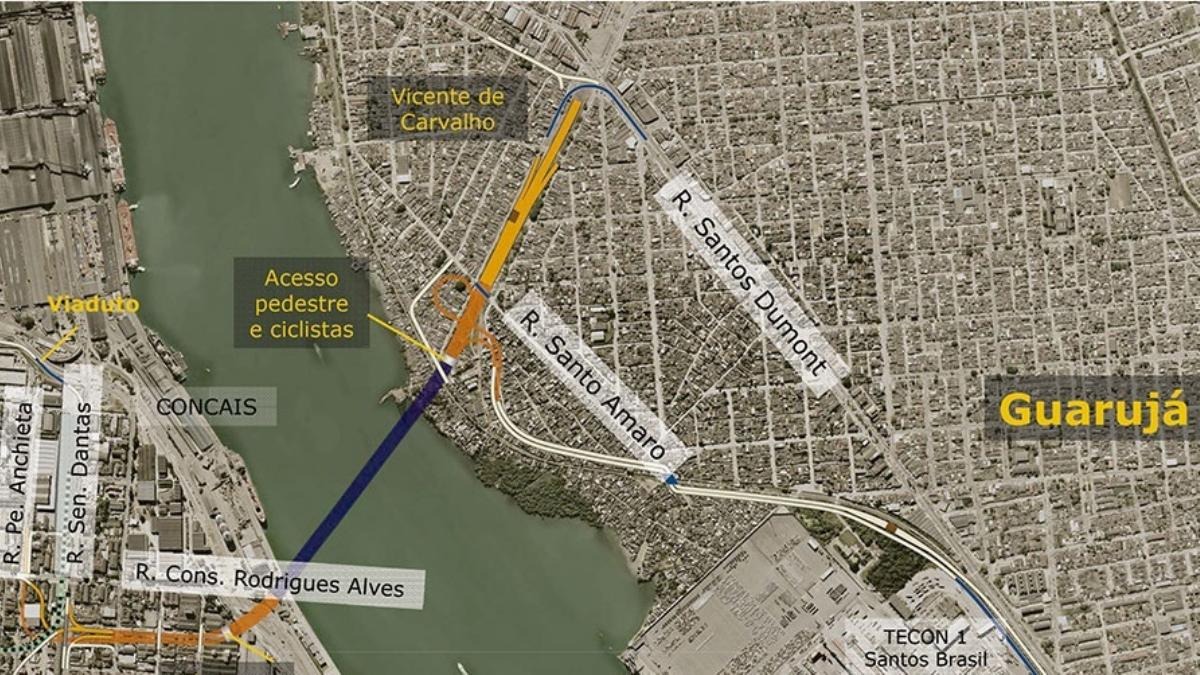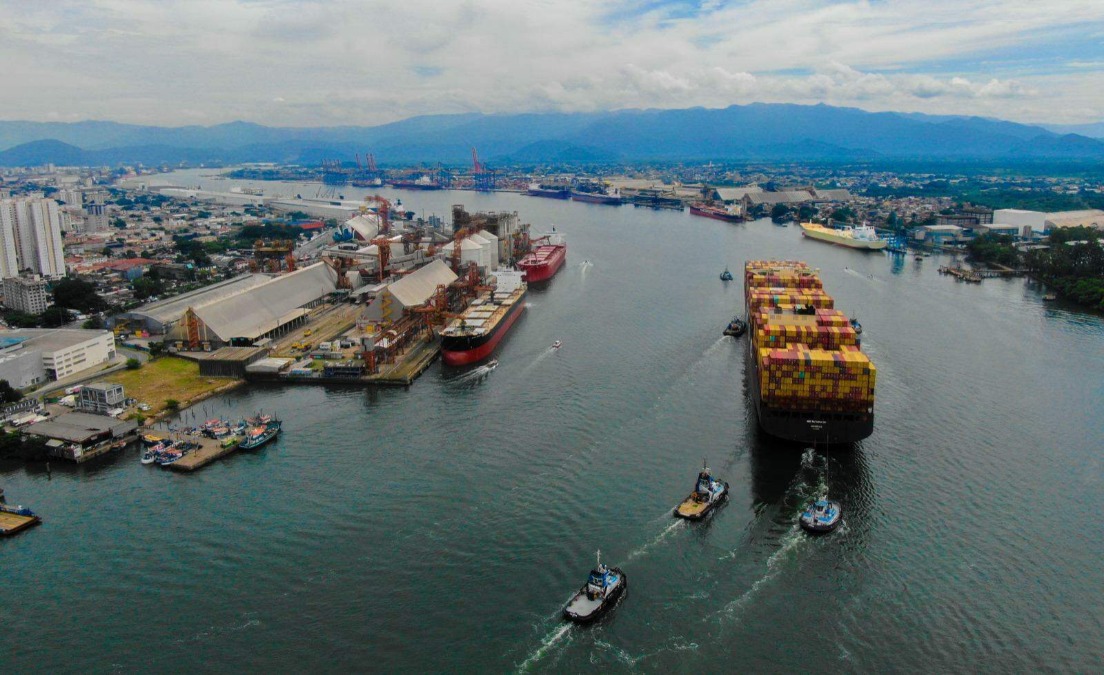
The contractual modeling of the Santos-Guarujá tunnel Public-Private Partnership (PPP) presents a relevant inconsistency between financial responsibility and control capacity.
According to a formal statement by the Santos Port Authority (APS) to the Court of Accounts of the Union (TCU), the agency is responsible for approximately half of the federal public funds budgeted for the project.
However, it does not participate in the decision-making flow that authorizes measurements, validates construction phases, or releases disbursements.
In the current structure, these competencies are concentrated in the São Paulo State Government, which is responsible for managing the concession contract. The APS, despite contributing to financing, is not a party to the contract, which limits its institutional role.
This mismatch creates a direct problem: the obligation to provide resources is not accompanied by formal mechanisms for monitoring, oversight, and technical validation.
In practice, this reduces the ability to control the application of federal funds.
The APS itself acknowledges that the current model does not offer sufficient legal certainty for making the contributions. The agency also points out that it did not have full access to the contractual terms agreed with the concessionaire, which worsens the supervisory limitation.


As a way forward, the Port Authority proposes formalizing its participation in the contract through an addendum that includes it as an intervening-consenting party.
This measure would allow its insertion in the technical validation process and authorization of disbursements, without altering the risk matrix or the economic-financial balance of the concession.
The request is aligned with the TCU's own guidelines, which require greater rigor in governance and accountability in projects involving federal resources.
Without this adjustment, the risk is operational: the absence of an adequate legal instrument may prevent or delay the release of funds, compromising the project's schedule.
The case highlights a recurring point in major infrastructure projects: the need for alignment between who finances, who decides, and who oversees.
When this relationship is not clearly defined, the impact tends to fall directly on project execution.