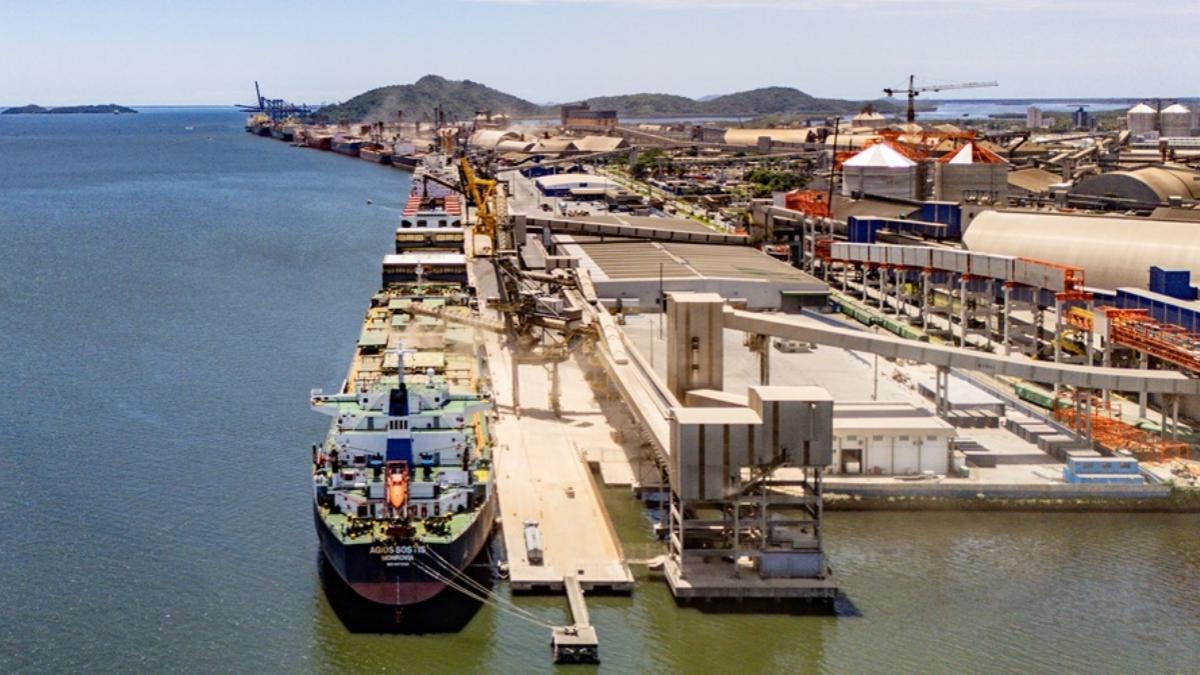
The maritime bulk cargo transport sector may present limited growth in the coming years, depending on the evolution of the situation in the Strait of Hormuz, according to estimates from Bimco. The analysis indicates that "demand will grow up to 1% in 2026 and between 0.5% and 1.5% in 2027, should the Strait of Hormuz remain closed for an indefinite period". In contrast, in a reopening scenario, the growth projection rises to between 2.5% and 3.5% in 2026 and between 2% and 3% in 2027.
In the prolonged closure scenario, "cargo volumes are expected to stagnate during 2026 and 2027, with weaker performance in grain shipments and smaller cargoes, due to their greater dependence on this route", in addition to prospects of lower agricultural supply linked to rising fertilizer prices.
Average transport distances would also vary. Under closure conditions, an increase of between 0% and 1% is estimated for 2026 and 2027, driven by a greater share of products with longer routes, such as iron ore, grains and bauxite. In a reopening scenario, the increase would be slightly larger due to better performance of certain cargo flows.
The report identifies additional factors that may affect demand. Among them, a possible return of maritime traffic to the Red Sea, which would reduce navigation distances by eliminating detours around the Cape of Good Hope. On the other hand, "the possible onset of El Niño around the second quarter of 2026 could limit transits through the Panama Canal" due to lower water levels, leading to detours and longer voyages.
Asset details


Bimco forecasts that iron ore shipments will remain stagnant in 2026 and grow between 0.5% and 1.5% in 2027, in a scenario where the Taiwan Strait remains closed. This performance would be influenced by factors such as steel demand trends, especially in China, and supply expansion from exporting countries such as Australia, Brazil and West African nations.
With regard to coal, growth of up to 1% is projected for 2026 and between 0.5% and 1.5% in 2027, should the strait remain closed. If it is reopened, these figures may decrease. The report notes that "lower availability of liquefied natural gas could drive a shift towards coal in some markets", although demand in countries such as China and India has shown a declining trend this year.
In the grain sector, growth of between 3% and 4% is projected for 2026, followed by a contraction in 2027 in the strait closure scenario. On the other hand, reopening of the strait could boost growth to between 7% and 8% in 2026. Factors such as fertilizer availability, weather conditions and agricultural productivity influence these projections.
With regard to smaller bulk cargoes, a decline of between 1% and 2% is estimated for 2026 should the closure continue, while in an alternative scenario, they could record stronger growth. These products, including fertilizers, sulfur and aluminum, are highly vulnerable to disruptions in the Strait of Hormuz, through which a significant share of these flows passes.
```