By Jornal Portuário
Braskem has launched one of the most significant financial restructurings in its history. On Monday (24th), the company's Board of Directors approved filing a petition for extrajudicial recovery, a move designed to create legal protection for renegotiating a debt burden of approximately US$ 10.9 billion.
The measure represents a new chapter in negotiations that the petrochemical company had been conducting with its main creditors. Information released on Monday indicates that the company has reached understanding with relevant investor groups to advance the restructuring. About US$ 7 billion of the total would be related to debt securities held by investors.
The process is different from a traditional judicial recovery. The strategy seeks to allow the company to negotiate and implement a reorganization of its financial obligations within a legally protected environment, while preserving its business activities.
According to information released about the process, Braskem initially obtained adhesion from 39.6% of creditors covered, sufficient to move forward with the procedure, and will have approximately 90 days to seek the necessary support to consolidate the plan.
Operations continue
An important point for suppliers, workers, customers and companies linked to the supply chain is the scope of the extrajudicial recovery.
The procedure is concentrated on the company's financial obligations. According to information released following the petition, suppliers, employees and other operational obligations are not included in the financial restructuring process.
This means that, at this time, the extrajudicial recovery does not represent a halt to Braskem's factories or commercial activities.
The challenge lies in capital structure.
At the end of June 2026, the company itself reported gross corporate debt of US$ 10.4 billion and adjusted net debt of US$ 9.5 billion. In the second quarter, however, Braskem posted net income of approximately R$ 3.3 billion, showing that the financial crisis is occurring alongside a recent improvement in some operational indicators.
Cubatão puts the issue on the radar of the Santos Lowlands
Although the discussion is concentrated in the financial market, the subject also deserves close monitoring in the Santos Lowlands.
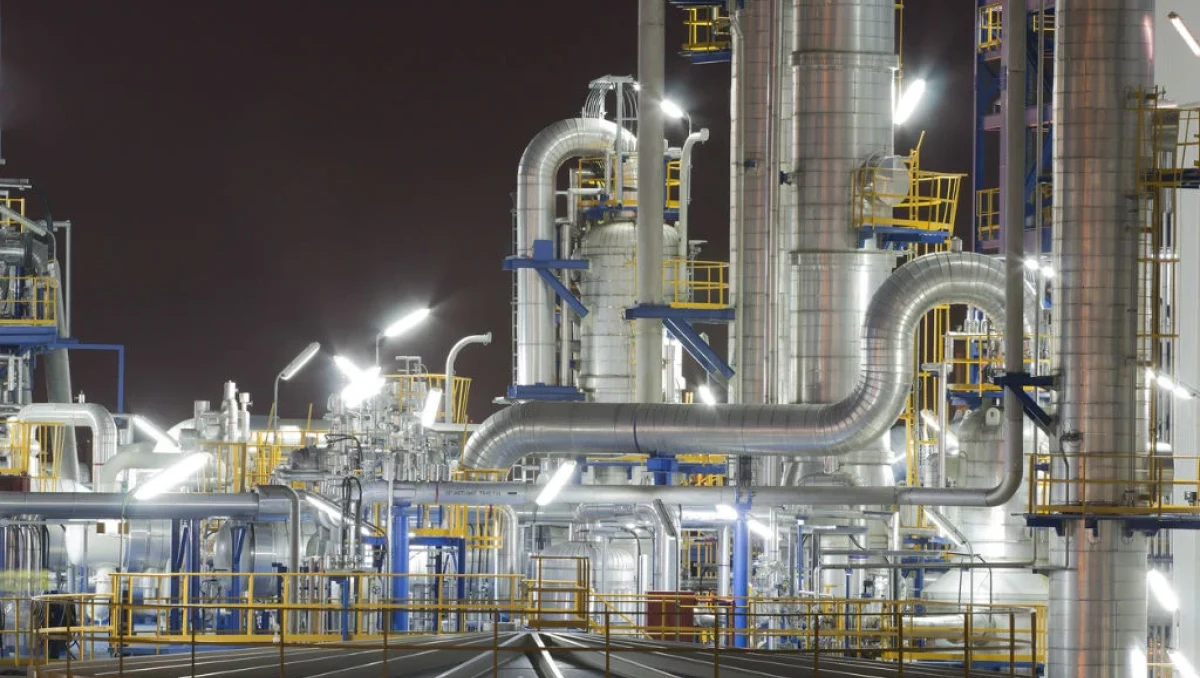
Braskem operates the PE8 CUB industrial unit in Cubatão, located on the banks of Cônego Domênico Rangoni Highway. The plant is dedicated to the production of low-density polyethylene (LDPE) and is part of the company's industrial structure in the State of São Paulo.
The company's presence in Cubatão makes the restructuring especially relevant to a region marked by integration among industry, road transport, warehousing, logistics operators and the Santos port complex.


Therefore, although the announced process is essentially financial in nature, its next chapters are also of interest to the regional productive sector.
There is, at present, no indication of interruption of the Cubatão unit's activities as a result of the extrajudicial recovery petition.
A giant attempting to reorganize its financial structure
Braskem is navigating a complex scenario, pressured by high debt levels and a challenging cycle in the global petrochemical industry.
Days before the Brazilian petition, Braskem Idesa, the company's Mexican operation run in partnership with Grupo Idesa, filed for Chapter 11 in the United States. The goal is to reduce its senior debt of approximately US$ 2.5 billion to US$ 1.6 billion.
In Brazil, however, the strategy now adopted is extrajudicial recovery.
In practice, the company gains room to negotiate with its creditors while attempting to build a more sustainable capital structure.
The next 90 days will be decisive
From now on, the market will mainly monitor Braskem's ability to expand creditor support and transform negotiations into a definitive plan.
```The size of the debt makes the process particularly complex. A significant portion of the obligations is concentrated in the international market, increasing the number of interests involved at the negotiating table.
For the logistics and industrial chain, however, the central question will be another: to what extent will financial reorganization be able to strengthen investment capacity and preserve the operation of one of Latin America's largest petrochemical companies?
In Baixada Santista, where industry and port function in an increasingly integrated manner, tracking Braskem's situation goes beyond the financial market.
It is also tracking an important link in the industrial activity installed in Cubatão and a chain that moves raw materials, petrochemical products, transporters, suppliers and logistics services.
The next 90 days should show what the shape of this new Braskem will be — and what the size of the necessary adjustment will be for the company to transform a debt exceeding US$ 10 billion into a sustainable financial structure.