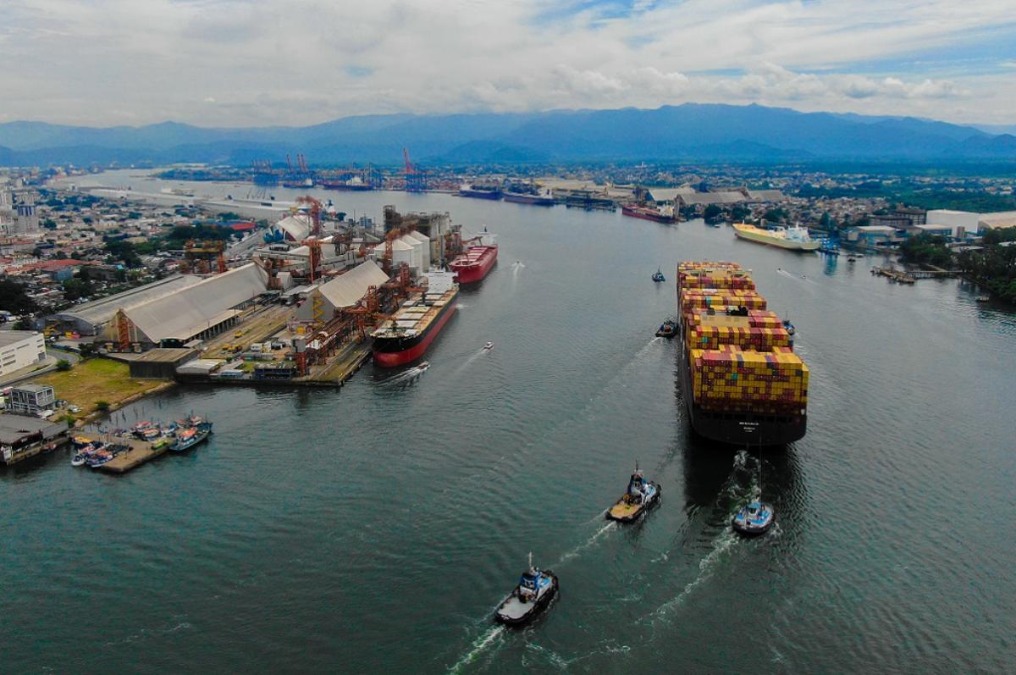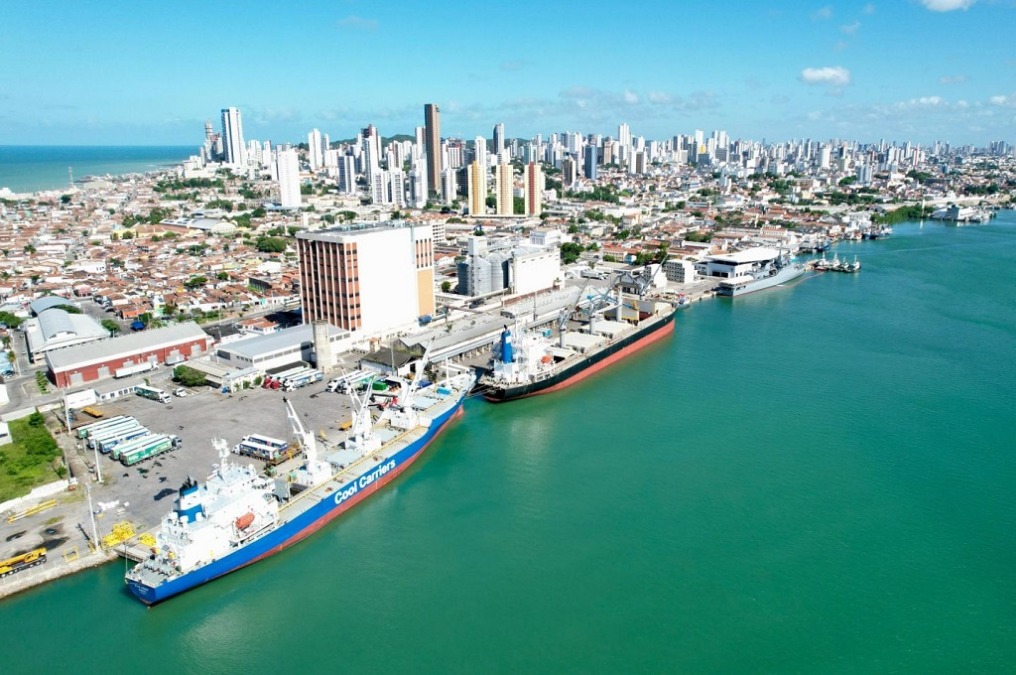
Natal Port has launched one of the most important infrastructure projects in recent years for logistics in Rio Grande do Norte. Last Friday (24), dredging services began on the access channel and turning basin, with investments estimated at R$ 60 million, sourced from the New Growth Acceleration Program (PAC).
The project's main objective is to recondition the access channel and increase the draft to 12 meters, allowing larger vessels to berth, a factor deemed strategic for raising the terminal's competitiveness in the Northeast region. Furthermore, the measure strengthens navigation safety and port maneuvering operations.
According to the chief executive officer of Rio Grande do Norte Port Authority (Codern), Paulo Henrique Macedo, the estimated timeline for completion is 120 days. Execution will be divided into two phases:
- first phase: maintenance dredging of 4 nautical miles, equivalent to 7.2 kilometers of the channel;
- second phase: reconditioning of the turning basin, the area designated for vessel maneuvering.
The intervention had been awaited for years by Rio Grande do Norte's productive sector. According to a recent survey, approximately 74% of the state's production still flows through ports such as Suape (PE) and Pecém (CE), a scenario the new dredging project aims to reverse by strengthening the capacity of the Natal terminal.


In addition to dredging, Codern reported that the investment package includes other relevant structural works, including:
- reinforcement of protective bumpers on the central pillars of the Newton Navarro Bridge;
- improvements to quay bumpers;
- recovery of warehouses and sheds;
- modernization of the port's photovoltaic system.
The infrastructure advance occurs at a time of operational growth for the terminal. Recent data from Codern show that Natal Port recorded a 21.23% increase in cargo handling in 2025, underscoring the importance of the project to sustain the state's logistics expansion.
In the port sector, the expectation is that dredging will allow not only an expansion of traditional cargo flows, such as fruits for export, but also open space for new business, such as mineral bulks, iron ore and live cargo, strengthening the port's strategic role in the Northeast economy.
```