
The global economy has entered a phase of elevated uncertainty, marked by a fresh surge in energy prices and growing signs of disruption across international logistics chains. The escalating crisis around Iran and the disruption of the Strait of Hormuz are pushing the market into territory of sharp instability, at a moment when concern no longer stops at fuel costs but extends to the possibility of supply ruptures.
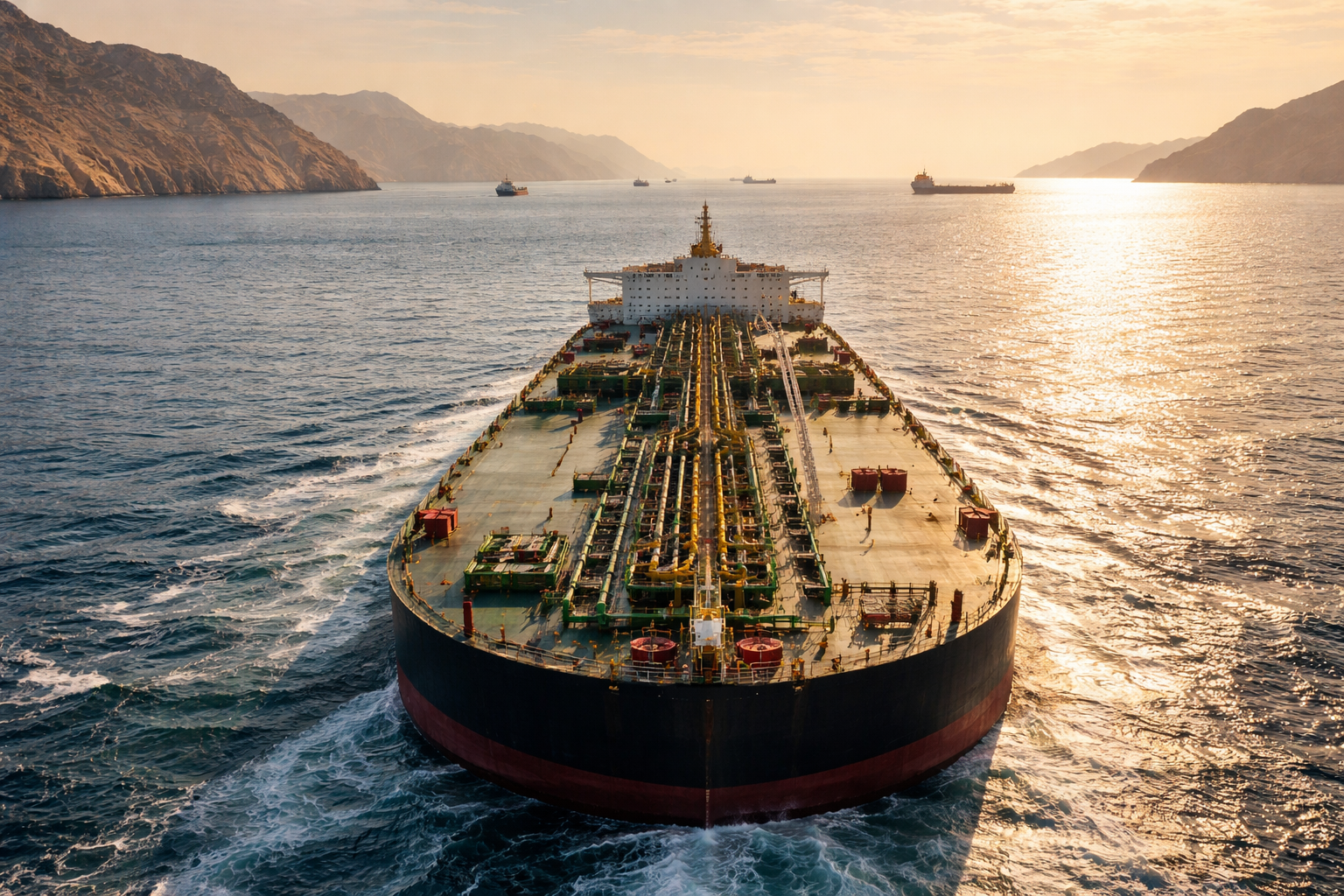
In the maritime sector, the effects are becoming clear. The price of very low sulfur fuel oil (VLSFO) has surpassed $1,000 per barrel, roughly double the level prior to the conflict, while high sulfur fuel oil (HSFO) has also reached historic highs. Pressure on crude is rippling directly through bunkering, ship operating costs and, in turn, global maritime transport costs. The problem, however, extends beyond fuel price hikes. The effective blockade of Hormuz is raising serious doubts about the regularity of energy supply, a strategic passage for oil and liquefied natural gas. Data already point to a significant drop in LNG vessel loadings from Qatar, a signal that disruption has begun to manifest in the physical market, with particularly acute impact on Asian markets.
In this context, commercial shipping faces a scenario that is more expensive, slower and more unpredictable. The prospect of costlier fuels may drive several shipowners to reduce speed to contain costs, while the probability of congestion at safer refueling hubs increases. The consequence may be a fresh wave of delays, reduced effective vessel supply and additional pressure on logistics chains. At the same time, the absence of a robust operational solution to protect maritime traffic in the region reinforces the sense of impasse. Although naval escort scenarios have been considered, signals from the sector point to limited capacity, insufficient to restore normal ship flows through Hormuz.


Given this picture, the release of crude from strategic reserves emerges as an attempt to cushion the shock and buy time. Nevertheless, the prevailing sentiment in the market is that the global economy has entered a true gray zone—a phase in which prices may continue to rise, supply may become more uneven across regions and uncertainty may weigh almost as heavily as fuel itself.
This publication was generated from information in the original feed. Credits and source reference have been included at the end of the text.
Source: https://portaldomar.org/2026/03/23/economia-global-entra-numa-zona-cinzenta-com-escalada-de-precos/ ```