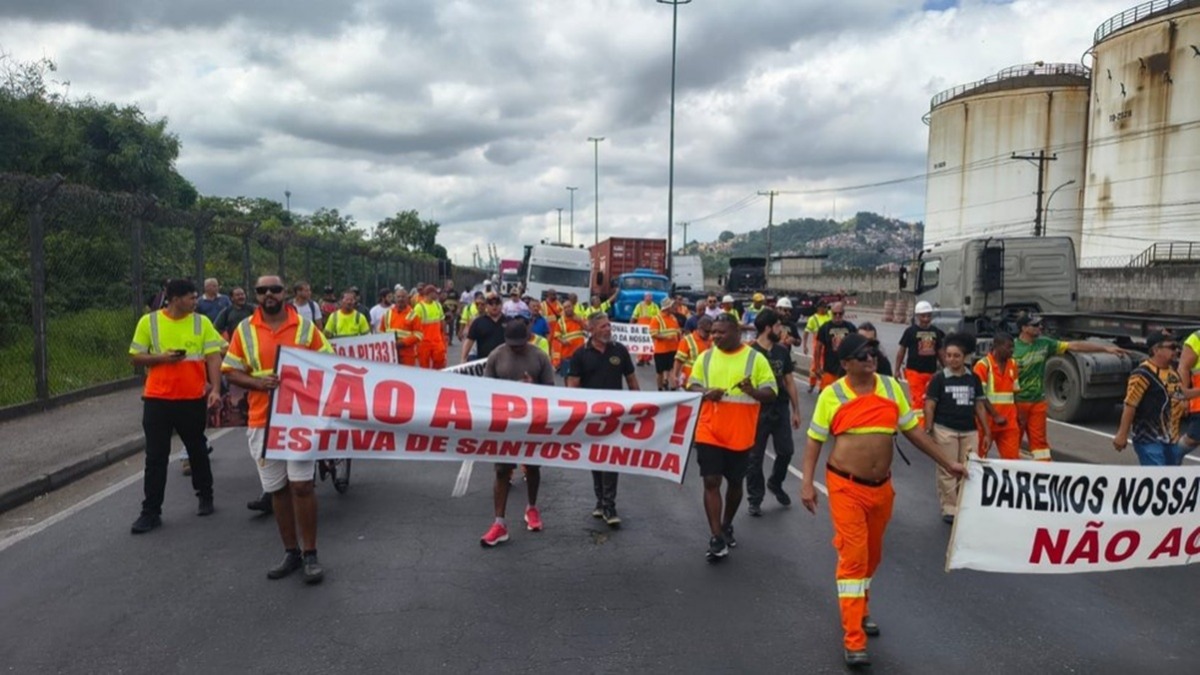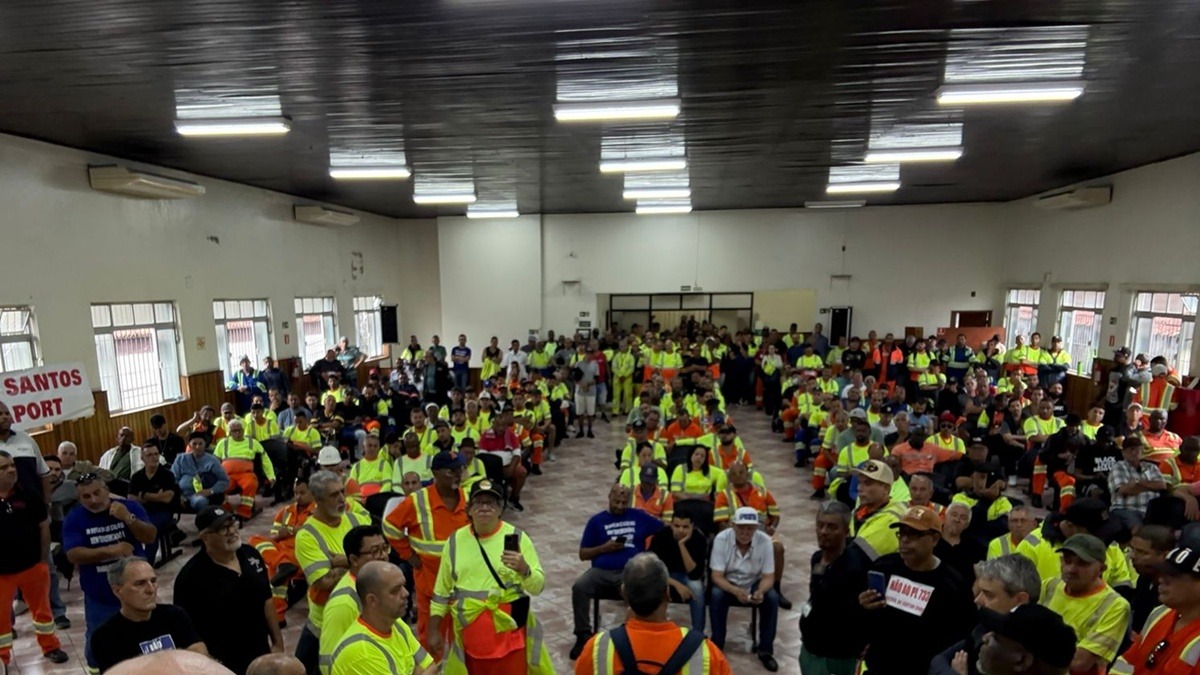
The Stevedores' Union of Santos, São Vicente, Guarujá and Cubatão has declared a strike by the category, which began at 7 a.m. on Wednesday (25th), following a hearing at the Regional Labor Court of the 2nd Region (TRT-2). The movement, however, takes place under restrictions imposed by the Judiciary, which authorized only a partial 12-hour stoppage, with an expected end at 7 p.m.
Contacted by Jornal Portuário, Bruno Santos, president of the Stevedores' Union of Santos, São Vicente, Guarujá and Cubatão, stated that the category's mobilization is directly linked to concerns over the advancement of Bill 733 (PL 733). According to him, the bill represents a threat to the exclusivity of port labor and to rights historically won by workers. "This is a fight for the preservation of our job market and for the valorization of our category," he emphasized.
The judicial decision, handed down in the scope of a collective labor dispute filed by the Union of Port Operators of the State of São Paulo (Sopesp) against the Stevedores' Union, recognized the legality of the movement but conditioned its implementation on maintaining at least 50% of the workforce in operation.
With this, workers were instructed to report normally to the ships, executing only half of operations. The strategy seeks to comply with the judicial determination while at the same time ensuring visibility to the category's protest.
Among the main reasons for the stoppage is concern over bills pending in the National Congress, such as PL 733, which may alter port labor rules, especially with respect to labor exclusivity. According to the decision, this type of mobilization, although it has a political character, is considered legitimate when related to the direct interests of the professional category.
The Judiciary also set a daily fine of R$ 200,000 in case of non-compliance with the determinations, a measure that applies to both the union entity and port operators who might prevent compliance with the decision.


During the hearing, considered tense by category representatives, it was also determined that there will be rigorous oversight of the movement. A court officer was assigned to verify compliance with the injunction at strategic points, such as OGMO/Santos and port terminals, assessing the percentage of adherence and possible irregularities.
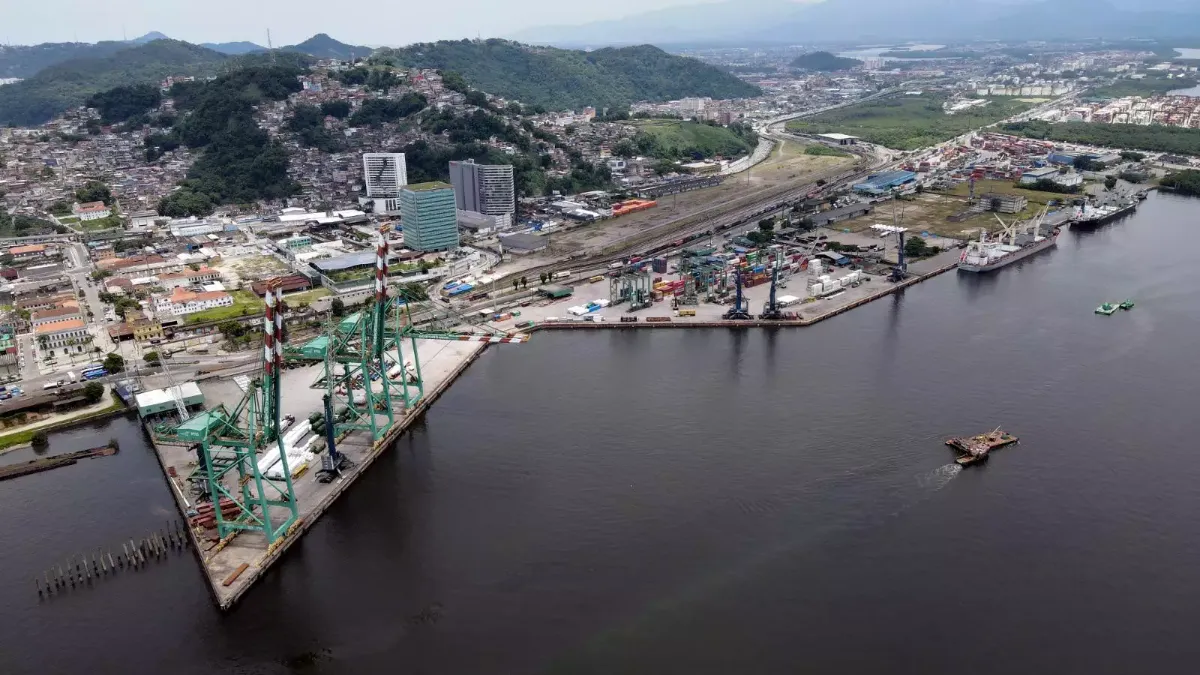
In addition to actions on the ships, the union called workers without scheduled shifts to reinforce the mobilization in front of major terminals, such as BTP and Santos Brasil, with the aim of increasing pressure on authorities and sector operators.
The category also seeks to draw the attention of the Federal Government and parliamentarians, demanding clear positions on legislative proposals that may directly impact the port labor model in the country.
Wednesday's stoppage is seen as a strategic move to open space for dialogue and strengthen the defense of rights acquired by stevedores, at a time of uncertainty about the future of the activity in Brazil.
```