
The Houthi movement, which controls much of northern Yemen, faces a decisive moment that could have direct impact on international maritime transport. As tensions escalate between Iran, the United States and Israel, the Tehran-aligned group will have to decide whether to become actively involved in the conflict or opt to preserve its internal position in Yemen.
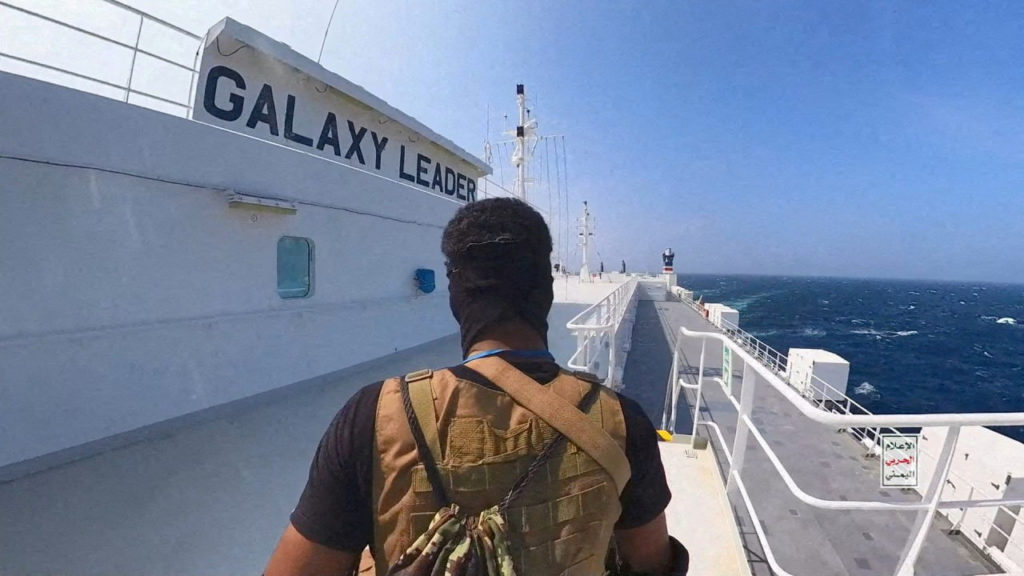
The importance of this decision goes far beyond the regional dimension of the movement. The Houthis operate in a strategic zone near the Strait of Bab el-Mandeb, a mandatory passage between the Red Sea and the Gulf of Aden. This maritime corridor is one of the world's main trade arteries, linking Asia to Europe through the Suez Canal. In recent years, drone and missile attacks against merchant vessels have demonstrated the group's capacity to disrupt maritime traffic on this route. Whenever the threat increases, many shipping companies opt to divert their vessels around the Cape of Good Hope, extending voyages, raising operational costs and pressuring global logistics chains.
Should the Houthis decide to align more directly with Iran in the current regional escalation, the risk to navigation in the Red Sea could increase significantly. This could again place pressure on shipowners, insurers and logistics operators, at a moment when the maritime sector already faces multiple sources of geopolitical instability.


Thus, more than a local actor in the war in Yemen, the Houthis have become an element with the potential to influence the balance of international shipping and the security of one of the planet's most important maritime routes.
This publication was generated from information in the original feed. Credits and reference to the source have been included at the end of the text.
Source: https://portaldomar.org/2026/03/04/houthis-perante-decisao-que-pode-voltar-a-abalar-o-shipping-global/ ```