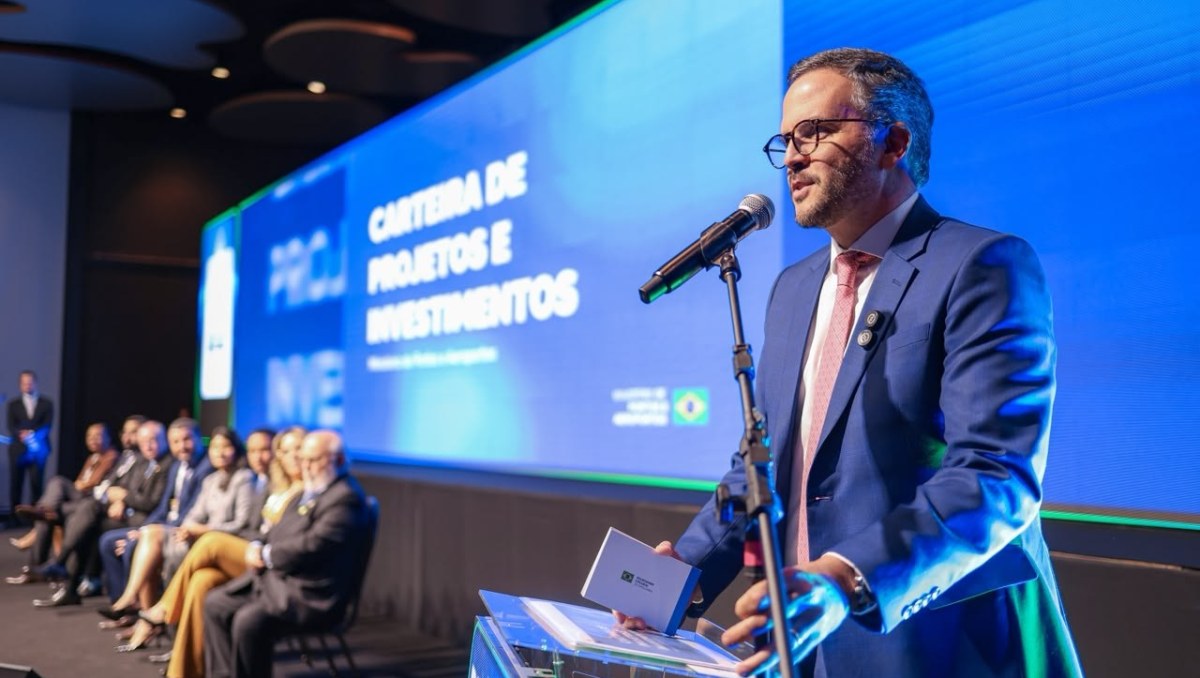
SANTOS (SP) – With one of the most respected careers in the Brazilian port sector, Mário Povia brought to ENIP 2026 a comprehensive analysis of the challenges and opportunities facing national ports amid transformations in global maritime trade.
During his participation, Povia emphasized that Brazil is at a strategic moment to consolidate its position as one of the world's leading exporters of agricultural commodities, minerals and industrialized products. To achieve this, according to him, it will be necessary to advance on topics such as port governance, regulatory certainty and expansion of operational capacity in terminals.
The specialist recalled that cargo movement in Brazilian ports continues to grow above historical average, driven mainly by agribusiness. This scenario demands continuous investment in dredging, land access, technology and expansion of operational areas.
Povia also highlighted that competition between ports is no longer merely regional but has become global. In his assessment, Brazilian operators compete for cargo and investment with major port complexes in Asia, Europe and North America.


Another point addressed was the need to accelerate licensing processes, modernize regulatory frameworks and create an even more favorable environment for private investment. According to him, legal predictability is one of the factors most closely observed by international investors interested in port projects.
When speaking specifically about Santos, Povia classified the complex as one of the main logistical assets in Latin America, but warned that sustainable growth will depend on the execution of structural works and integration among the various actors involved in the logistics chain.
The presentation reinforced the view that the future of Brazilian ports will depend not only on physical infrastructure, but also on efficient management and strategic planning.
```