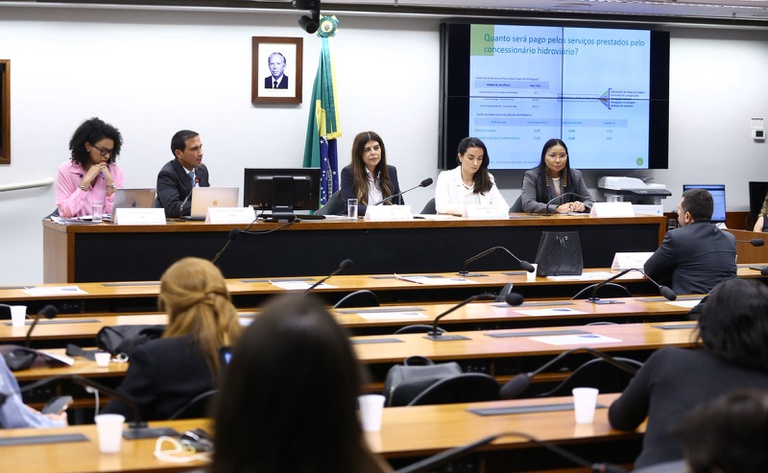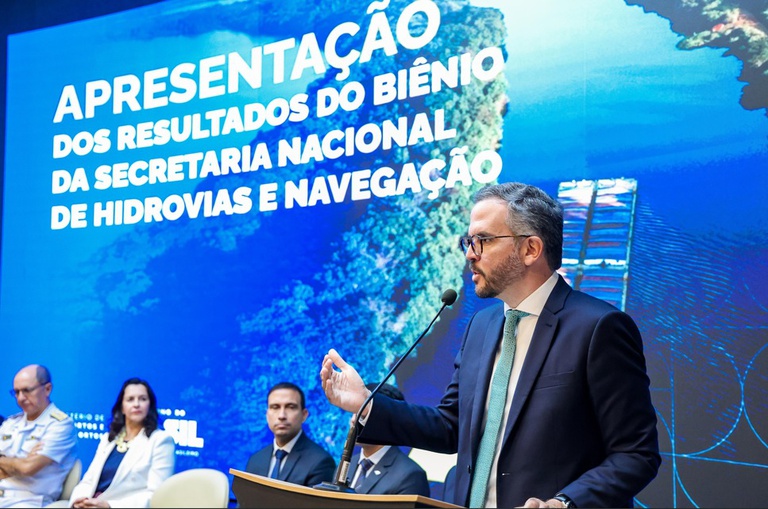
The Minister of Ports and Airports, Tomé Franca, presented on Thursday (21st), in Brasília, a summary of the main actions of the National Secretariat of Inland Waterways and Navigation (SNHN), which is completing two years of operations. During the event, data were presented on the growth of inland waterway transport and cabotage, infrastructure investments, dredging and rock removal works, expansion of river terminals, modernization of locks and advances in the Merchant Marine Fund (FMM).
Also highlighted were waterway concession projects, as well as initiatives aimed at decarbonizing aquatic transport and strengthening the Brazilian shipbuilding industry.
Tomé Franca emphasized the advances achieved by inland waterway policy over the past two years and the secretariat's role in the sector's comeback. "In these two years, we have done more for inland waterways than has been done in all of Brazil's history. This is reason for recognition of the priority given to this agenda, but mainly for the work of all those who work in the National Secretariat of Inland Waterways and Navigation," he stated.
The national secretary of Inland Waterways and Navigation, Otto Burlier, noted that a significant portion of the secretariat's actions is aimed at improving inland waterway passenger transport, especially in regions most dependent on inland waterways. "This is an important initiative to improve the quality of transport offered to the population that depends most on inland waterways in Brazil," he stated.
Inland waterway infrastructure
Overall, the sector registered growth of 12.4% in inland waterway transport, in addition to increased infrastructure investments and progress in the portfolio of strategic projects focused on inland navigation and cabotage.
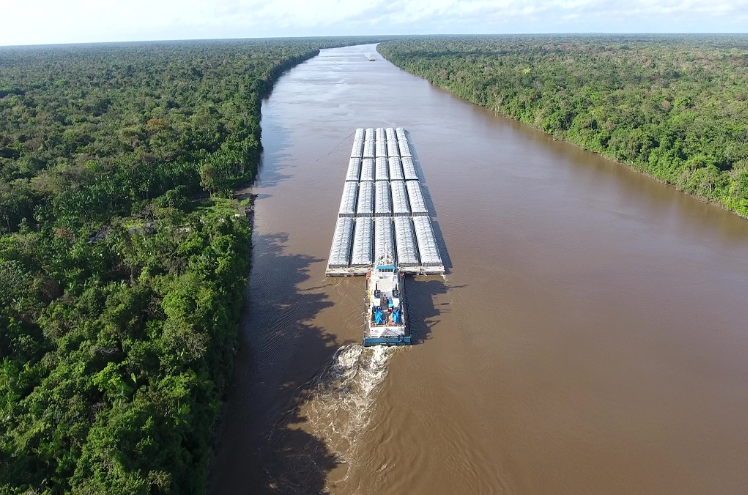
The data presented show that transport on inland waterways moved 145 million tons of cargo in 2025. Cabotage, in turn, transported 223 million tons in the country, consolidating inland navigation as a strategic logistics alternative for national development.
In the area of inland waterway infrastructure, investments increased from R$ 716 million between 2019 and 2022 to R$ 1.5 billion between 2023 and 2026. In this year alone, the Annual Budget Law (LOA) provides for more than R$ 540 million allocated to the sector, covering dredging works in the Amazon, Madeira and Solimões rivers, as well as the operation and maintenance of locks in different Brazilian states.
Ongoing projects


Among the main ongoing projects are the rock removal works of Pedral do Lourenço on the Tocantins River (PA) and Nova Avanhandava on the Tietê River (SP), considered fundamental to expand navigability and increase the efficiency of national inland waterway transport.
Another highlight is the expansion of the Manaus Inland Waterway Terminal (Manaus Moderna), a project with a forecast investment of R$ 876 million and aimed at modernizing the loading and unloading infrastructure for inland navigation in the Amazon.
The secretariat's strategic agenda also provides for the advancement of inland waterway concessions of the Paraguay, Madeira, Tocantins, Tapajós and Lagoa Mirim rivers, with auctions scheduled for the first half of 2027. The projects are expected to enhance logistics competitiveness, reduce operational costs and stimulate decarbonization of aquatic transport.
Cabotage and shipbuilding industry
In cabotage (between Brazilian ports), the advances of the BR do Mar program, regulated in 2025, already register the entry of five new companies and 15 new vessels in operation.
The Merchant Marine Fund (FMM) also showed significant growth in the current cycle. Approved values increased from R$ 22.8 billion between 2019 and 2022 to R$ 88.1 billion between 2023 and 2026. Signed contracts grew from R$ 1.6 billion to R$ 14.3 billion in the same period. Overall, 833 projects were contracted, generating more than 48,000 jobs across the country.
"We are working continuously to make progress and overcome bottlenecks that still hinder sector development, especially in access to financing through the Merchant Marine Fund. We also seek to expand the reach of these resources to Northern Brazil, mainly for companies that face difficulties in offering the guarantees required by the financial system," Otto Burlier concluded.
The event also featured the participation of the acting executive secretary of the MPor (Ministry of Ports and Airports), Helena Venceslau; the director general of Navigation of the Brazilian Navy, Silvio Luís; the director general of the National Agency for Aquatic Transport (Antaq), Frederico Dias; the director of the National Department of Transport Infrastructure (Dnit), Edme Tavares; and the director of Institutional Relations of the National Confederation of Transport (CNT), Valter de Souza.
```