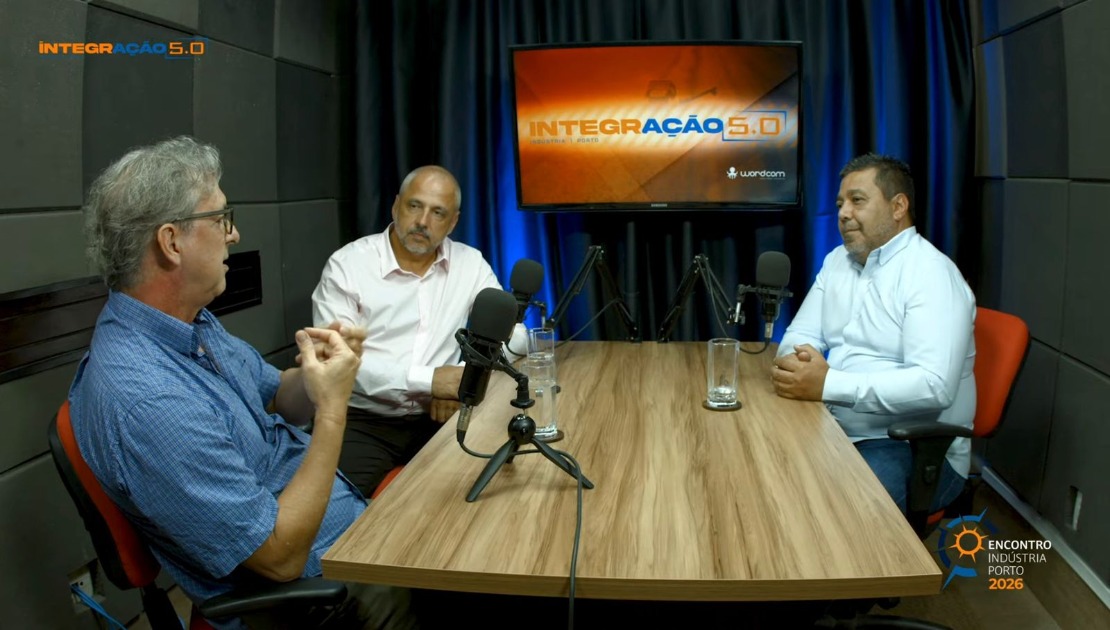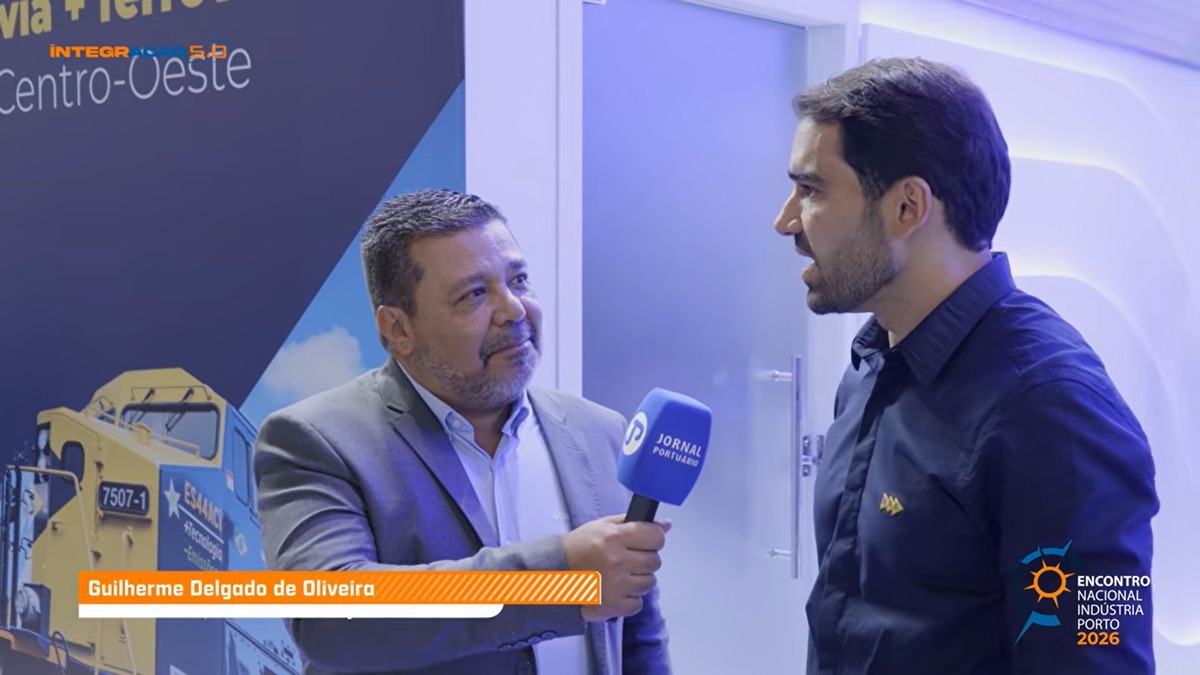
In an interview granted to Jornal Portuário, today on the Programa Integração 5.0, during special coverage of Intermodal 2026, MRS representative Guilherme Delgado detailed the progress of an important multimodal corridor that has been transforming national logistics.
According to him, the integration between road, waterway, and rail modes represents a leap in efficiency for the country, especially for the transportation of agricultural production from the Midwest.
The operation begins in São Simão, in southern Goiás, where cargo arrives by truck. It is then loaded onto the Tietê-Paraná waterway and subsequently transferred to rail, continuing to Santos Port.
According to the company, the solution already demonstrates significant impact on the sector's ESG agenda, with an estimated 70% reduction in CO2 emissions compared to direct road transport.
Beyond the environmental benefit, the initiative significantly reduces the so-called Brazil cost, enhancing the competitiveness of Brazilian commodities in the international market.


During the interview, MRS also noted that the first stage of the project already foresees 2.3 million tons handled, with investments in rail expansion in the Baixada Santista region and improvements in the descent to Santos.
The sector's expectation is that the project will become one of the main strategic routes for agribusiness in the coming years.
Sources linked to the sector indicate that new rail capacity expansions to Santos may be announced in the second half of the year.
```