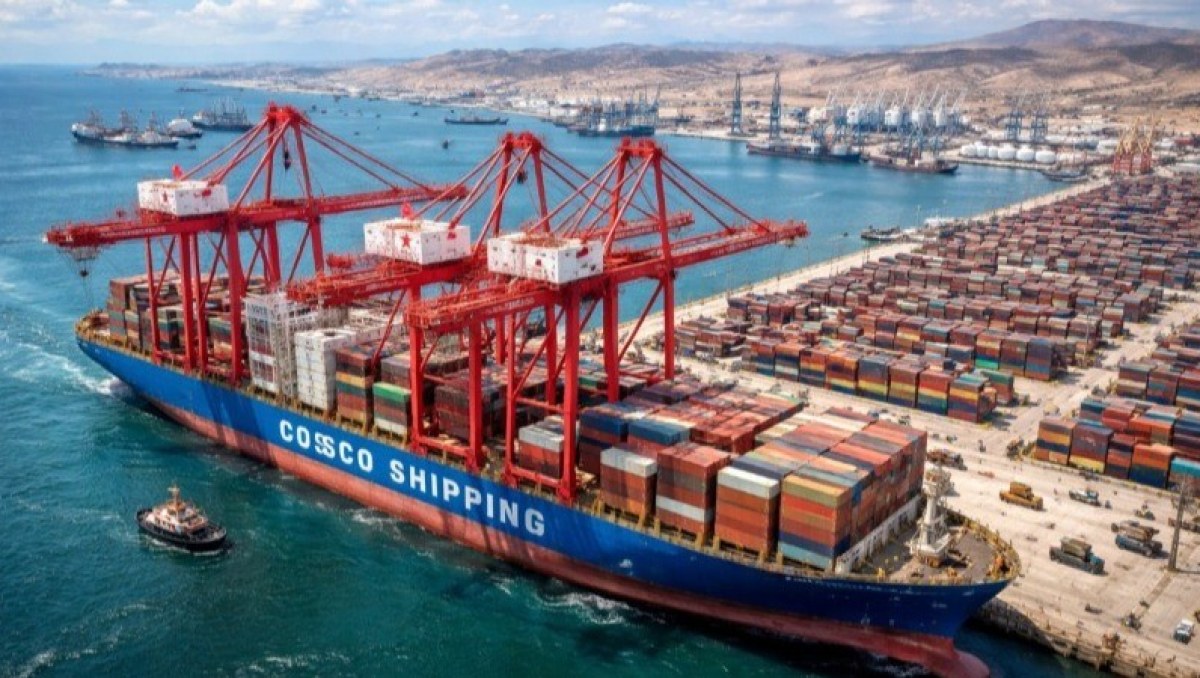
Something fascinating is happening in South America. No, it's not a new Brazilian logistics plan, nor a leap in efficiency at our ports. It's the opposite. While we keep discussing projects, reviewing studies, litigating decisions and organizing seminars on competitiveness, Peru decided… to build a port.
And even more curious: it's already operational. Chancay Port, majority-controlled by Chinese giant COSCO Shipping, which holds 60% of the project in partnership with Peruvian Volcan, emerges with a strategic profile within the global initiative known as the New Silk Road.
There is a Chinese message to the world that this undertaking is not merely another port terminal. It is one of those messages that does not arrive in the form of an official document, but in the form of a ship berthed, operations initiated and cargo loaded. And what is most striking is not the grandeur of the project. It is the simplicity of the logic.
If Asia is the destination, why keep shipping via the Atlantic? While that question echoed, apparently ignored here, in Tupi-Guarani lands, someone decided to answer it in practice.
And thus a new route is born. Not announced in grand national speeches, not debated in depth in endless forums, but absolutely real.
A shorter, more efficient route and, as always happens in such cases, more dangerous for those who stood still. Travel time has dropped. Costs too. And predictability, that almost exotic word in Brazilian logistics vocabulary, became a competitive advantage.
But wait. We still have some advantages. We have bureaucracy. We have legal uncertainty. We have projects that "are moving forward," an expression that in Brazil can mean anything between getting off the drawing board or staying exactly where it has always been.


Meanwhile, cargo begins to look at the map with a certain sense of independence. And the map, let's face it, doesn't lie. For the Central-West producer, the calculation is straightforward.
If it's cheaper and faster to cross the border, reach the Pacific and ship directly to Shanghai, the choice stops being ideological and becomes mathematical. And against mathematics, discourse loses.
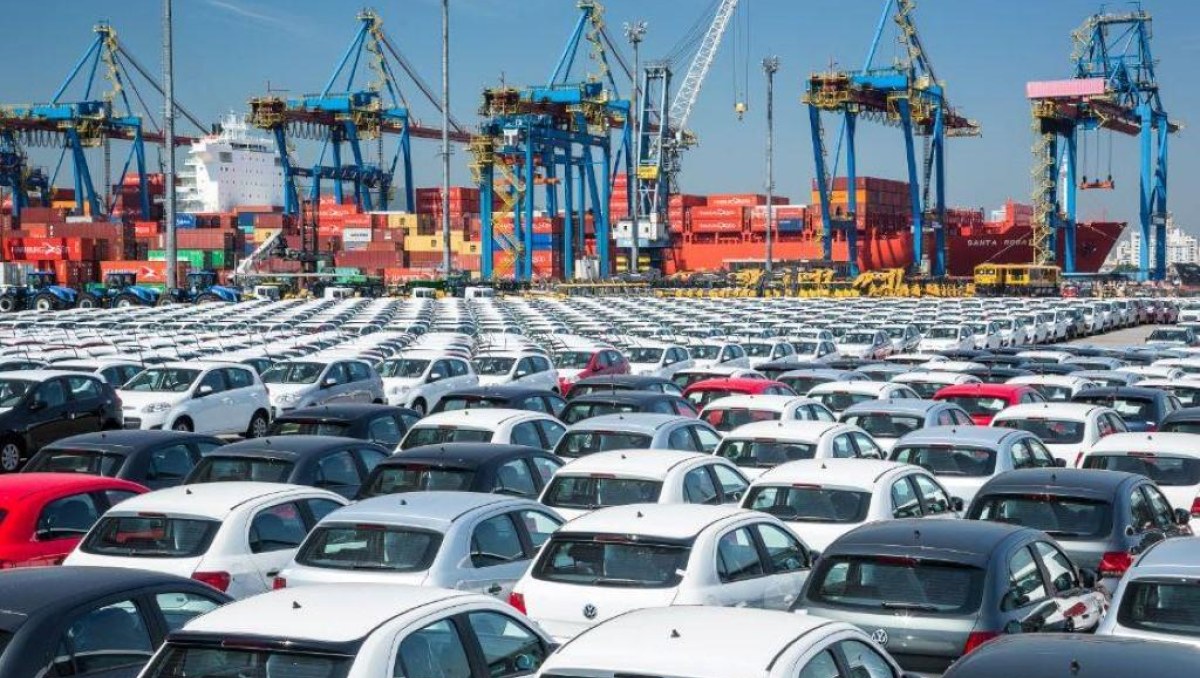
Brazilian ports, such as Santos Port, remain giants. But size alone was never a guarantee of efficiency. Dinosaurs were big too. The difference is that in this case, the meteorite doesn't come from space. It comes from the Pacific.
And it goes by the name of Chancay. Of course, challenges remain. Onshore infrastructure is not yet fully ready, logistics corridors need to mature and regional integration still depends on investments.
But here comes another bothersome detail: they are solving it. And us, well… we are watching. Perhaps the greatest risk is not losing cargo immediately. It is losing relevance gradually, in silence, without noticing. When we realize it, it won't be a crisis. It will just be the new normal.
The route is already being created. Not in PowerPoint, but in concrete, action and executed decisions. And all of this happening, ironically, right before our eyes.
But rest assured. Soon we should have a bilateral working agreement to discuss the matter.