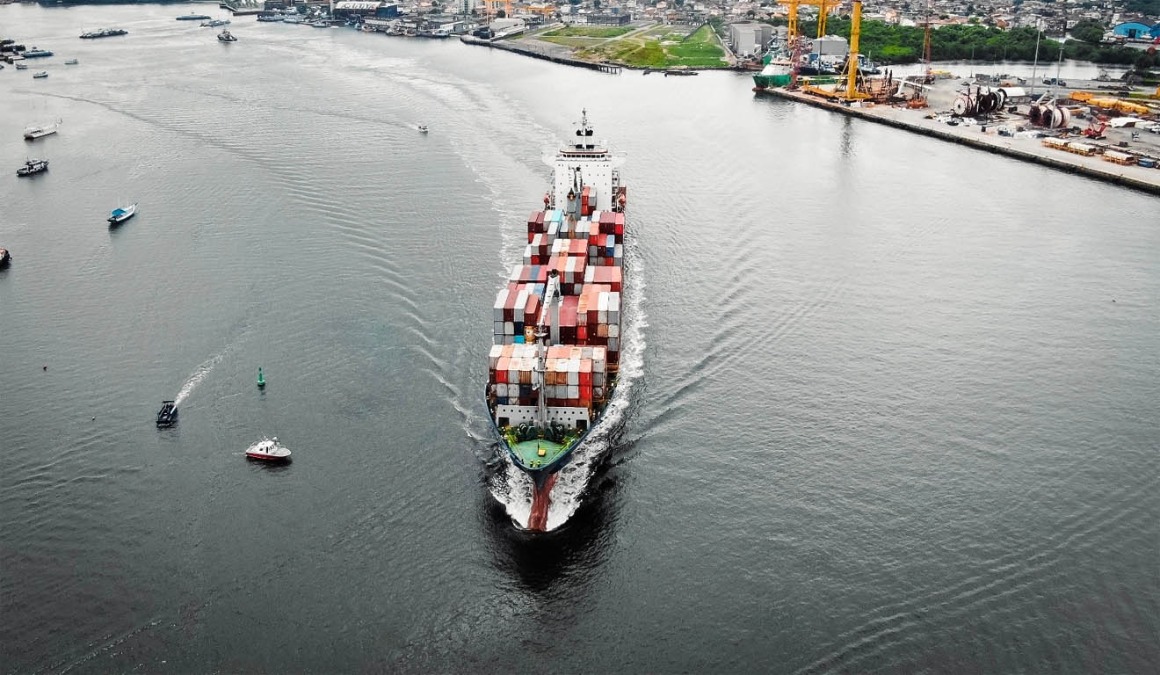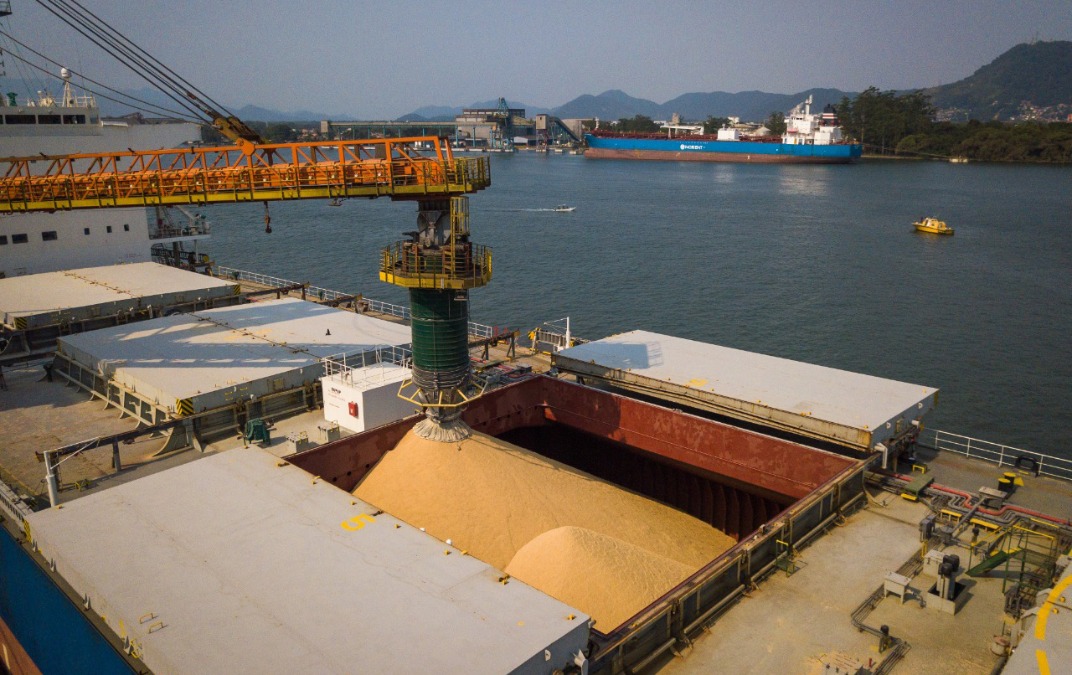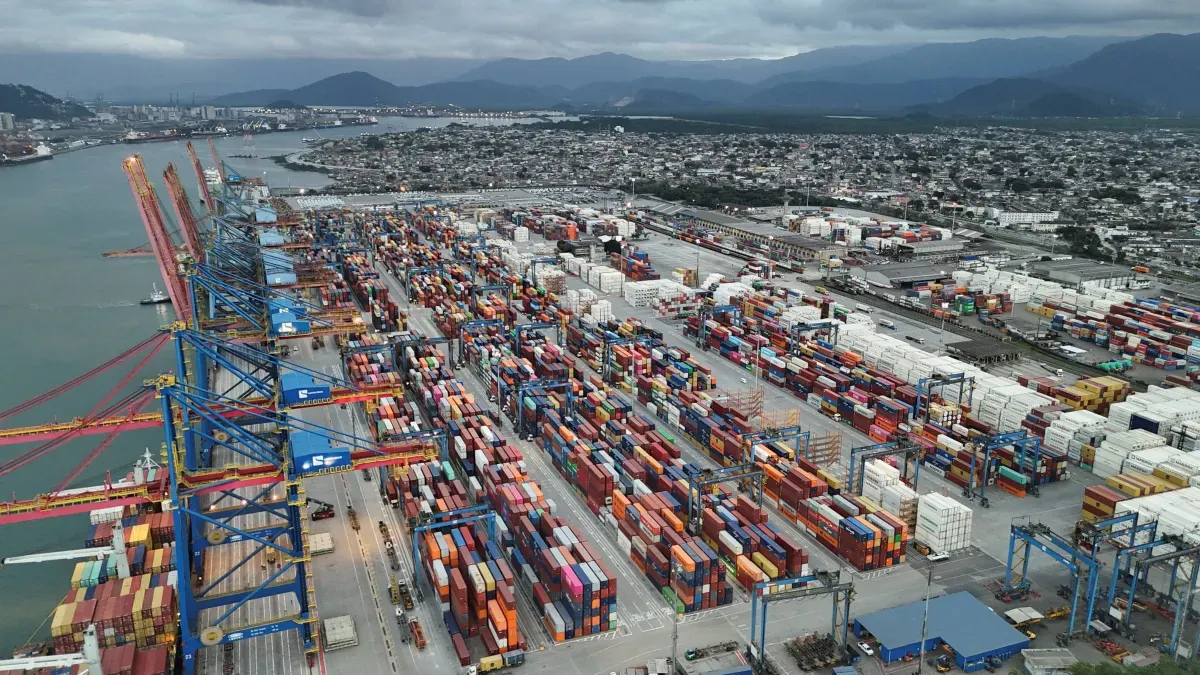
Container movement at the Port of Santos (SP) is operating increasingly closer to its limit and has raised alarms among specialists, who point to rising logistics costs in Latin America's largest port complex.
Data presented to CNN by consultant Luis Cláudio Montenegro, from Neowise Consultoria, shows that the increase in ship queues has nearly quintupled the average THC value (fee charged for container handling at terminals).
According to the consultancy's survey, between 2019 and 2026, this value rose from US$ 70 to US$ 100 per TEU (standard 20-foot container) to around US$ 500.
Meanwhile, the auction for Tecon Santos 10 continues awaiting a final decision. The government has postponed the bidding at least eight times.
The new container megaterminal is expected to attract nearly R$ 6 billion in investments and expand container handling capacity at the port by 50%.
Montenegro notes that the figures presented are estimates, since contracts between shipowners (shipping companies) and terminals are considered strategic in nature and are not publicly disclosed.
According to the consultant, price behavior tracks directly with the port's installed capacity.
In 2011, THC hovered around US$ 300, but fell in subsequent years with the start of operations of BTP and DP World at the Port of Santos in 2013.
The two terminals expanded the complex's capacity. "These terminals came in and the price plummeted. It was US$ 300 in 2011, fell to US$ 160 in 2015, went to US$ 90 in 2017 and reached US$ 70 in 2019," he stated.
In Montenegro's assessment, who provides services to Swiss giant MSC, from 2019 onwards the terminals returned to operating near capacity, driven mainly by growing demand and e-commerce.
Currently, according to him, the three container terminals in the port complex - Santos Brasil, BTP and DP World - are congested.
On the other hand, port terminals argue that the logistics problems that increase port service costs, such as THC, are mainly explained by bottlenecks in the land access infrastructure to ports.
"We have bottlenecks, but we also have the opportunity to face them head-on and make the necessary investments. The bottlenecks are less within the port and more in infrastructure, especially land access," says Jesualdo Silva, executive director of ABTP (Brazilian Association of Port Terminals).
While acknowledging that some ports are on the brink of operational saturation, he states that there are other idle port terminals. For him, there is an opportunity for the government to advance public policies on diversifying transport modes, such as greater use of inland waterways.
"We have some concentration in these more sought-after ports, like Santos, Paranaguá and other southern ports. But while we have this bottleneck, there are several terminals being built [to address these problems]."


Increase in ship queues
The survey also shows that the average waiting time for berthing at the Port of Santos jumped from eight to nine hours in 2019 to around 35 hours in 2024, precisely due to saturation at the port.
In a statement, APS (Santos Port Authority) confirmed to CNN the increase in ship waiting time for berthing. However, the port's manager stressed that "from 2019 to 2025 there was a 42% increase in container movement at the Port of Santos, which indeed pressures the installed infrastructure".
In recent years, container movement in Brazil has set records with growth above the global average. Furthermore, this type of cargo has recently changed its profile.
According to a study by Antaq (National Agency for Land Transport), shipowners operating in Brazil have omitted port calls - a practice that occurs when a ship cancels a scheduled stop at a specific port and proceeds to the next one.
The survey also points out that shipowners delay cargo deliveries and fail to disclose information about window availability - the time slot scheduled for a ship to berth at the terminal, perform loading or unloading operations, and vacate the berth.
The justification used for these omissions is that port terminals focused on container handling are operating beyond capacity, which creates problems for ship operations.
Loss of competitiveness
The consultant warns that if the scenario persists, Brazil may lose competitiveness on international maritime routes. According to him, shipowners may stop calling larger vessels at Brazilian ports.
"If this continues at this pace, Brazil will no longer receive large ships. And smaller ships have higher freight rates," said Montenegro.
``` ```htmlIn recent years the sector has been betting on the deployment of Tecon Santos 10 as one of the main alternatives to reduce congestion at the port.
However, APS stated that, beyond this terminal, it is working on other logistics options to attract shipowners and avoid congestion, such as deepening the waterway access channel to 16 meters and optimizing storage yards.
The port authority also reported that it has allocated three areas for the installation of logistics condominiums, which, according to APS, can improve efficiency between the backland and the port terminals.
*This publication was generated from information in the original feed. Credits and source reference have been included at the end of the text.
Source: https://www.cnnbrasil.com.br/blogs/jenifer-ribeiro/infra/perto-do-esgotamento-santos-ve-quintuplicar-custo-para-conteineres/
```