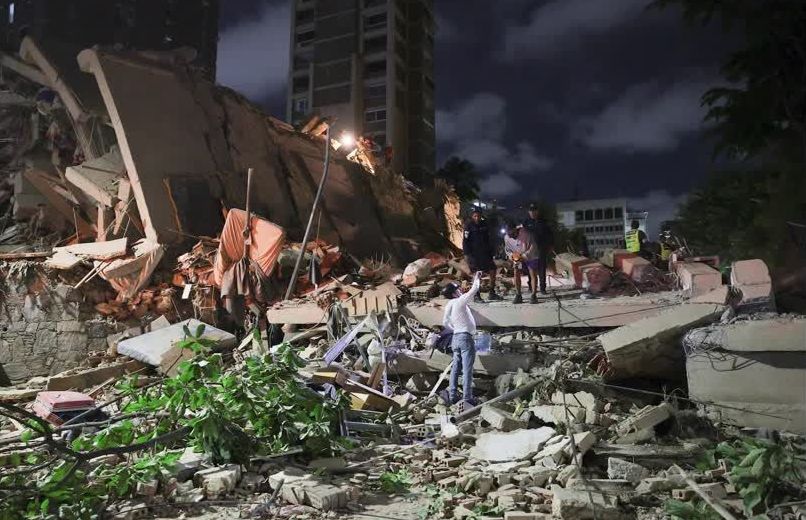
Three major earthquakes struck different parts of the world on Wednesday: one measuring 6.9 magnitude in Japan, two in Venezuela — measuring 7.5 and 7.2 magnitude — and another measuring 5.6 magnitude in California, United States. The coincidence raises a question: are the events related? The answer is no, according to Caltech seismologist Dr. Lucy Jones. Read more Venezuela's President Delcy calls for "unity" for country to cope with earthquakes U.S. Embassy in Venezuela issues alert to Americans after earthquakes Over 500 agents work in rescue operations in earthquake rubble in Venezuela The earthquakes occurred in distinct fault systems and tectonic plate boundaries, which means one did not trigger the others. Jones explains that major tremors separated by thousands of kilometers of distance generally do not increase the probability of another major earthquake in a different region. The coincidence lies in the date, not in the origin. Each earthquake occurred in areas known for intense seismic activity, where tension between tectonic plates has been accumulating for decades or even centuries. According to the expert, major earthquakes are part of the natural geological cycle of these regions, although it is still not possible to predict exactly when they will occur.