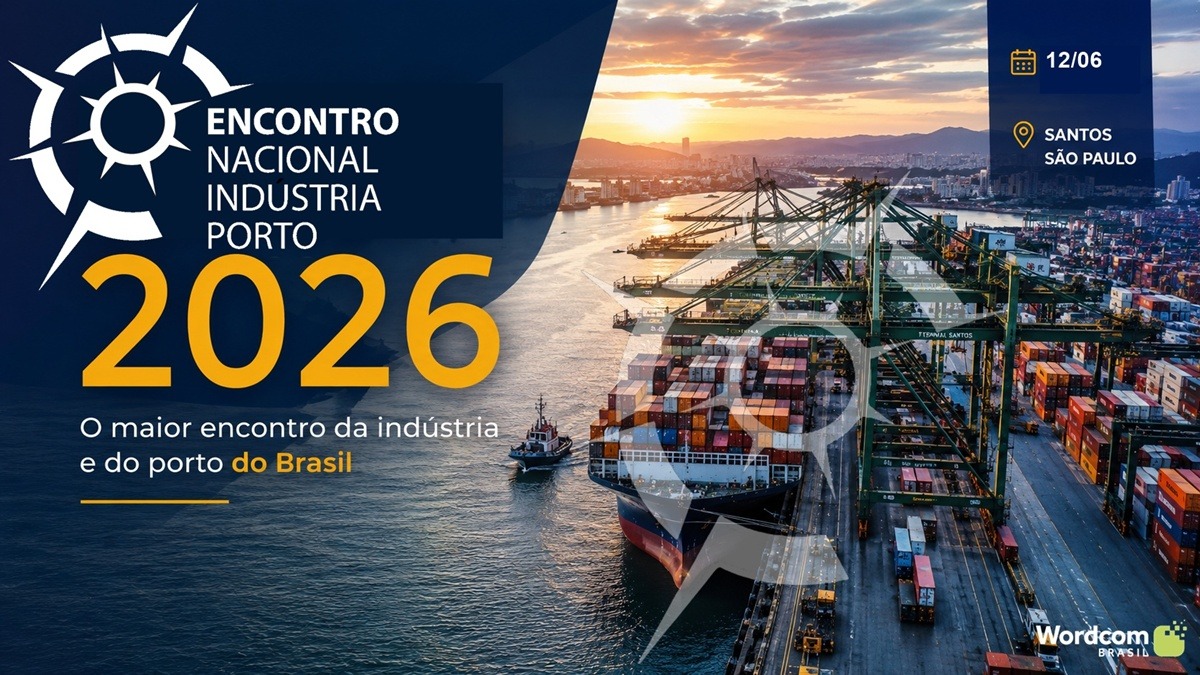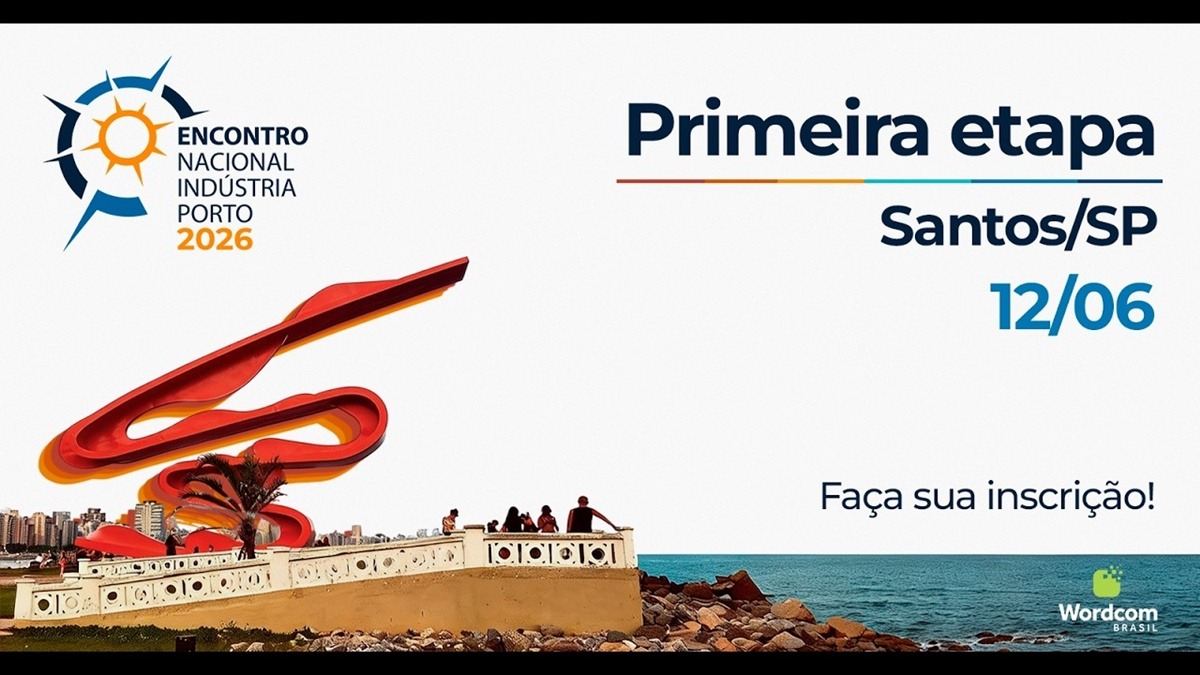
Santos resumed a prominent position on the national stage by hosting, on June 12, the first stage of the National Industry-Port Meeting (ENIP) 2026. The event brought together authorities, executives, specialists and representatives of the port community to debate solutions aimed at strengthening the integration between industry, ports and Brazilian logistics infrastructure.
With special coverage by Jornal Portuário and Band, the meeting established itself as an important forum for building proposals aimed at increasing the country's competitiveness and preparing the sector for the challenges of the coming decades.
Throughout the program, participants highlighted the relevance of the Port of Santos as the main link between national production and the international market. Responsible for moving a large portion of Brazil's trade balance, the Santos complex was pointed out as a key piece for economic growth and expansion of Brazilian exports.
Among the main topics discussed was the need to accelerate infrastructure investments. Strategic projects such as the Santos-Guarujá Tunnel and the Tecon Santos 10 Terminal (STS10) were presented as fundamental initiatives to expand the port's operational capacity, reduce logistics bottlenecks and ensure greater efficiency in cargo transport.
Another highlight was the advocacy for a State policy for the infrastructure sector. Speakers emphasized the importance of ensuring legal predictability, regulatory security and continuity of investments, regardless of changes in government. According to participants, only with long-term planning will it be possible to meet the growing demand from industry and foreign trade.


Technological innovation also gained space in the debates. Specialists highlighted the use of artificial intelligence, data analysis and digitalization of processes as tools capable of increasing operational efficiency and promoting greater integration between different transport modes.
Agendas linked to sustainability and ESG practices were also present during the meeting. Decarbonization of port operations, use of cleaner energy sources and the pursuit of environmentally responsible processes were pointed out as essential factors for maintaining the competitiveness of the Port of Santos on the global stage.
Another consensus among participants was the need to expand integration between the municipalities of the Baixada Santista region and the port complex. Modernization of urban infrastructure, improvement of road and rail access and strengthening of regional governance were presented as indispensable elements for port growth to generate benefits for the entire region.
The Santos stage of ENIP 2026 reaffirmed the importance of cooperation between the public sector and private initiative to build solutions that drive Brazilian economic development. By bringing together different agents of the logistics and industrial chain, the meeting established itself as one of the main forums for discussion about the future of ports and national infrastructure.
```