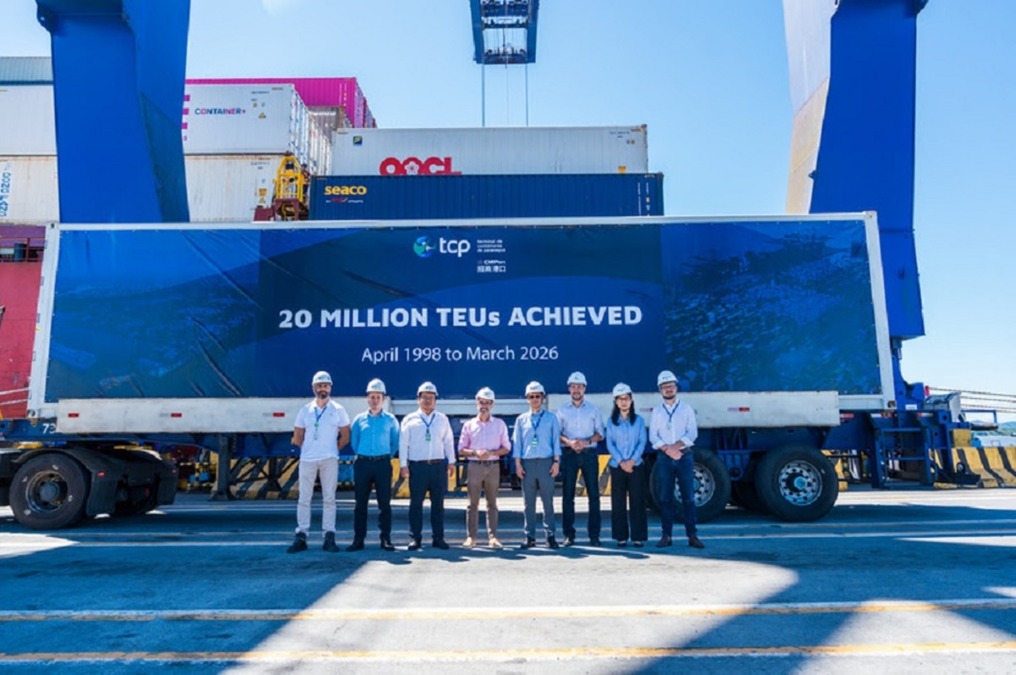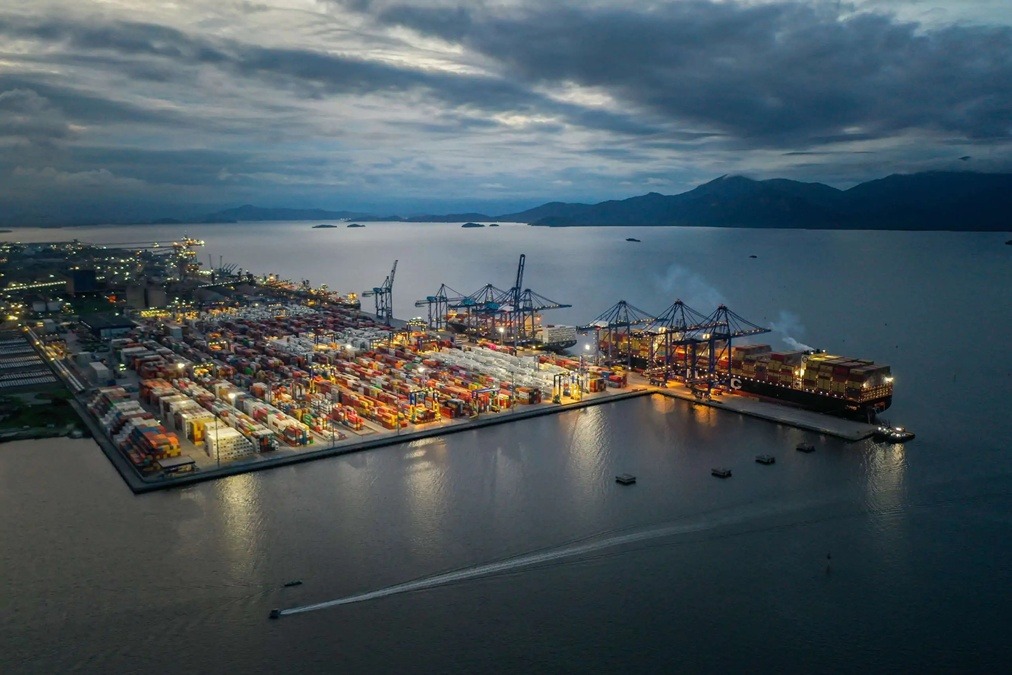
Paranaguá Container Terminal (TCP) has reached a new operational milestone in the first half of 2026. The terminal handled 835,000 TEUs between January and June, establishing the largest volume ever recorded for the period since the terminal began operations. The result represents growth of 4% compared to the 803,000 TEUs handled in the same period of 2025.
The performance reinforces the strategic position of Paranaguá Port in Brazilian foreign trade, especially in supply chains for agro-industrial product exports, refrigerated cargo, and manufactured goods.
Exports drive growth
According to TCP, the advance was sustained mainly by increased movement of full containers, in both exports and imports.
Shipments registered growth of 10%, rising from 3.816 million tonnes to 4.180 million tonnes. Discharges advanced 9%, moving from 1.503 million tonnes to 1.635 million tonnes in the year-on-year comparison.
Among the segments that contributed most to the result are:
- Meat and frozen products: exports of 2.031 million tonnes, growth of 16%;
- Pulp and paper: increase of 9% in shipments;
- Automotive sector: standout in imports, with advance of 8%;
- Consumer goods: growth of 10% in imports.
Record in refrigerated cargo
One of the semester's main highlights was the operation of refrigerated containers (reefer), a segment considered strategic for Brazilian agribusiness.
TCP surpassed for the first time the mark of 70,000 refrigerated containers handled in a semester, consolidating Paranaguá as one of the main logistics corridors for exporting animal proteins and frozen products.
The specialized structure for refrigerated cargo is a competitive differentiator for the terminal, especially for serving international markets with strict requirements for temperature control and traceability.


Infrastructure and competitiveness
The result occurs in a scenario of strong competition among Brazil's main ports for attracting containerized cargo.
For industry experts, TCP's growth demonstrates the importance of continuous investments in infrastructure, operational technology, and logistics integration to increase the efficiency of Brazilian terminals.
The ability to handle large volumes, offer regular maritime connections, and ensure operational efficiency has become a decisive factor for exporters and importers in choosing ports.
Paranaguá expands its role in foreign trade
TCP's performance reinforces the role of the Paraná port complex as one of the main gateways for Brazilian products destined for the international market.
With strong presence of agribusiness, automotive industry, and manufacturing sectors, the terminal continues to expand its share in national container movement.
The new record of 835,000 TEUs in the first half of 2026 shows that Brazilian port competition continues to expand and that investments in capacity, technology, and operational efficiency will be increasingly decisive in defining industry leaders.
```