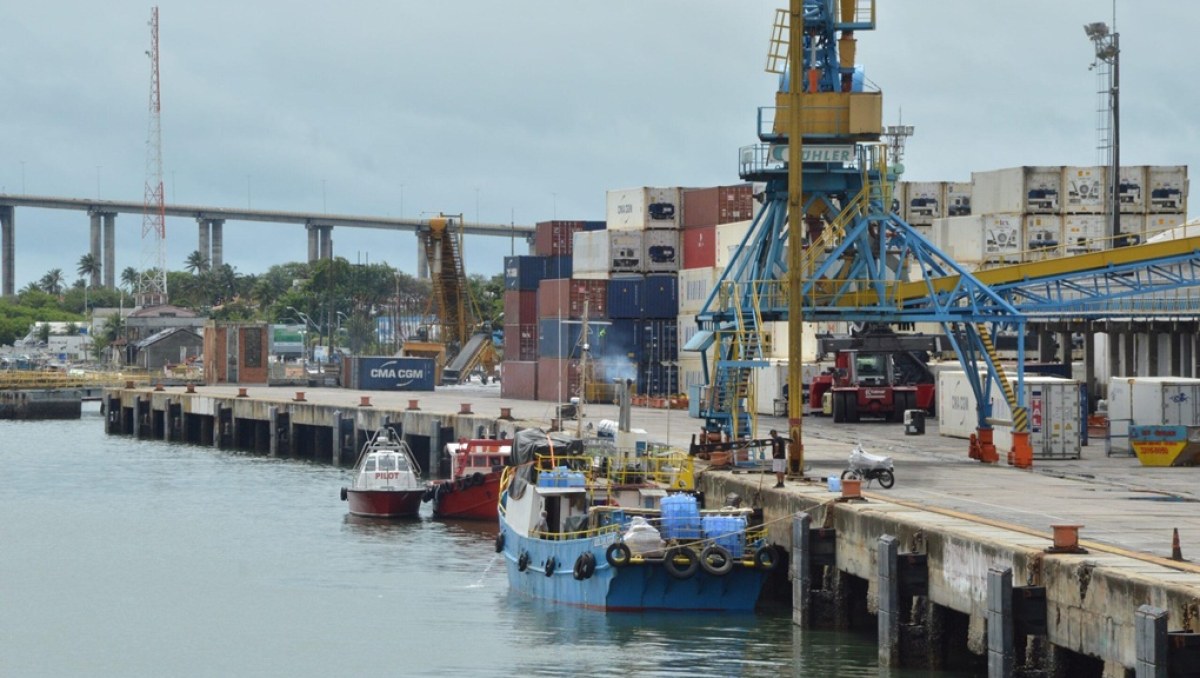
NATAL/RN – Port workers at Companhia Docas do Rio Grande do Norte (CODERN) are preparing a mobilization for next Wednesday, September 16, in front of Natal Port. The demonstration aims to draw attention to a series of labor and safety claims presented by the category, as well as questions about the company's use of public resources.
Among the main points raised by workers are compliance with a collective agreement signed previously, payment of a hazard allowance and the outsourcing policy adopted by the company.
The mobilization occurs at a time of dissatisfaction among the category with labor relations management within the company. According to worker representatives, rights provided for in collective instruments continue to be not fully observed.
Disagreement over minimum wage
One of the main claims is related to the Collective Labor Agreement (ACT) 2021/2023.
According to the workers, the understanding reached during that period provided for a recomposition of R$ 500 in the minimum wage. The category claims that, if the agreement were applied according to their interpretation, the base salary should reach R$ 1,802.75, while it is currently at R$ 1,548.53.
The difference, according to the workers, represents one of the main reasons for the mobilization.
The category is demanding from CODERN's current administration a position on compliance with the agreement and the regularization of the amounts it believes are owed.
Hazard allowance at the center of the mobilization
Another point of strong concern involves payment of a hazard allowance to workers performing operational activities in the port area.
Workers question the use of a Technical Report on Environmental Work Conditions (LTCAT) to justify the non-granting of the allowance to certain employees working near the dock.
In the assessment of category representatives, the working conditions at the site would justify a new review of the classification of activities and the application of safety standards.
Workers also cite NR-16, which establishes criteria related to hazardous activities and operations, and argue that functions performed in areas considered risky should be evaluated according to the actual characteristics of the work performed.
The category also questions the fact that the allowance is paid to professionals linked to workplace safety, while workers directly involved in port operations, according to them, do not receive the same benefit.
The issue is expected to be one of the central points of the protest.


Outsourcing is also a target of criticism
The policy of hiring outsourced services is another element that motivated the mobilization.
Workers criticize the possibility of hiring an outsourced fire brigade, arguing that the company could prioritize valuing and training its own staff.
For the category, the measure represents a questionable use of public resources and may contribute to reducing the participation of permanent employees in activities considered strategic for port operations.
The discussion, therefore, goes beyond the labor issue and also involves the management model adopted by the company.
Safety at Natal Port
Concern with safety gains additional weight given the history of accidents mentioned by workers.
For the category, it is not enough to discuss wages or benefits when there are employees exposed daily to port operations that involve risks inherent to cargo handling, equipment and vessels.
Representatives argue that the actual conditions found at the dock should be considered in safety assessments and in decisions related to remuneration of workers exposed to hazardous activities.
Category promises mobilization
``` ```htmlThe demonstration is expected to bring together workers in front of Natal Port and aims to pressure CODERN management for answers to the workers' demands.
In a statement released by representatives of the mobilization, the workers' category states that it does not intend to accept what it considers breach of labor commitments and exposure to risks without the corresponding protection and compensation provided for by law.
The movement also intends to put into discussion the management of public resources and the choice for outsourcing certain activities.
Jornal Portuário is monitoring the mobilization and the developments of the demands presented by the workers.
```