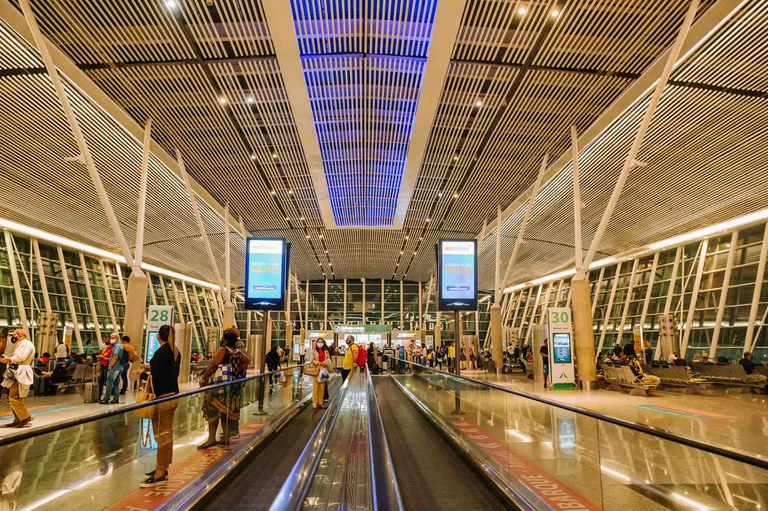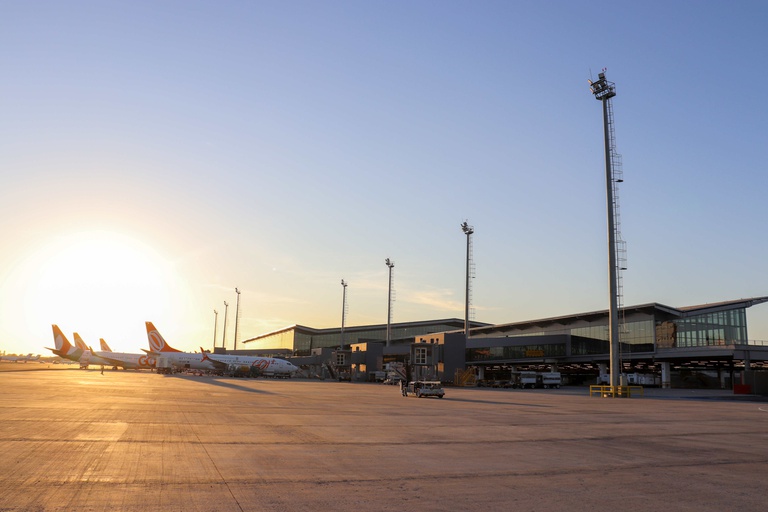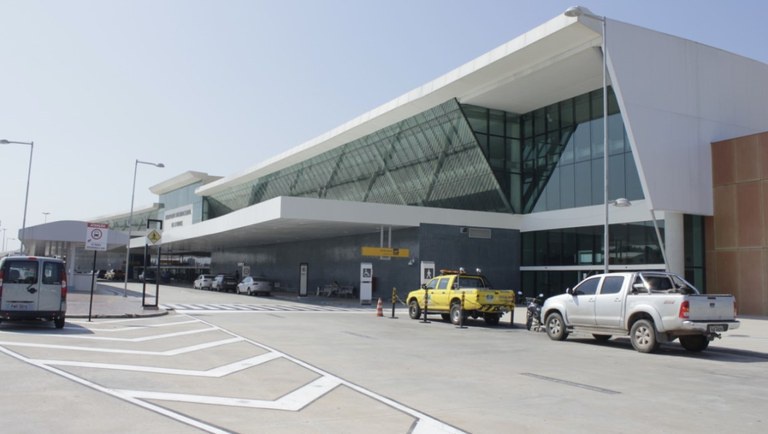
With 332,520 passengers recorded in January 2026, Belém Airport led air traffic in the North Region and remained one of the main connection hubs for regional aviation. The data appear in the Demand and Supply Report by the National Civil Aviation Agency (Anac). Following in sequence is Manaus Airport (AM), with 271,703 passengers, equivalent to 28.3% of the traffic analyzed. Also notable are the airports in Palmas (TO), with 62,767 passengers, Macapá (AP), with 50,903, and Porto Velho (RO), with 49,552, which complete the group of the region's main terminals by volume of travelers.
In comparison with the same period in 2025, the figures indicate growth in air demand. Belém Airport went from 316,791 passengers to 332,520, registering growth of 4.9%. Manaus, in turn, showed an increase of 1.8%, rising from 266,863 to 271,703 passengers in the same interval, reinforcing the trend of strengthening the regional air network.
The Pará capital also leads in number of operations. There were 2,559 takeoffs recorded in the month, which represents 31.14% of the total analyzed. Manaus comes next, with 2,424 flights (29.50%), consolidating the two airports as the main connectivity hubs of the North Region. Palmas appears with 490 takeoffs (5.96%), Porto Velho with 345 (4.20%), Macapá with 341 (4.15%), and Santarém with 340 flights (4.14%). The survey also includes Rio Branco (246 takeoffs; 2.99%), Marabá (243; 2.96%), Parauapebas (210; 2.56%), and Boa Vista (189; 2.30%), highlighting the strategic role of the region in the dynamics of domestic air transport and territorial integration of the country.
"Regional aviation plays an essential role in integrating the Amazon and in the development of cities in the North of the country. For this reason, the Federal Government has prioritized investments in infrastructure, technology, and operational safety, ensuring better conditions for airports and expanding the region's connectivity with the rest of Brazil," stressed the Minister of Ports and Airports, Silvio Costa Filho.
"Regional aviation plays an essential role in integrating the Amazon and in the development of cities in the North of the country"
Silvio Costa Filho
In the breakdown by inter-regional flow, the largest movement occurred on the Southeast–North route, with 188,387 passengers, equivalent to 39.01% of the total. Next come flights within the North Region itself, which totaled 145,196 passengers (30.07%), highlighting the importance of aviation for internal mobility in an area marked by vast distances and logistical challenges. Connections between North and Center-West recorded 98,172 passengers (20.33%), while North–Northeast routes accounted for 50,883 passengers (10.54%).


Beyond passenger transport, cargo movement also stands out. In January, Manaus Airport led the ranking with 7.16 million kilos transported, equivalent to 70.17% of the share among the region's main airports. Next are Belém, with 1.87 million kilos (18.36%), and Macapá, with 195.2 thousand kilos (1.91%). Also notable are Palmas (184.5 thousand kg), Santarém (160.5 thousand kg), and Porto Velho (158.7 thousand kg), forming a set of terminals that sustain regional air logistics.
Investments
Growth in aviation in the North Region accompanies investments in airport infrastructure conducted by the Ministry of Ports and Airports. For the 2026–2027 cycle, R$ 672.4 million are planned for works, studies, and improvements at ten airports in the region. The interventions include modernization of terminals, installation of safety equipment, and operational adjustments in cities in the Amazon Region, with the aim of expanding air connectivity and strengthening regional integration.
Among recent initiatives is the installation of an Automated High-Altitude Weather Station (EMA-A) at Barcelos airport in Amazonas. The equipment received an investment of R$ 4.8 million and is part of a portfolio of projects aimed at strengthening safety and efficiency in air operations at regional airports.
The actions are part of the Federal Government's strategy to expand airport infrastructure in remote areas of the Amazon, where air transport is essential for population mobility, tourism development, and economic integration of the region with the rest of the country.
Source: https://www.gov.br/portos-e-aeroportos/pt-br/assuntos/noticias/2026/03/belem-pa-concentra-maior-fluxo-da-aviacao-da-regiao-norte-em-janeiro