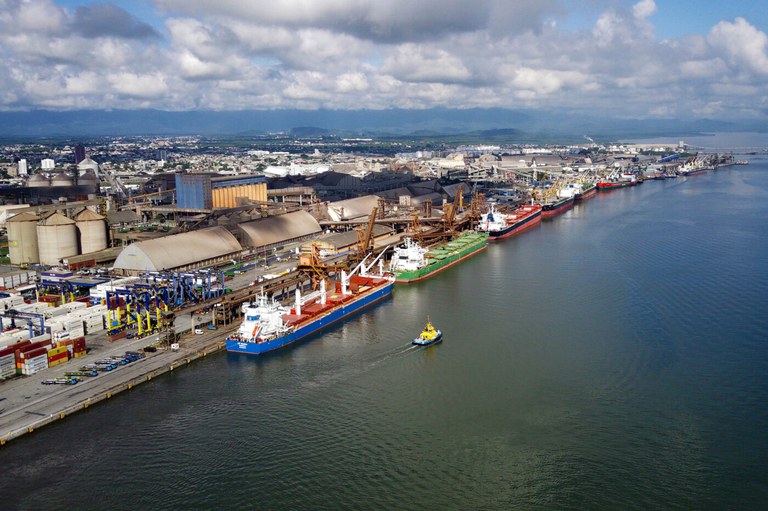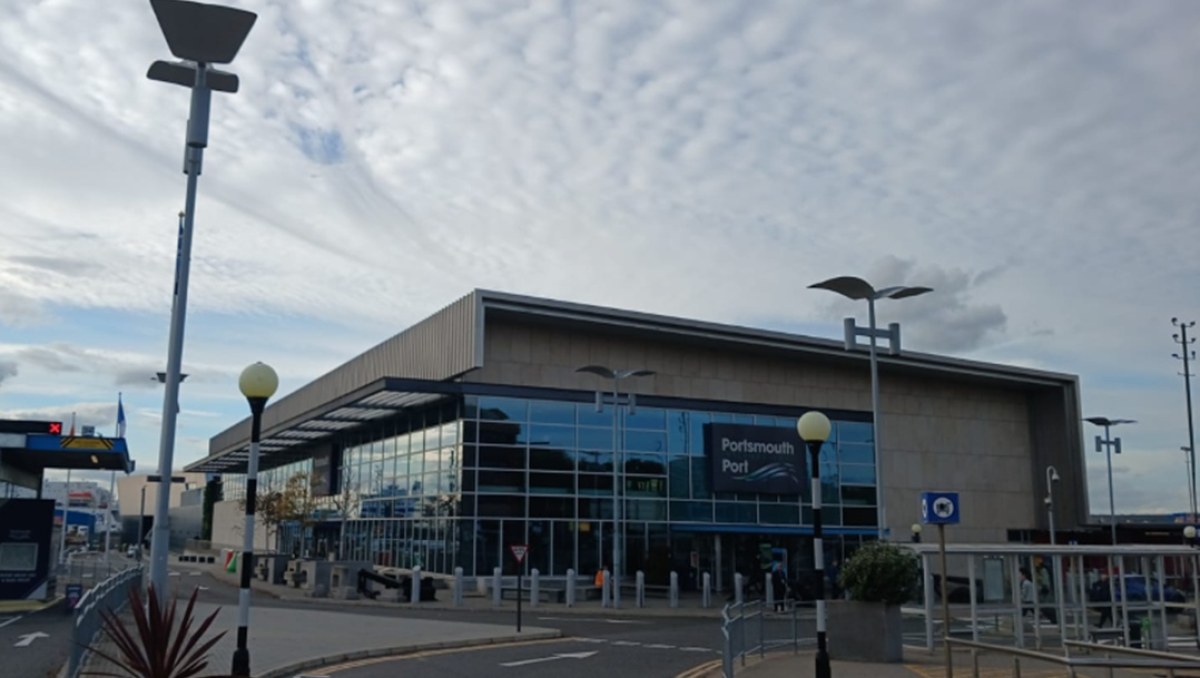
Decarbonization of maritime transport does not depend on ships alone. It also hinges on ports.
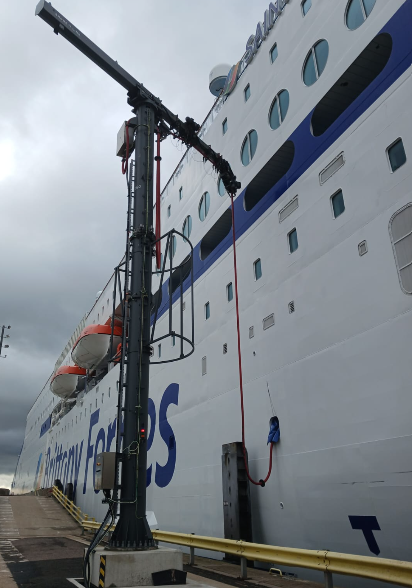
This transformation can already be observed in Portsmouth, in southern England, where berthed vessels are connected to the onshore electrical grid and can shut down their auxiliary engines, reducing atmospheric emissions, noise, and fossil fuel consumption.
I had the opportunity to follow this experience during GreenPort Congress 2026, one of the leading international forums dedicated to port sustainability. Representing Instituto PORTa, I also presented the work Dredging and Predictability: Waterway Resilience and Logistical Governance in Response to the 2026 Amazon Drought, which discussed the impacts of extreme drought in the Amazon and the challenges of logistical resilience on waterways subject to increasingly frequent climate events.
Sea Change: clean energy directly at the dock
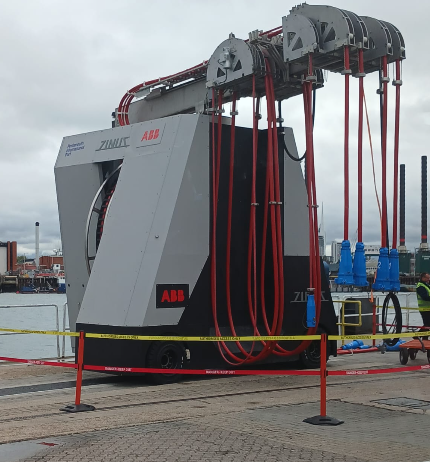
One of the congress highlights was a technical visit to Portsmouth International Port, where the Sea Change project is in operation, considered the United Kingdom's largest shore power system.
The technology, also known as Onshore Power Supply (OPS), allows ships to shut down their auxiliary generators during berthing and use energy supplied by the onshore grid instead. The benefit is immediate: fewer emissions, less noise, and improved environmental quality in port areas.
The project received approximately £28 million in investments, has a connection capacity of 15 MVA, and is expected to avoid around 20,000 tons of CO₂ equivalent emissions per year when operating at full capacity.
More interesting than the numbers, however, is the message behind them. Portsmouth demonstrates that port decarbonization is not merely a technological challenge. It is, above all, a matter of planning, financing, and institutional coordination.
Infrastructure is only the first step
During the visit, it became clear that the Sea Change's greatest challenge was not installing the infrastructure, but ensuring its use.
The port authority highlighted that the system's competitiveness depends directly on electricity costs. Although investments in equipment were high, shipowners' decision to use or not use onshore power is strongly tied to comparing electricity prices against the cost of fuels used on board.
The British experience shows that the energy transition requires more than technological solutions. It demands integration between ports, energy operators, shipowners, and governments, as well as economic instruments capable of making decarbonization financially attractive.
This is a lesson particularly relevant to Brazil, where discussion on port electrification remains in its early stages.
From innovation to competitiveness
``` ```htmlThe expansion of shore power is occurring in parallel with the advancement of environmental regulations in international maritime transport.
In the European Union, the FuelEU Maritime regulation establishes progressive targets for reducing the carbon intensity of energy used by ships and creates incentives for the use of energy supplied on shore. Starting in 2030, certain categories of vessels will be required to use this infrastructure when available in European ports.
Although the legislation does not apply directly to Brazilian shipping, its effects cross European borders. Ships operating on routes between Brazil and Europe are now impacted by an increasingly emissions-reduction-oriented regulatory environment.


In this context, port electrification ceases to be merely an environmental issue. It becomes part of the maritime sector's competitiveness agenda.
An opportunity for Brazilian ports
Brazil has a relevant advantage in this discussion: one of the most renewable electricity matrices in the world.
While several countries still depend on fossil sources for power generation, the predominance of renewable sources in Brazil's electricity system amplifies the environmental benefits of shore power. In practical terms, each ship connected to the grid tends to emit significantly less carbon than it would using its auxiliary generators.
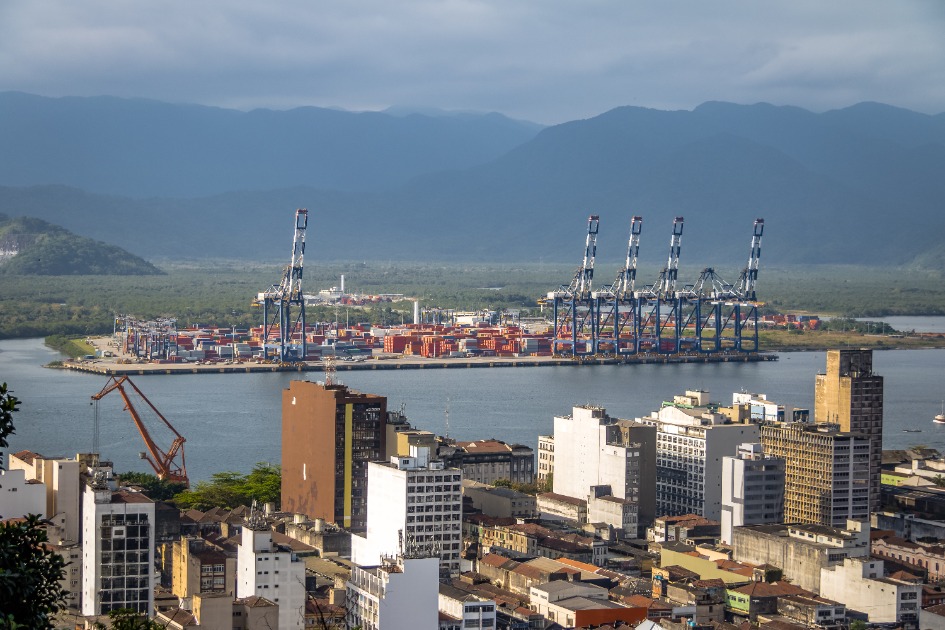
The country already has concrete experience. In 2024, Santos Port inaugurated an electricity supply system for berthed tugboats using energy from the Itatinga Hydroelectric Plant. Although still far from the scale of European projects, the initiative demonstrates that port electrification is technically feasible in the national context.
Ports such as Vitória, Santos, Suape and Pecém have the opportunity to transform this agenda into a competitive advantage, aligning sustainability, innovation and operational efficiency.
An agenda for the future
The main lesson from Portsmouth is that sustainability and competitiveness go hand in hand.
Ports are assuming an increasingly strategic role in the energy transition of logistics chains. Beyond moving cargo, they are now providing the infrastructure necessary for decarbonizing maritime transport.
Brazil brings favorable conditions to participate in this process: a low-carbon-intensity electricity matrix, growing operational experience and a modernizing port system.
The question is no longer whether port electrification will be part of the future. The question is which ports will be prepared to lead this transformation and capture the opportunities associated with it.
Portsmouth offers a possible answer. The future of maritime decarbonization does not begin only aboard ships. It also begins at the dock.
``` ```html
Maria Eduarda Medeiros Correa
Master's student in Transport Engineering at the Military Engineering Institute (IME), Mechanical Engineer, Naval Construction Technologist and member of the PORTa Institute.