The Civil House released an extensive technical note on the bidding process for Tecon Santos 10, the future mega container terminal at Santos Port, reinforcing the strategic importance of the project for national logistics and defending relevant adjustments to the competitive bidding model for the auction.
The document, drafted by the Special Secretariat for the Investment Partnerships Program (SPPI), states that the terminal is considered essential for expanding the operational capacity of the Santos complex, reducing vessel queues, and lowering logistics costs related to ship demurrage.
According to the note, Santos Port already operates near capacity limits, accounting for roughly 30% of Brazil's container throughput. Growth in Brazilian foreign trade and cargo movements underscores the urgent need to expand port infrastructure.
The government also emphasizes that Tecon Santos 10 should consolidate Santos as a regional "hub port," expanding maritime routes and strengthening Brazil's competitiveness in international trade.
Among the document's main points is a defense of broad competition in the auction. The Civil House states there is no federal public policy preventing participation by operators already installed at Santos Port and that excessive restrictions could undermine the competition's competitiveness.
The note contrasts with some of the understanding previously discussed at ANTAQ and the TCU, particularly regarding limits on participation by economic groups already present in the Santos complex's container market.
In the text, the Civil House states that both CADE's analysis and ANTAQ's own competitive studies identified no sufficient grounds for an outright ban on the participation of shipowners or vertically integrated operators in the auction.
The document stresses that vertical integration between shipowners and port terminals is already an established global practice, potentially generating economies of scale, demand predictability, and operational efficiency. At the same time, it acknowledges that any competitive risks should be monitored by regulators throughout the contract term.


Another important point concerns current Santos market operators. The Civil House defends that companies currently operating at Santos Port may participate in the first phase of the auction, provided they previously demonstrate an irrevocable divestment process of their current assets, conditional on winning the bid.
In practice, the proposal opens space for groups linked to MSC, Maersk, DP World, and Santos Brasil to compete for the new terminal through divestiture of existing operations.
The government argues that this opening can boost competition for the asset, increase the concession value, and ensure selection of the most efficient operator for the project.
The technical note also confirms that the surplus value identified in the project totaled R$ 1.044 billion in net present value, an amount that will form the fixed and variable concession fee structure of the contract.
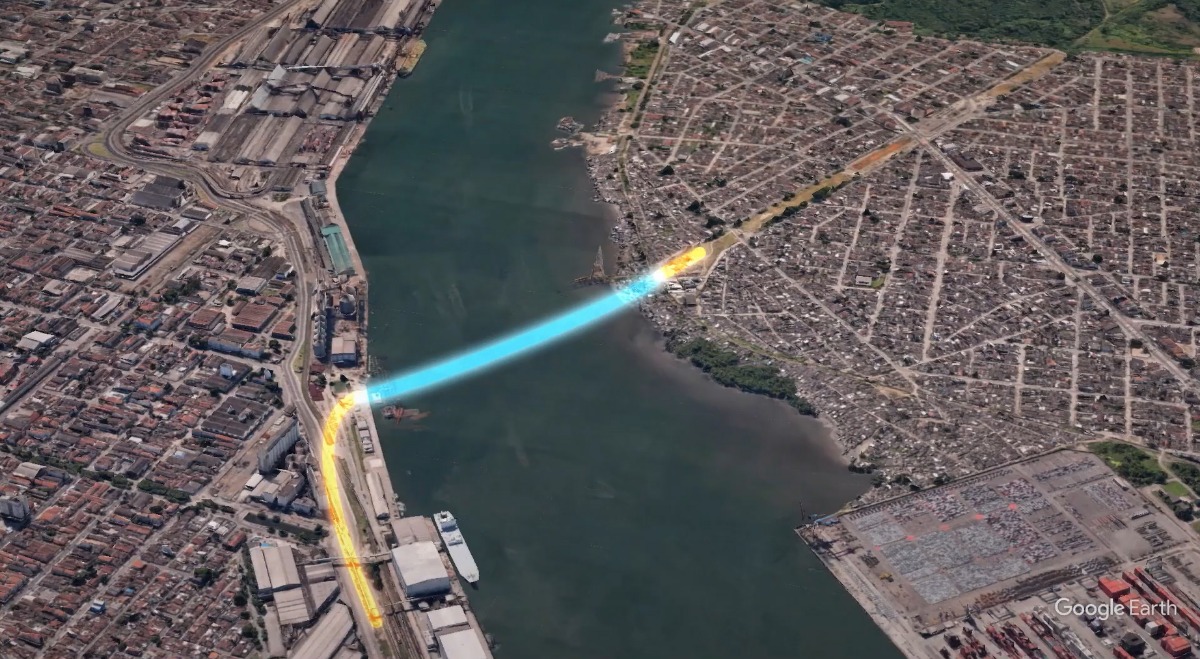
In the field of land infrastructure, the document reinforces the need for rail integration of the terminal. The future lessee will be required to build and maintain an internal rail yard with minimum capacity equivalent to 900 TEUs per day in each operational direction.
Furthermore, the Civil House alerts to the saturation scenario of road and rail access to the port region and calls for alignment of projects by Ecovias, MRS, and FIPS with the terminal's future access routes.
Finally, the document underscores the urgent need to publish the tender notice for Tecon Santos 10, considered one of the most strategic projects in Brazilian logistics infrastructure.