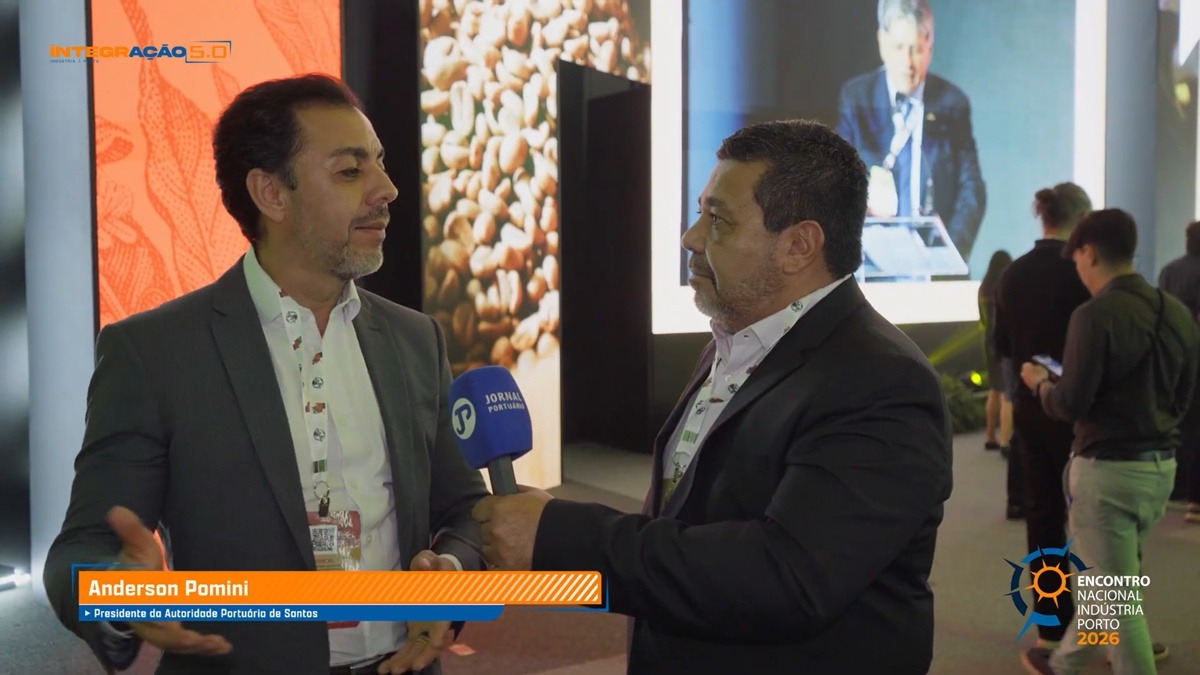
The challenges of Brazilian logistics and the impacts of infrastructure on the flow of coffee production were among the main topics debated during the XXV International Coffee Seminar in Santos. In an interview with Programa Integração 5.0, Ronald Moraes, export manager at COOXUPÉ, highlighted the sector's concern over operational bottlenecks faced in exports through Santos Port.
According to Ronald, the growth of Brazilian agricultural production, coupled with the expansion of global coffee consumption, especially in Asia, requires urgent investments in highways, railways and port access infrastructure.
"The producer makes the investment, prepares the coffee and takes the cargo to the port. But often faces delays, excessive cargo and shipping difficulties, which end up generating losses and additional costs," he explained.
The executive stressed that Santos Port plays a strategic role in Brazilian exports, being responsible for the largest share of national coffee shipments. However, he noted that current infrastructure needs to keep pace with the agribusiness growth rate.


During the interview, Ronald Moraes also drew attention to the need for new investments in access roads to the Baixada Santista region and expansion of railway capacity, which are fundamental to increasing logistics efficiency and reducing operational bottlenecks.
Another point discussed was the growth of the Asian market, mainly China, which has been gradually increasing consumption of Brazilian coffee. According to experts present at the seminar, the potential for international expansion further reinforces the importance of logistics planning and modernization of national infrastructure.
The seminar brought together authorities, exporters, cooperatives and representatives of the productive sector to discuss solutions capable of strengthening Brazilian competitiveness in foreign trade, connecting agribusiness, innovation and logistics.