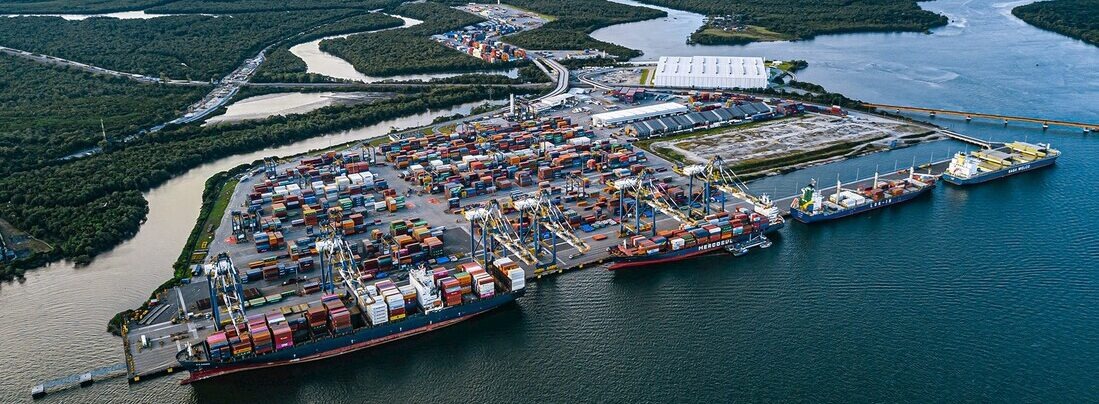
DP World received 15 new ITVs (Internal Terminal Vehicles) and three Reach Stackers (vehicles used for the movement and stacking of intermodal cargo containers) for operation at the Santos Port terminal. The fleet, entirely electric and aligned with DP World Group's decarbonization practices worldwide, is part of the terminal's expansion schedule that aims to achieve net-zero emissions by 2050.
With the new equipment, the company becomes the first terminal at Santos Port to operate 100% electric Reach Stackers and one of the first DP World terminals in the Americas to employ this type of technology. The ITVs, meanwhile, follow the electrification standard used across all DP World operations worldwide.
The operational vehicles will be used in the movement and stacking of containers and, unlike diesel models, significantly reduce greenhouse gas emissions and produce less noise.
Based on international standards for port operations, the company expects that the 15 electric pieces of equipment can prevent the emission of over 500 tonnes of CO2 per year compared to traditional diesel-powered models. Additionally, they offer greater energy efficiency and gains in maintenance and operational performance.
Investments


The new operational structure is part of a broader investment agenda by DP World in Brazil, aimed at expanding logistics capacity, modernizing infrastructure, and strengthening multimodal connectivity.
Currently, the company is investing over R$ 2 billion to expand the Santos terminal's container operations, with the goal of increasing its operational capacity to 1.7 million TEUs by 2026 and 2.1 million TEUs by 2028.
"We are advancing consistently in transforming port operations toward an increasingly efficient and sustainable model. We continue to accelerate our investments in Brazil, focusing on innovation, safety, operational efficiency, and emissions reduction, reinforcing DP World's strategic role in global trade," says Fabio Siccherino, CEO of DP World Brasil.
Among the main milestones of the company's decarbonization strategy is also the full electrification of the RTGs (Rubber Tyred Gantry Cranes) fleet at the Santos terminal. The project includes investments of over R$ 100 million and involved the conversion of 22 equipment powered by fossil fuel to electric energy, significantly reducing the carbon footprint of operations.