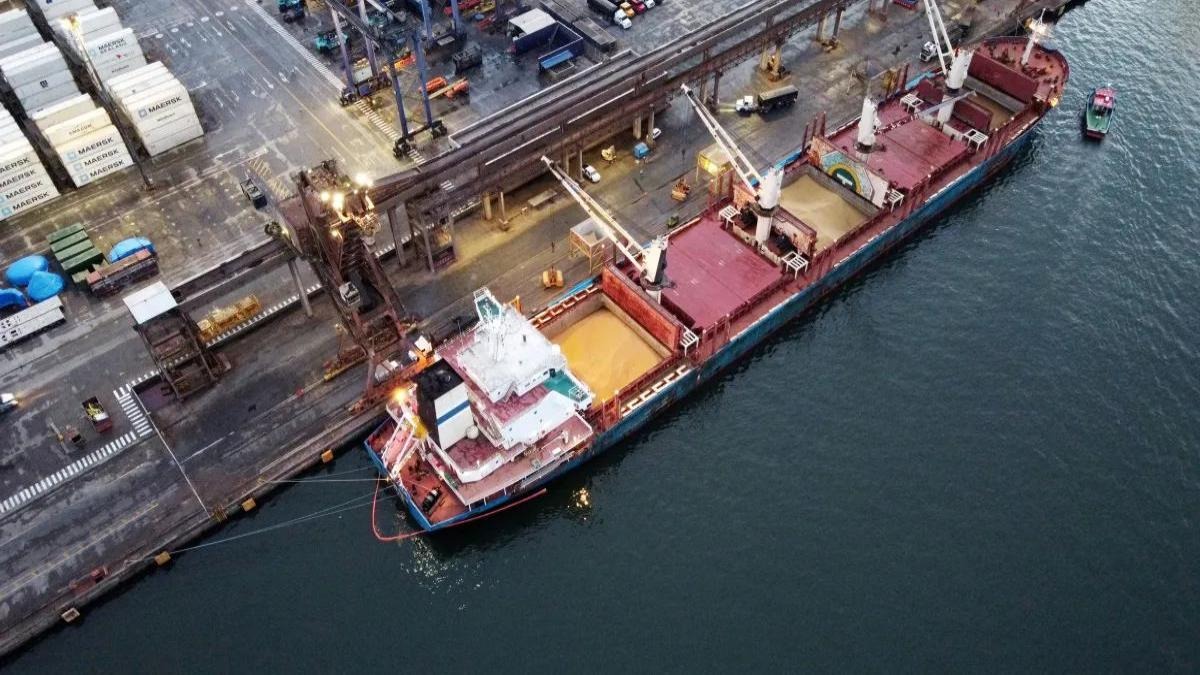
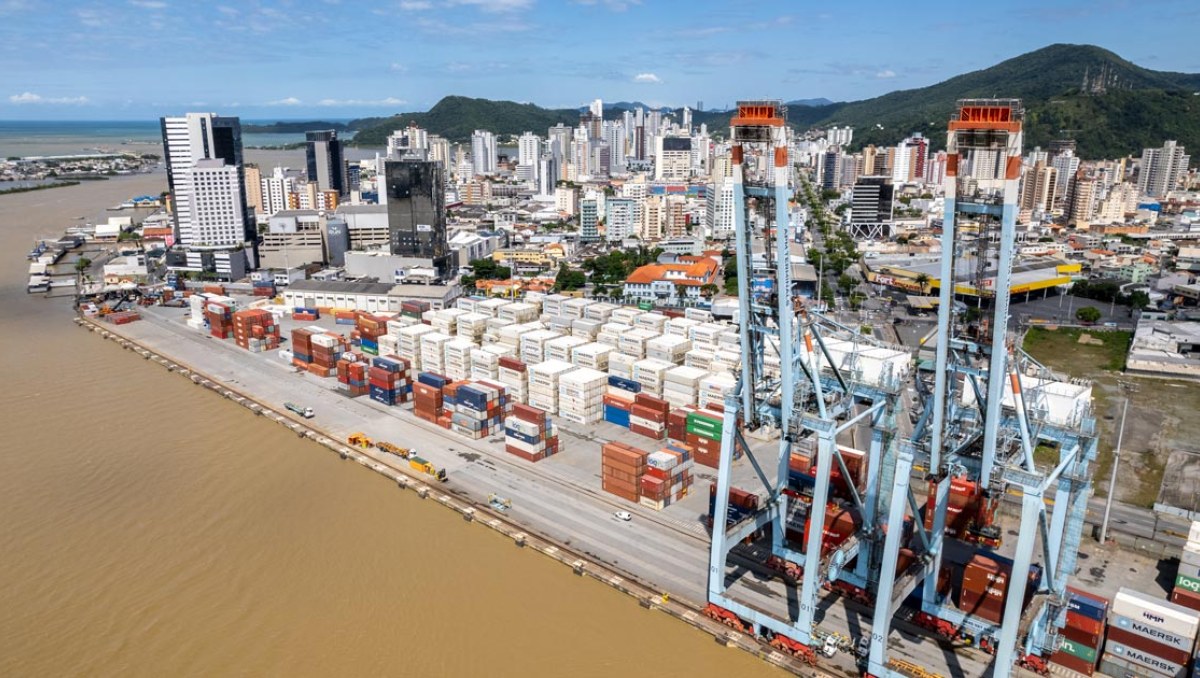
The Association of Private Port Terminals (ATP), the Brazilian Association of Container Terminals (ABRATEC), the Brazilian Association of Port Terminals (ABTP), Centronave, and the National Federation of Port Operations (FENOP) have expressed their concerns to the National Waterway Transport Agency (Antaq), the National Ports Secretariat (SNP), and Codeba regarding the current navigability restrictions in the Itajaí-Navegantes Port Complex.
According to a document organized by these entities, the limitations have impacted the safety of operations, logistics predictability, and the competitiveness of Brazilian foreign trade in the port complex.
The associations state that factors such as channel access depth limitations and operational restrictions recently determined by the Maritime Authority highlight the need for continuous monitoring of navigability conditions, maintenance of design depths, and greater transparency in the disclosure of operational information to agents operating in the complex.
In the declaration, the entities advocate for the immediate adoption of measures to restore the region's full operational capacity and reiterate that the continuity of the channel concession process is a condition to enable structural investments in the complex. Among the investments cited are channel deepening, expansion of the turning basin, removal of the Pallas ship hull, and construction of the new Navegantes breakwater.
Through the document, the associations also request an urgent meeting with the competent authorities to define a joint action plan focused on navigation safety, operational predictability, and maintaining the competitiveness of the port complex.


Restrictions
The operational limitations were imposed preventively by the Maritime Authority with the strict objective of ensuring navigation safety and preventing critical accidents in the region. The decision was motivated by severe silting detected in the inner channel, where sediment accumulation has reduced the safe passage space for vessels. This situation was aggravated by delays in the submission of updated bathymetry reports by the local port administration, which forced the adoption of stricter safety margins.
To mitigate grounding risks and prevent ships from touching the riverbed, the authority determined a restriction on maximum permitted draft and added a thirty-centimeter requirement for Under Keel Clearance. As a direct consequence, large commercial vessels have lost up to ten percent of their cargo capacity and have become strictly dependent on high tide periods to carry out their maneuvers in the complex.
```