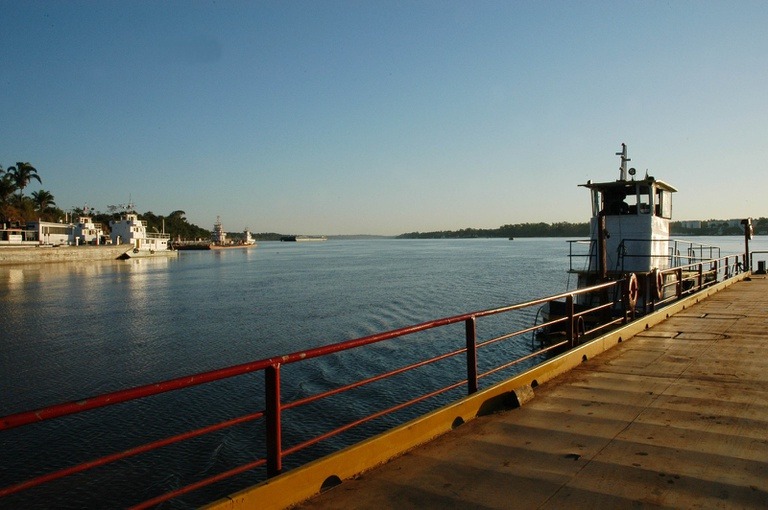
The Federal Government has brought forward measures to reduce the effects of a possible new drought in the Amazon in 2026. The initiative includes planning for dredging, waterway maintenance, reinforcement of nautical signaling, and ongoing assessment of navigation conditions.
These actions are taking place preventively, taking into account the historical droughts recorded in 2023 and 2024, and aim to prevent damage to passenger transport, the supply of cities, and cargo flow in the North region.
Among the planned measures is the launch of the Inland Waterway Monitoring Panel, a tool of the SNHN (National Secretariat for Inland Waterways and Navigation) that will allow real-time monitoring of navigation conditions in different regions of the country. The system will concentrate hydrological data, operational information, and strategic alerts to support decisions on dredging, channel maintenance, and logistics operations during extreme weather events.
According to the Minister of Ports and Airports, Tomé Franca, early action is essential to reduce social and economic impacts in the Amazon. "Strengthening the monitoring of inland waterways and preparing operational actions in advance is fundamental to guarantee supply, mobility, and safety for the population that depends on the rivers on a daily basis," he stated.
Background
The droughts recorded in 2023 and 2024 caused direct effects in cities such as Manacapuru, Tabatinga, Itacoatiara, and Parintins, where rivers reached critical levels, affecting the transport of food, medicines, and drinking water, in addition to interfering with economic activities such as fishing and family farming.


In Itacoatiara, the Amazon River reached 83 centimeters in 2024. In the case of Parintins, levels reached 1.9 meters, the lowest mark recorded in 49 years. Beyond logistical difficulties, the drought caused isolation of riverside and indigenous communities and intensified supply challenges in municipalities dependent on inland waterway transport.
According to experts, extreme weather events, associated with rising global temperatures and the influence of the El Niño phenomenon, have intensified drought periods in the Amazon and increased navigation challenges in the region.
Planning
To expand operations during critical periods, the Ministry of Ports and Airports and the National Department of Transport Infrastructure (Dnit) have adopted measures of continuous technical monitoring of river levels, early definition of priority stretches for dredging, and coordination with logistics operators in the North region.
According to the director of Dnit, Edme Tavares, the Federal Government currently holds permanent contracts for inland waterway maintenance, which increases operational capacity compared to previous years. "Today we have a more prepared structure to act preventively. The contracts in force allow greater planning of necessary interventions to maintain navigability and reduce logistical and social impacts in the Amazon region."
```