
The Ministry of Ports and Airports (MPor) has begun structuring a new tool to monitor the capacity of Brazilian ports and identify, in advance, possible saturation points in port infrastructure.
The initiative will be conducted by a Working Group coordinated by the National Ports Secretariat (SNP), responsible for developing Port Saturation Monitoring (MSP). The proposal is to create a technical database capable of crossing the installed capacity of port complexes with demand growth projections.
In practice, the monitoring should allow the government to identify where existing infrastructure may become insufficient before bottlenecks compromise cargo flow.
Integrated infrastructure analysis
The MSP should consider not only terminal capacity, but also road, rail, and waterway access associated with port complexes.
Another relevant point is that the model intends to analyze jointly organized ports and Private-Use Terminals (TUPs), allowing a broader view of available capacity in each region.
Beyond the quantity of infrastructure, the tool should monitor indicators related to the level of service of port complexes.
According to the Ministry, monitoring results will be released annually. The first edition is scheduled for 2027.
Data may guide new investments
One of the main objectives of the MSP is to transform capacity and demand data into support for investment decisions.
The information may be used by the Ministry of Ports and Airports itself, port authorities, the granting authority, and the private sector in defining and prioritizing projects.
Monitoring should also help evaluate the need for new auctions, leases, and expansion of existing terminals, allowing decisions to be made based on a more accurate assessment of available infrastructure and cargo movement prospects.


According to the National Ports Secretary, Alex Ávila, the initiative should expand the sector's planning capacity and provide more accurate information for decision-making.
Government wants sector participation
Building the monitoring system will not be restricted to the government. The Ministry intends to consult associations and entities in the port and logistics sector, port users, companies, concession holders, port authorities, regulatory agencies, oversight bodies, and state governments.
These participants will be able to contribute data, information, and technical input to the construction and implementation of the tool.
The intention is for the MSP to function as an intelligence database for port planning, without replacing existing planning instruments.
Santos also on the radar
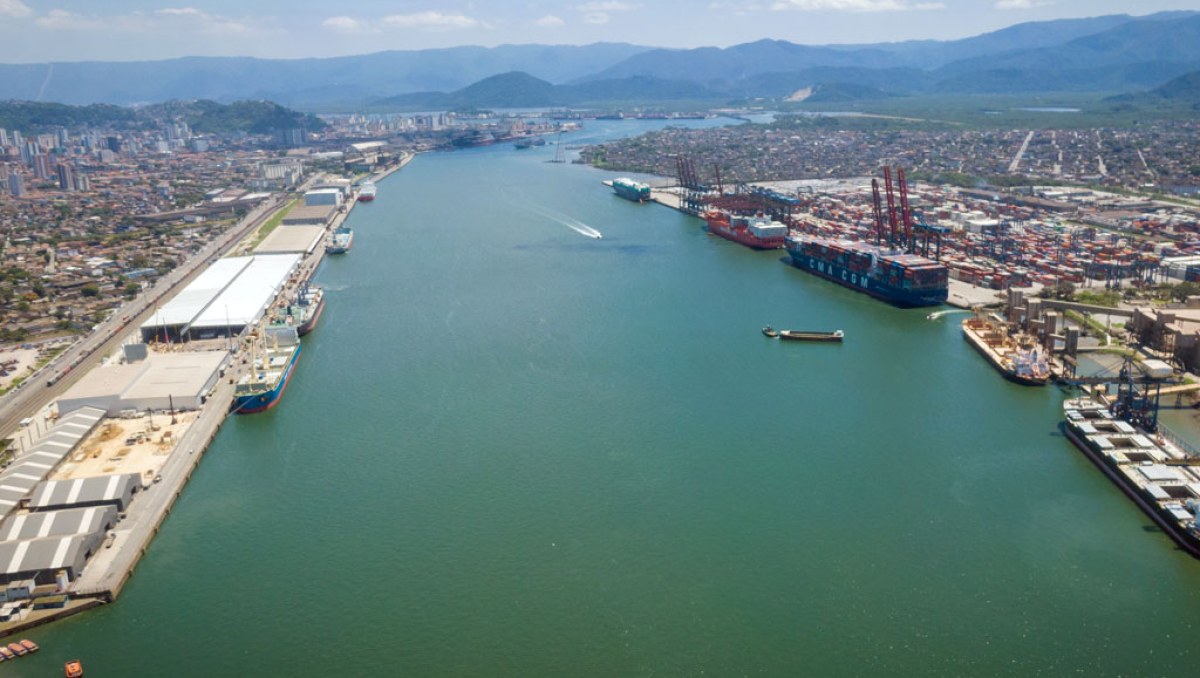
For Santos Port, the country's leading port complex, the creation of a national monitoring tool may gain importance given the expected growth in cargo movement and the permanent need to expand infrastructure.
The integrated analysis of terminals, land access, and waterway infrastructure may allow a broader assessment of bottlenecks that can limit the complex's growth.
More than monitoring the current situation, MPor's proposal seeks to anticipate the problem: identify where capacity may approach its limit and allow investments and new structures to be planned before saturation affects operations.
Next steps
The first Working Group meeting is scheduled for September. Subsequently, the Ministry should define the technical partner responsible for implementation, conduct consultations with representatives from public and private sectors, and establish the terms necessary for project execution.
The government's forecast is to complete the initial structuring of the initiative by December 2026.
```With the MSP, Brazil's port sector now has a proposal for systematic monitoring of the relationship between demand, capacity and service level. The expectation is that this forward-looking perspective will help direct investments to the points where infrastructure will be most needed in the coming years.