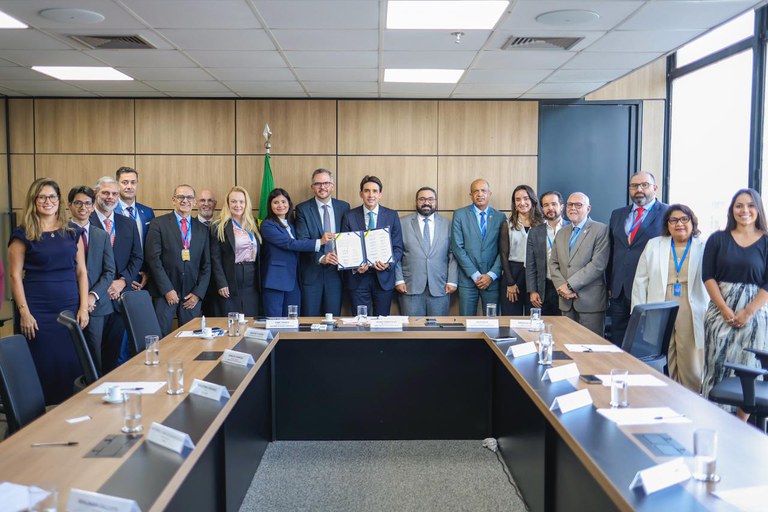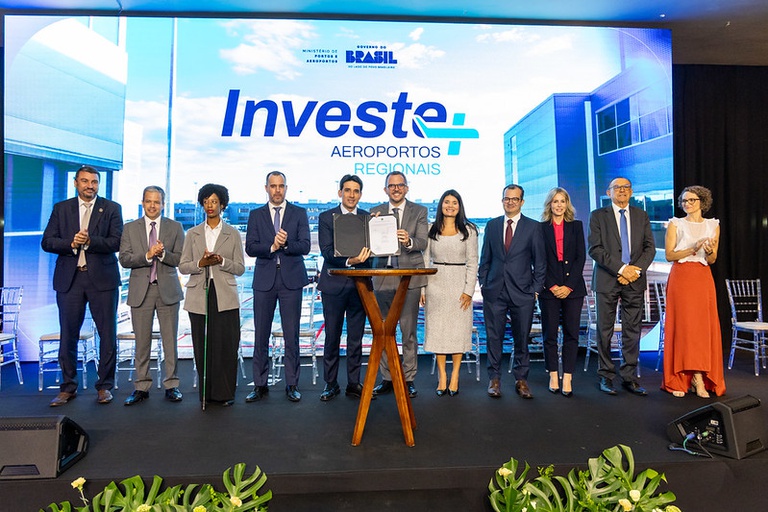
The Ministry of Ports and Airports (MPor) launched, on the evening of Tuesday (24th), the Investe + Regional Airports Program. The initiative extends to states and municipalities an already consolidated model for generating ancillary revenues at airports, with a focus on attracting private investments, raising service quality and boosting economic development in the regions served.
The proposal allows states and municipalities responsible for airports delegated by the Union to enter into commercial contracts with terms exceeding those of concessions and delegation agreements. In practice, this expands legal certainty and predictability for investors, creating a more favorable environment for structuring projects, such as hotels, shopping centers, schools and other enterprises linked to airport activity.
For the Minister of Ports and Airports, Silva Costa Filho, the measure represents yet another advance in the modernization of Brazilian regional aviation. "We are creating a more stable and attractive environment for investments, which translates into more efficient airports, better services for passengers and more development opportunities for the regions," he said.
Currently, 422 airports operate under delegation agreements, with approximately 50 already having been granted to private initiative. The program's expansion to this universe opens new fronts for revenue diversification, reducing dependence on airport tariffs and public resources.
The benefits also reach passengers directly. With new investments, the expectation is for infrastructure modernization, expansion of service offerings and greater comfort in the terminals.


The National Secretary of Civil Aviation, Daniel Longo, highlighted the impact of the initiative on the daily lives of the population. "By encouraging new businesses within and around airports, we improve the passenger experience and, at the same time, generate jobs and income in the cities served," he stressed.
The initiative also reinforces the strategic role of airports in regional development. With more investments and services, these assets tend to consolidate as economic hubs, attracting companies, strengthening local productive chains and invigorating tourism and commerce.
Source: https://www.gov.br/portos-e-aeroportos/pt-br/assuntos/noticias/2026/03/governo-federal-amplia-beneficios-do-investe-aeroportos-para-terminais-regionais