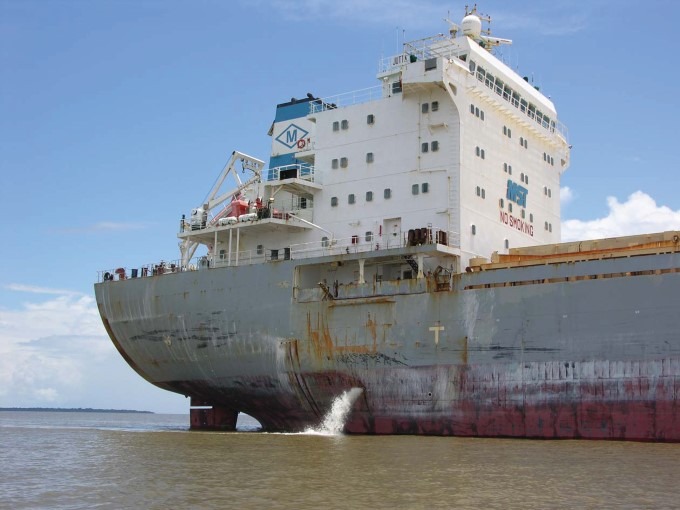
The decarbonization agenda led by the International Maritime Organization continues to be one of the main priorities of the global maritime industry. However, shipowners and shipping companies are also turning their attention to other environmental issues that have been gaining ground in international discussions: ballast water management, underwater noise generated by vessels, and biofouling on ship hulls.
Although these three topics have already been part of industry concerns for years, experts assess that the trend is toward regulatory progress in the coming cycles of international debates, which could result in new operational obligations, investments in technology, and increased costs for shipping companies.
Ballast water remains among the most sensitive issues. Used to ensure the stability of vessels during voyages, it can transport marine organisms between different regions of the planet. Improper discharge has the potential to introduce invasive species into new ecosystems, affecting local biodiversity and causing environmental and economic impacts.
Another prominent issue is underwater noise pollution. Studies show that noise generated by engines, propellers, and mechanical systems of vessels can interfere with the communication, navigation, and behavior of various marine species, especially mammals such as whales and dolphins. International discussions seek alternatives to reduce these impacts without compromising the operational efficiency of shipping.
Biofouling, characterized by the accumulation of marine organisms on vessel hulls, is seen as a double challenge. In addition to contributing to the dispersal of invasive species between different regions, it increases friction with water, raising fuel consumption and, consequently, atmospheric emissions from ships.
For shipowners, the progress of these agendas represents the need for additional investments in monitoring technologies, treatment systems, special hull coatings, and new operational practices. The sector is closely monitoring discussions at the IMO and other international forums to assess the regulatory and economic impacts that may arise in the coming years.
Experts observe that the global trend is to broaden the environmental approach to shipping, incorporating not only targets for reducing greenhouse gas emissions, but also measures aimed at protecting marine biodiversity and ocean ecosystems.
In this scenario, maritime sector companies have been reinforcing sustainability strategies and technological innovation to adapt to an increasingly demanding regulatory environment aligned with global environmental preservation targets.



🎟️ EXCLUSIVE DISCOUNT FOR JORNAL PORTUÁRIO READERS
Jornal Portuário readers have 15% discount on registration for ENIP 2026 – Santos Stage.
Discount code: JP15
📅 Date: June 12, 2026
📍 Location: Santos (SP)
Register now:
https://www.sympla.com.br/evento/encontro-nacional-industria-porto-2026-etapa-santos/3397606
```