The advance of the Northern Arc as a strategic corridor for Brazilian exports gained fresh momentum with the arrival of Super Porto Verde in Itacoatiara. The facility, developed by Super Terminais, received investments of R$ 250 million and will focus on the grain and fertilizer segment.
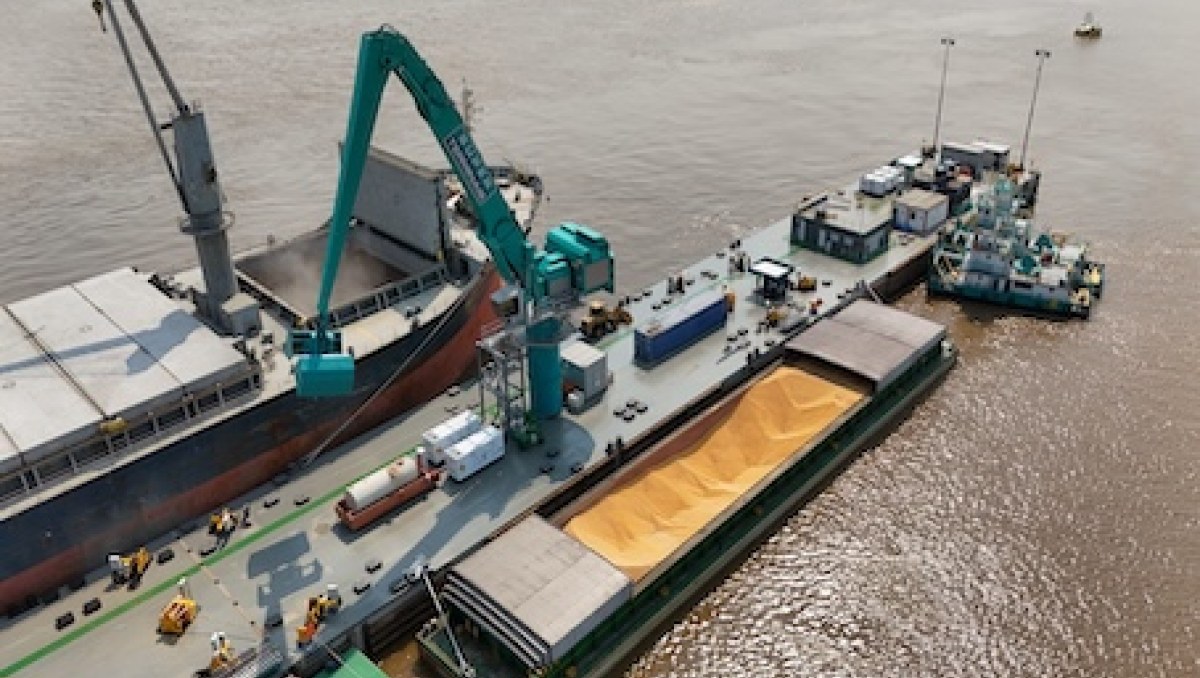
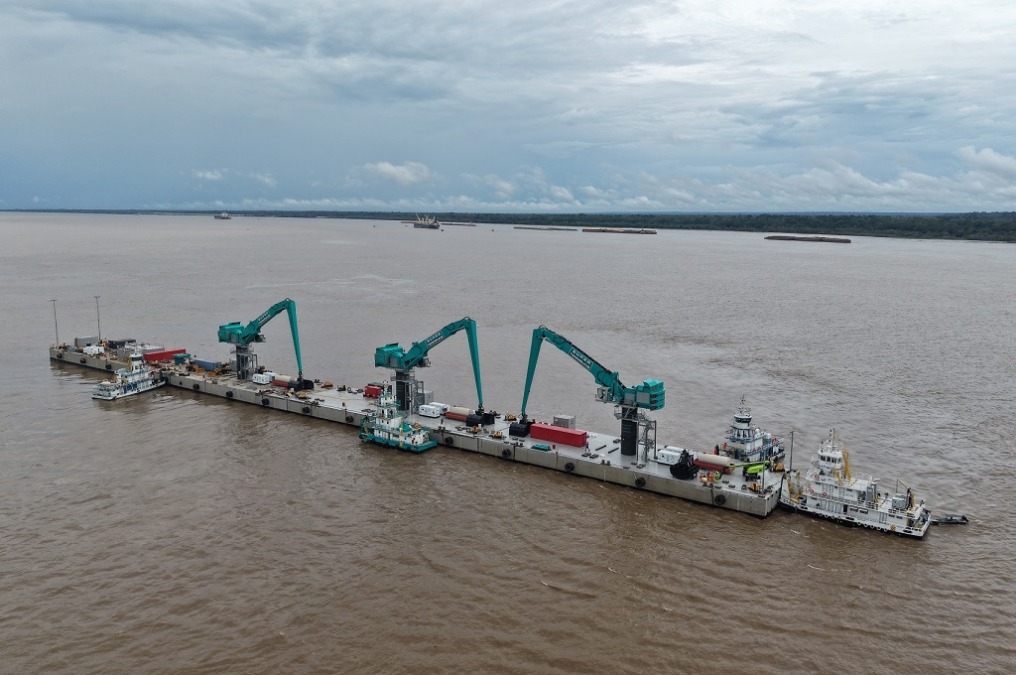
The structure, currently under installation, is considered the largest floating transshipment system for bulk cargo in the Americas and forms part of the company's strategy to boost logistical efficiency in the Amazon region.
Located approximately 175 kilometers from Manaus, the project is situated in an area deemed strategic for integration between Amazon waterways and Brazilian agribusiness export flows.
According to Super Terminais' chief executive officer Marcello Di Gregorio, the new facility is expected to represent a leap forward in national logistics.
"The Northern Arc is consolidating as one of Brazil's main export routes, with emphasis on inland waterway transport, a model that reduces environmental impact and drives sustainable development," the executive stated.
The floating pier will be incorporated into a port area of 300 thousand square meters and was designed to expand the capacity for moving Brazilian agricultural output. Initially developed for container operations, the system was adapted to handle solid bulk transshipment in light of growing demand for logistical infrastructure along the Northern corridor.
Beyond operational gains, the investment is also expected to stimulate the regional economy. According to the company, Super Porto Verde should generate approximately 130 direct jobs and a further 250 indirect jobs, strengthening economic activity in Itacoatiara and increasing Amazonas' participation in the national logistics chain for agricultural commodities.


The structure will measure 240 meters in length and 18 meters in width, equipped with three electric cranes Sennebogen model 895E, considered the largest in their category worldwide and the first to operate in the Southern Hemisphere.
The equipment will have operational capacity of up to 2,100 tons per hour.
The system will also allow simultaneous berthing of one Panamax vessel of up to 50 thousand tons and six barges, with expected operations completed in up to 36 hours, reducing logistical bottlenecks and increasing operational predictability for trading companies and agribusiness operators.
The company also highlighted that the project reinforces its expansion strategy aligned with the sustainability agenda, betting on inland waterway transport as a lower-carbon alternative for large-scale cargo transportation.
"We are ready to deliver a technological, sustainable and efficient operation that will expand alternatives for moving Brazilian agricultural production," added Marcello Di Gregorio.
```