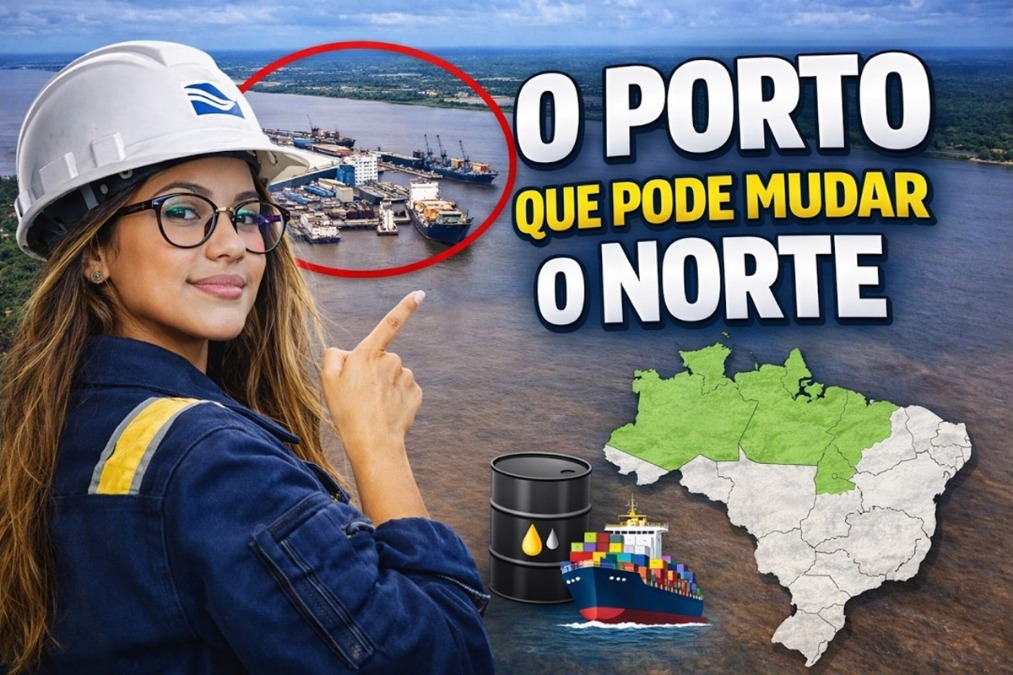
On International Women's Day, communicator Larissa Ramos decided to go further. Breaking paradigms, she ventured to Amapá to showcase the behind-the-scenes of a journey full of opportunities beginning to emerge in the region. The initiative also symbolizes female leadership in spaces historically dominated by men, such as logistics and the port sector.
During the business mission organized by the Brazilian Service for Support to Micro and Small Enterprises (Sebrae RJ), Larissa visited Santana Port, considered one of the most strategic logistics hubs in northern Brazil.
Located near the city of Macapá, the terminal plays a fundamental role in regional supply and the export of resources such as minerals, grains, and products from the Amazon bioeconomy, including açaí.
With a privileged geographic position on the banks of the Amazon River, the port also offers logistics advantages for international trade, being closer to maritime routes connecting Brazil to Europe, the United States, and other global markets.


Currently, the complex moves millions of tons of cargo per year and has been gaining relevance on the national stage. The expectation is that the region's potential will expand further with advances in discussions on oil and gas exploration in the Brazilian Equatorial Margin.
Furthermore, the state government has promoted incentive policies and legal certainty to attract new investments and transform Amapá into a strategic logistics and energy hub.
Despite the natural challenges of the Amazon region, Santana Port is undergoing a moment of transformation. And, on this symbolic date, Larissa Ramos's journey reinforces that women continue pioneering frontiers, revealing stories and pointing the way toward the future of logistics development in Brazil.
```