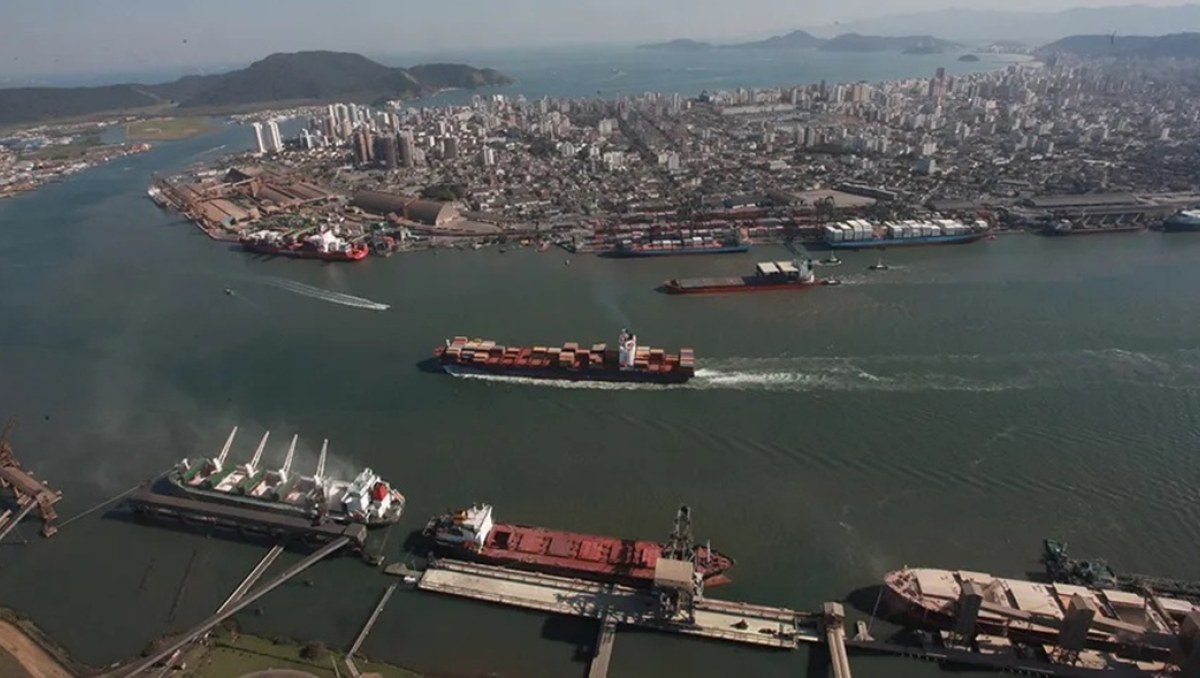
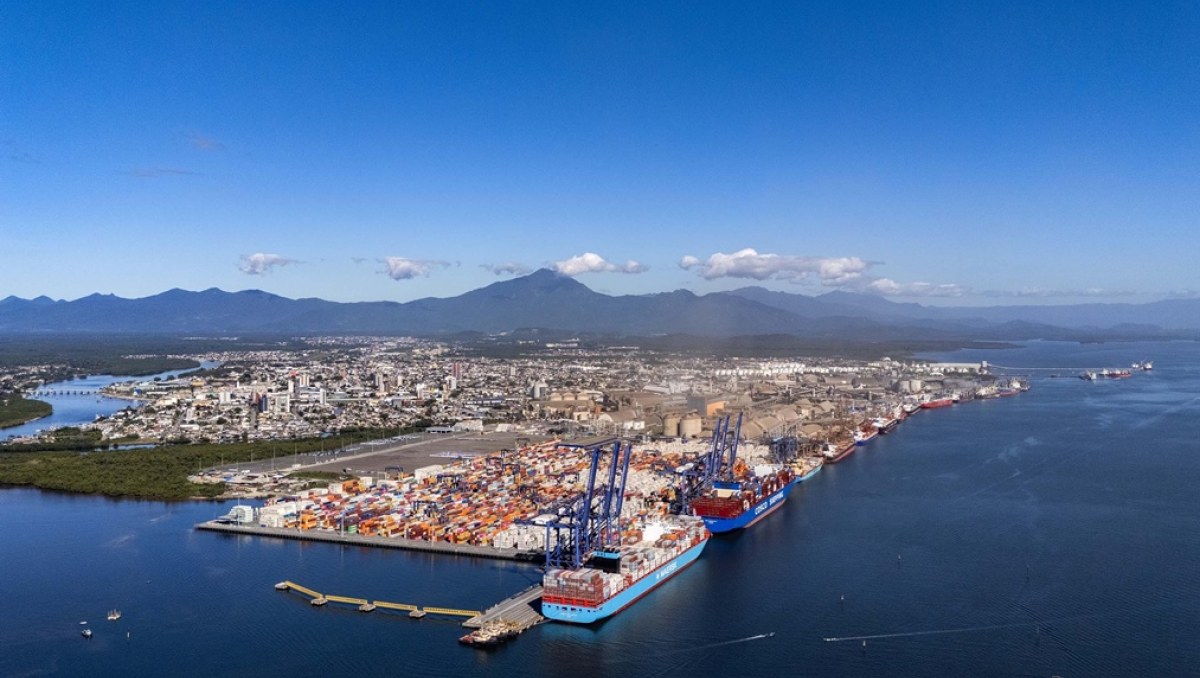
The port dispute in the Southern Region has taken on a new dimension. On one side, Paranaguá moves forward with railway works, new leases and the concession of the access channel. On the other, private terminals in Santa Catarina and Rio Grande do Sul are preparing billion-dollar projects to capture part of the agricultural, industrial and containerized cargo flowing through the southern corridor.
More than a competition between ports, what is at stake is the choice of shippers. Producers, cooperatives and industries seek shorter waiting times, efficient land access, berth availability and more predictable logistics costs.
Paranaguá prepares a structural response
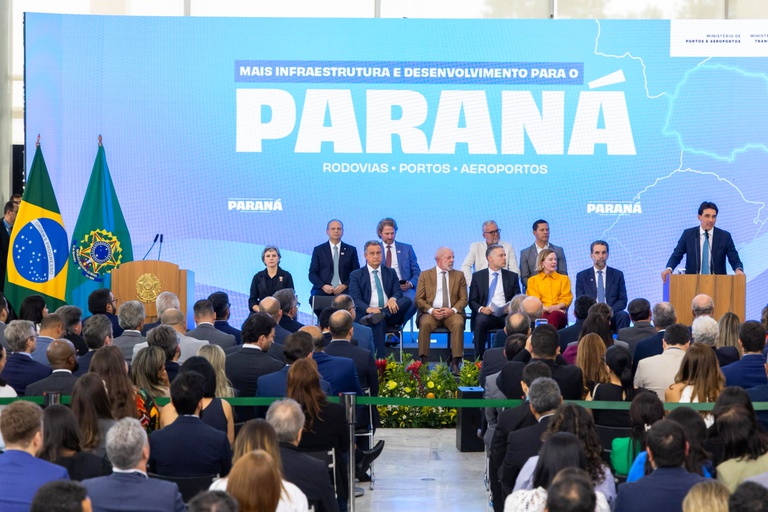
The Port of Paranaguá enters this new cycle supported by consolidated infrastructure and a portfolio of contracted investments. After eight auctions of port areas and the concession of the access channel, Portos do Paraná announced approximately R$ 5.1 billion in investments, in addition to resources from concession fees earmarked for modernizing the complex.
One of the main interventions is the Moegão, a centralized railway unloading system that has exceeded 95% completion. With investment exceeding R$ 650 million, the structure should raise railway reception capacity from approximately 550 to 900 wagons per day.
Another decisive change will be the concession of the access channel, with R$ 1.23 billion in investment contributions expected over 25 years. The contract provides for dredging, signaling, maintenance of aquatic infrastructure and progressive deepening of the draft to up to 15.5 meters, allowing for the operation of larger and more heavily laden vessels.
New leases also expand capacity for vegetable grains. Terminals PAR14, PAR15 and PAR25 alone represent more than R$ 2 billion in private investment commitments. PAR14, won by BTG Pactual Commodities Sertrading, provides for approximately R$ 1.2 billion in contributions, including participation in implementing the first phase of the new "T"-shaped Pier.
Santa Catarina eyes cargo currently passing through Paraná
The most direct competitive pressure may come from Itapoá, in northern Santa Catarina. Coamo, a Paraná cooperative that already maintains operations in Paranaguá, has announced the establishment of a new private-use terminal in Babitonga Bay.
The development is designed to occupy approximately 43 hectares, accommodate three berthing spaces and handle up to 11 million tons per year. The initially announced investment reaches R$ 3 billion, with expected start of operations in the early part of the next decade.
This move deserves attention because Coamo itself moves close to 5 million tons annually through its terminals in Paranaguá. The future Santa Catarina facility will work with grains, fertilizers, fuels, liquid bulk and LPG, offering the cooperative its own route and reducing its dependence on shared infrastructure.
Santa Catarina also expands capacity in Babitonga Bay. Dredging to deepen the channel from 14 to 16 meters will allow it to receive vessels up to 366 meters and approximately 16,000 TEUs. A significant portion of the investment was advanced by Porto Itapoá, a private terminal specialized in containers.


Beyond Coamo's new TUP, the region already brings together Porto Itapoá, Portonave and the Santa Catarina Bulk Terminal, forming a set of public and private facilities capable of competing for containers and bulk cargo with neighboring complexes.
Rio Grande do Sul opens a new front
In Rio Grande do Sul, expansion is mainly linked to the pulp supply chain. CMPC's industrial project prompted the establishment of two private-use terminals, located in Rio Grande and Barra do Ribeiro, with estimated port investments of around R$ 1.4 billion.
The Rio Grande terminal will be able to handle up to 9 million tons per year, store approximately 194,000 tons and operate two vessels simultaneously. The accession contract was signed in January 2026, while the development continues to comply with environmental licensing stages.
```htmlThe state is also discussing an integrated concession of port channels and waterway stretches, with an estimated R$ 134 million in direct investments. The proposal aims to ensure permanent maintenance of navigability and greater operational predictability.
Cargo will choose the most efficient route
The new competition will not be decided by port size alone. The shipper will evaluate the entire chain: berth availability, channel depth, rail and road connections, waiting time, productivity, and final transportation cost.
Paranaguá maintains scale, tradition, and strong ties to agribusiness. Santa Catarina advances with specialized private terminals and deeper channels. Rio Grande do Sul bets on integration between industry, waterway, and port.
In this new landscape, state boundaries lose importance. Cargo will flow to the corridor offering greater reliability and lower cost. For southern ports, investing has ceased to be merely a growth strategy: it has become a condition for remaining competitive.
Newsroom — Jornal Portuário
```