The record volume of resources from the 2026/2027 Harvest Plan, launched this Tuesday (30th) by the Brazilian Government, broadens the growth prospects for agricultural production and reinforces the importance of increasingly efficient logistics infrastructure to bring Brazilian products to domestic and foreign markets. With R$ 525.1 billion in credit and agricultural policy instruments—R$ 9 billion more than in 2025/2026—the incentive arrives at a time of strong expansion in Brazilian agribusiness, driven by export performance.
During the event, the acting President of the Republic, Geraldo Alckmin, highlighted the sector's contribution to the national economy. "We broke export records last year; of the 349 billion dollars exported by Brazil, 169 billion came from agribusiness. It has a fantastic effect in terms of stability and strengthening the Brazilian economy," he stated.
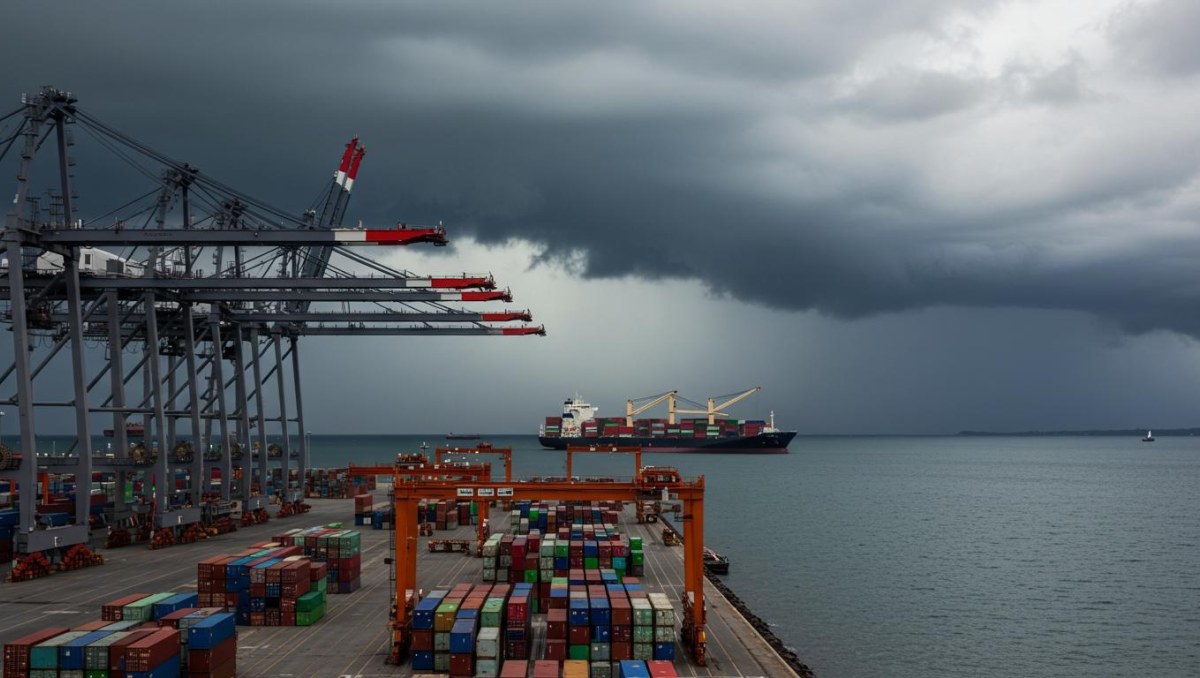
Representing the Ministry of Ports and Airports (MPor), executive secretary Thairyne Oliveira participated in the ceremony at the Palácio do Planalto and emphasized that the increase in agricultural production and exports makes strengthening the country's logistics infrastructure even more strategic. "Brazilian ports are the main gateway for foreign trade, and integration between different modes of transport makes crop evacuation more efficient, reduces costs and shortens timeframes. The resources announced by the Harvest Plan also drive demand for increasingly modern and competitive logistics," Thairyne highlighted.
Waterways gain ground in grain transport
The advance in agricultural production has also expanded the participation of inland waterways in cargo transport. According to the Agroalogistics Yearbook of the National Supply Company (Conab), the share of the inland waterway mode in grain exports rose from 8% in 2010 to 15% in 2025, consolidating itself as a strategic alternative to reduce costs and increase logistics efficiency.


The study also highlights the importance of soybeans, Brazil's main export product, which necessarily passes through national ports. In 2025, grain exports reached 108.18 million tonnes, a volume 9.5% higher than recorded in 2024.
The State of Mato Grosso remained the leading producing and exporting state, with 32.06 million tonnes shipped. Among export corridors, Santos Port led cargo movement with 34.57 million tonnes, followed by the ports of Itaqui (MA), Paranaguá (PR), Barcarena (PA) and Rio Grande (RS). China remains the main destination for Brazilian soybeans, accounting for 85.4 million tonnes purchased, equivalent to 78.9% of product exports.
"The Ministry of Ports and Airports has a fundamental role in ensuring the evacuation of this growing production. Ports and waterways are strategic links for Brazil to maintain its international competitiveness, strengthen food security and transform agribusiness growth into economic development and job creation," concluded Thairyne Oliveira.
Source: content automatically reproduced via official MPORT feed. Editorial credits and copyrights belong to the original source.
```