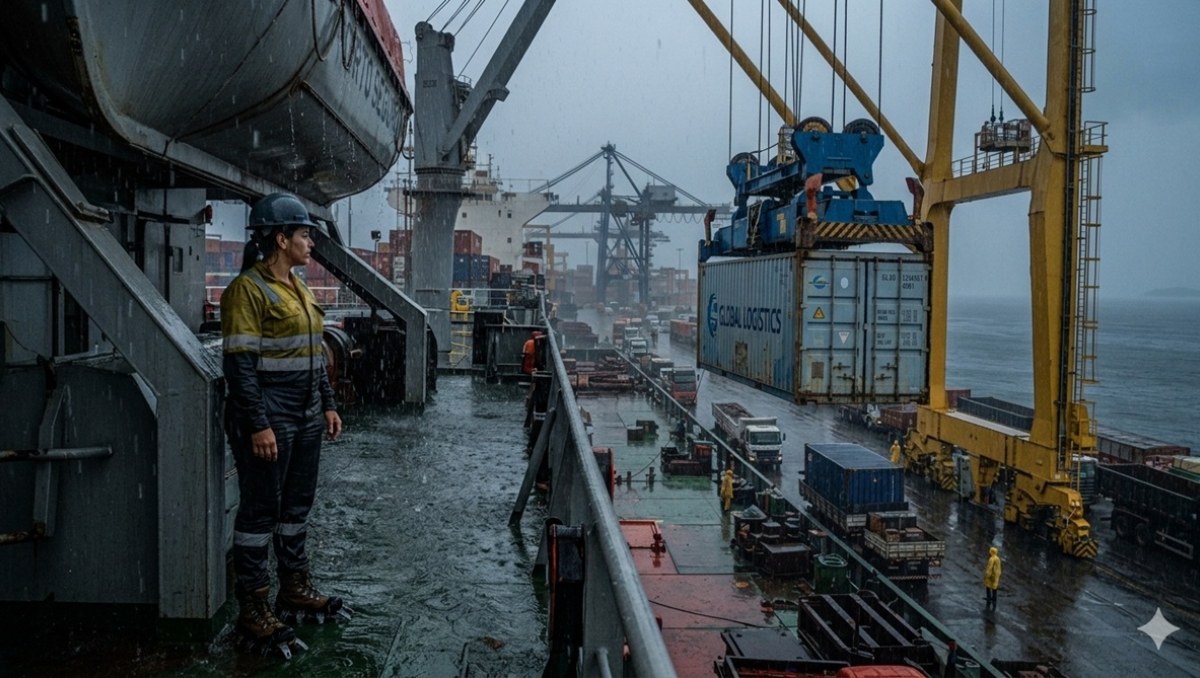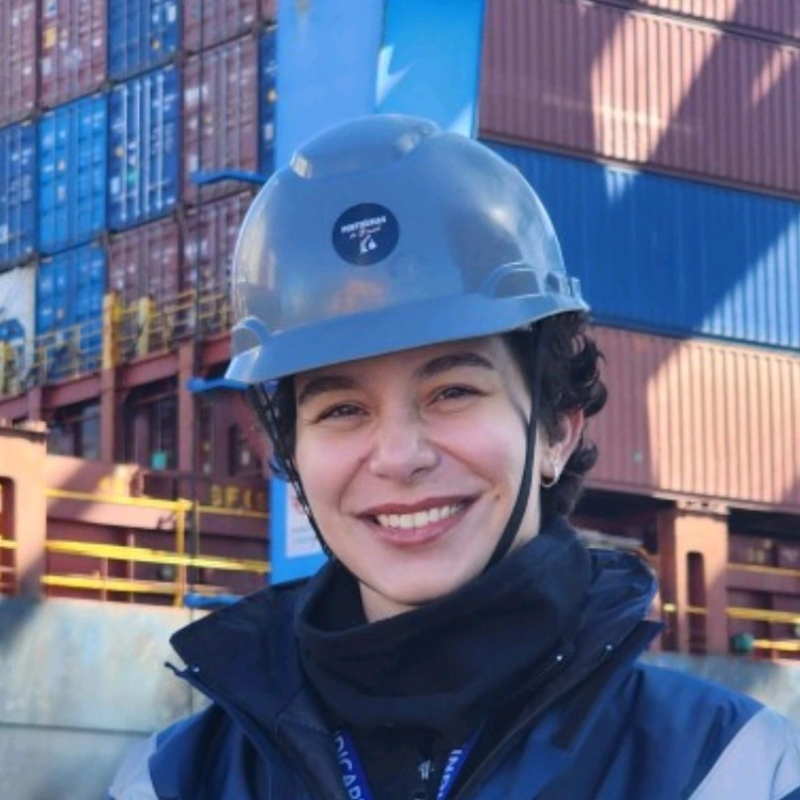
I step out of the car and feel the icy air of the Southern winter touch my face. It doesn't bother me. Preparing to spend the night on deck includes several layers of thermal clothing, covered by a high-visibility uniform. It wouldn't be the late afternoon breeze that would make me shiver. I grab my backpack from the back seat and adjust my hair before putting on my helmet.
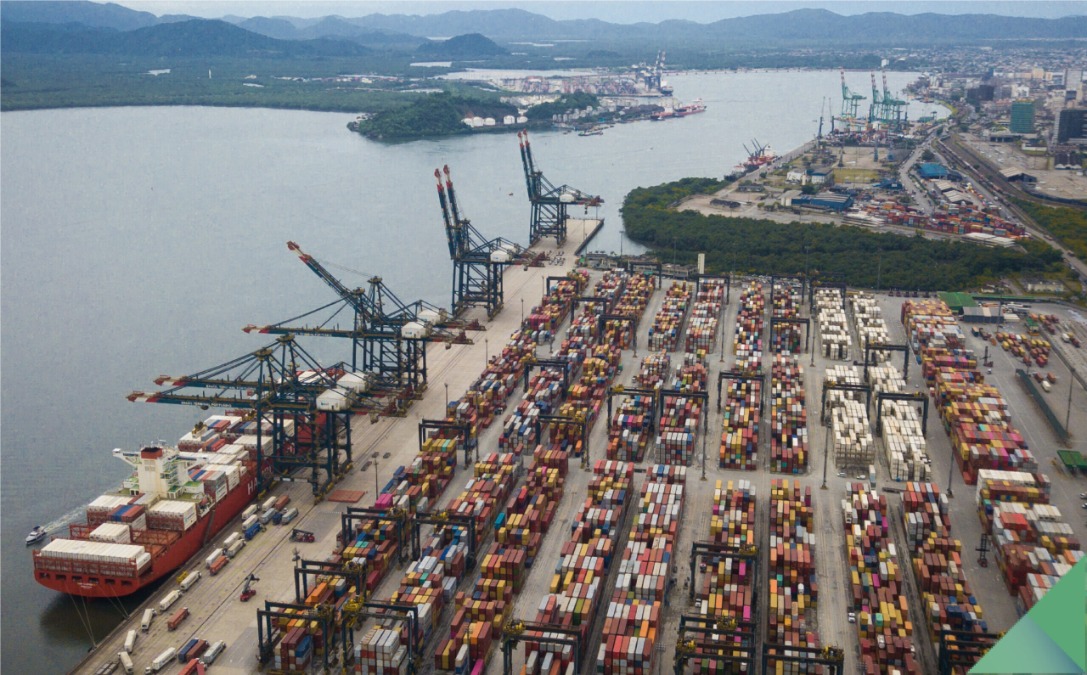
The bus is already waiting for workers in the center of the parking lot. Every fifteen or thirty minutes, it travels our "port circular" route, passing berths 1 and 2. I climb the steps, greet the driver and some colleagues. Each one is in their own world: some watch videos on their phones, others talk about football. I hear comments about tonight's game lineup, some joke or other, and we continue on our way. At the gatehouse, while the security guard was searching my backpack, he asked:
— So, are you going as a foreman today? I smile.
— Not today. I'm on container. He returns the smile of someone who just finished a twelve-hour shift.
— But that's it. Good work out there, girl! I thank him and wish him a good rest.
I bring my hand to the badge on my chest, hold it up to the electronic reader, and the turnstile lets me through. So begins another work shift. This routine seems ordinary today. The presence of women in port work no longer stirs the same strangeness it did decades ago.
We are on the decks and in the holds of ships. We operate equipment, inspect and move cargo, work in safety, hold leadership positions, and perform many other activities that keep Brazilian ports running. But it was not always this way.
When I crossed that same turnstile for the first time, in 2015, this was not yet the reality I found. The story of this transformation began long before my arrival at the port, before any of us put on a helmet and steel-toed boots to work on the dock. Our story begins in 1932, when Brazilian women won the right to vote.
In my view, this was the great milestone that started the timeline of port workers who are women, because from that point on we expanded the effective participation of women in public life and strengthened our influence in shaping the country's policies.
The results began to appear in the years that followed: the Consolidation of Labor Laws, the Statute of Married Women in 1962, and the Federal Constitution of 1988 consolidated equality between men and women in rights and obligations and prohibited discrimination in labor relations. Today it seems absurd to think that, little more than 60 years ago, a woman still needed her husband's permission to work.
But it was precisely this sequence of legal advances that expanded opportunities and paved the way for changes that, a few years later, would begin to reflect in the daily life of ports as well. In 1983, even before the Constitution expressly guaranteed equality between men and women in labor relations, Aidila Menezes, a checker at the Port of Recife, became the first Casual Port Worker woman in Brazil. More than taking on a role until then unprecedented, she became a symbol of a transformation that was beginning to reach Brazilian ports.
In a predominantly male environment, she paved the way for other women to come later, showing that competence never depended on gender. And she was able to witness up close the new cycle of modernization of Brazilian ports in the following decade. Law No. 8,630 also enters our timeline.
From that point on, the sector was reorganized; the Labor Management Body (OGMO) was created and various processes that had until then depended on informal arrangements were professionalized. There also came regulation of casual port work, NR-29, and years later, the new Port Law, consolidating a more modern and secure management model.
And this modernization transformed not just infrastructure and logistics. It also redefined labor relations. With more organized processes, greater professional qualification, specific safety standards, and better-defined responsibilities, ports began to offer a more structured environment prepared to receive an increasingly diverse workforce.
```html

It was in this environment that the female presence found conditions to grow more consistently. Over the past decades, Brazilian legislation continued to evolve. New rights were consolidated, public policies expanded protections for women, and the world of work came to recognize that equality depends not only on law, but also on the conditions for it to be effectively lived out. Today, the challenge is no longer the absence of rights in legislation.
The challenge has become turning these rights into reality in the day-to-day operations of ports. When we observe the evolution of women's entry into port work, we see that this growth did not happen by chance. It accompanied, gradually, the maturation of institutions, legislation, and the organizational culture of ports themselves.
The update to NR-1 represents another chapter in this trajectory. By incorporating psychosocial risks into occupational risk management, it broadens the concept of workplace safety. Protecting the worker no longer means merely preventing physical accidents and now also includes the prevention of harassment, violence, mental illness, and other situations that compromise their dignity.
At first glance, it may seem that all these changes concern only women. But one need only observe their effects to see that their benefits reach the entire port community. An environment that prevents harassment is an environment where people trust institutions more. Management that recognizes psychosocial risks protects workers' health. Relations based on respect strengthen teams, reduce conflicts, and make organizations more efficient.
When a port becomes safer for a woman, it also becomes safer for everyone. It is often said that women's rights are human rights. In ports, this idea takes on a very concrete translation: safe work environments for women are better work environments for all.
When Aidila Menezes entered port work in 1983, she represented an exception. When I walked through that gate for the first time in 2015, this reality was already beginning to change. Today, thousands of women are part of the routine in Brazilian ports.
This transformation did not happen by chance. It was built over decades by port workers, unions, port operators, OGMOs, port authorities, public agencies, and by legislation that expanded opportunities and raised standards of safety, dignity, and respect in the workplace. There are still important challenges ahead. Female participation remains small in various activities, and the construction of truly safe environments requires continuous improvement of institutions and people.
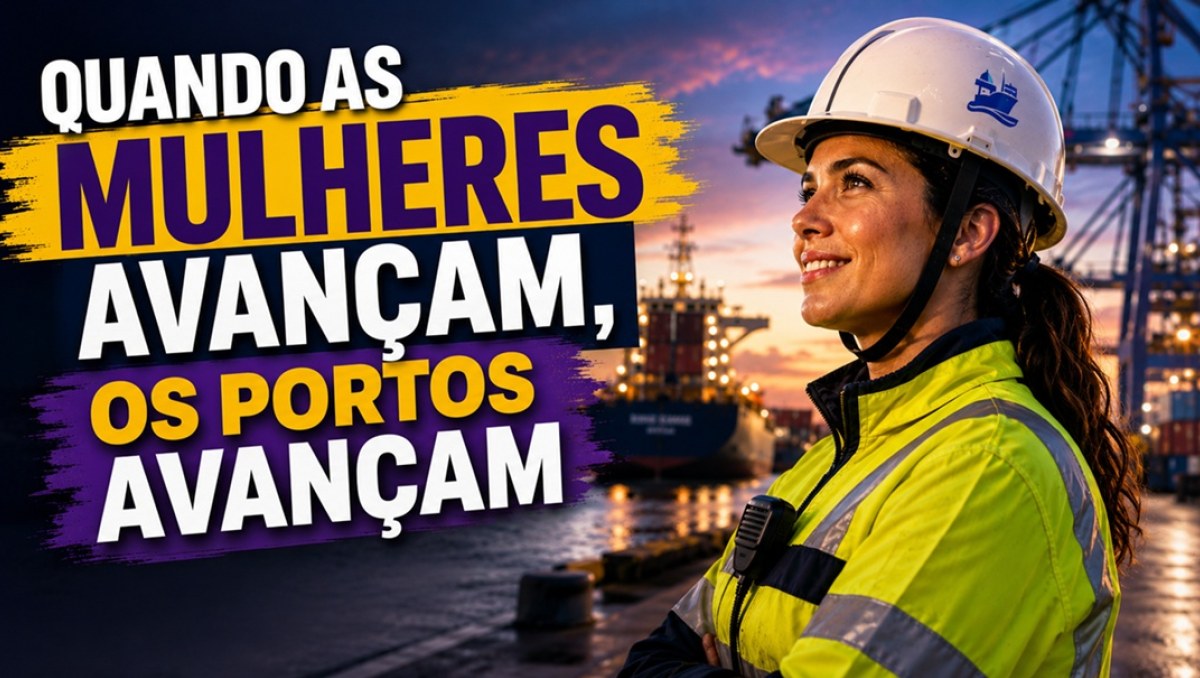
But the direction has already been set. Each advance achieved by a woman raised the standard of the work environment for all. When ports create conditions for a woman to work with safety, respect, and equality, they raise the standard of protection for the entire port community. Because when women advance, ports advance.
Daiane Silva de Jesus is a port warden at the Port of Imbituba (SC), a civil engineer and graduate student in Occupational Safety Engineering at PUC Minas. She represents FENCCOVIB on the Gender Equity Working Group of the Ministry of Ports and Airports and develops studies and projects focused on Safety and Health at Work in the port sector.
```