
The TECON Santos 10 "soap opera" continues, reminiscent of another: "Redenção" (Redemption), broadcast on the defunct TV Excelsior between May 1966 and December 1968, with a total of 596 episodes.
However, the essential structural works necessary for Brazil's socioeconomic development with environmental responsibility are "soap operas" far longer, with more episodes and plot twists than the most unusual artistic productions, although the "standard" adopted in our country appears to be exactly that.
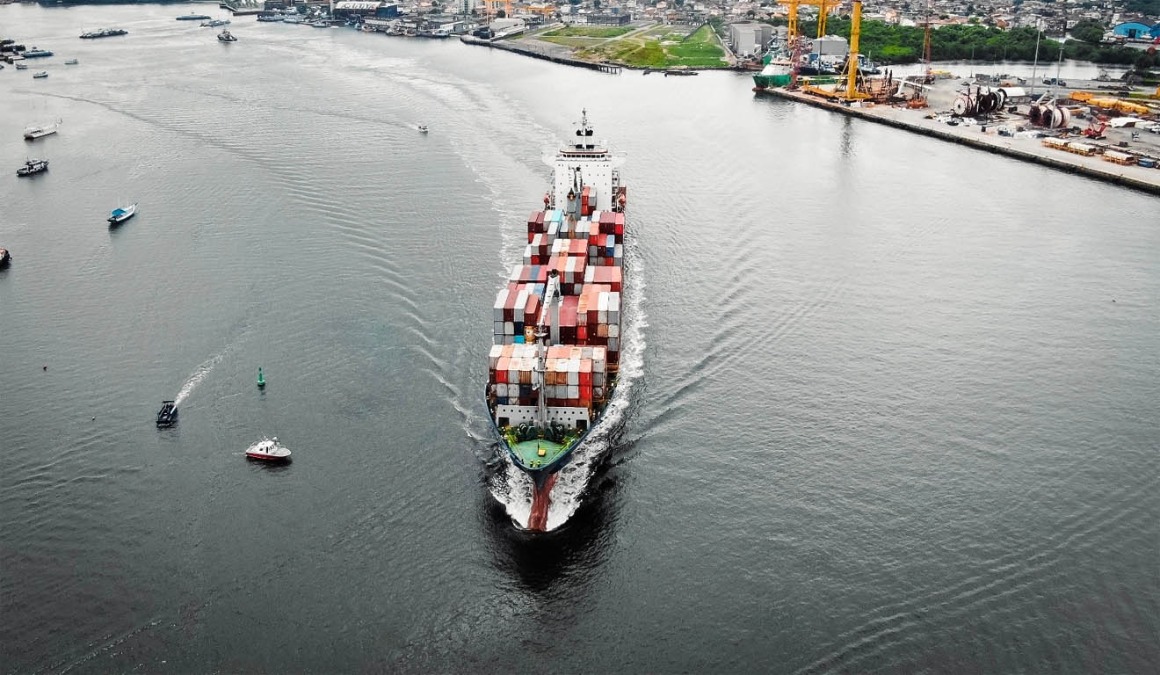
No one doubts the importance of this future terminal. The 2020 Master Development Plan (PDZ) of the Port of Santos already foresaw the allocation of the area for container operations, integrating a specific "cluster" for that purpose.
Thus, six years have gone by.
In 2022, it was the STS10 and was within the scope of the privatization proposal for the Santos Port Authority (APS).
Once this intention was discontinued, the delay in resuming the matter led to an alternative proposal from APS, which provided for the densification of two existing terminals (BTP and Ecoporto) and the relocation of the Cruise Terminal.
That proposal was discarded, but it served to resume the matter by the Ministry of Ports and Airports, now under the designation TECON Santos 10.
ANTAQ, MPor, TCU, CADE and even the Civil House of the Presidency of the Republic, plus some heavyweight supporting players, took the lead in the process.
Even the U.S. Consul in the State of São Paulo entered the process, expressing concern about the possibility of China winning the bidding tender.
TECON Santos 10 became a sensitive issue within the geopolitical sphere!
With several plot twists, the discussion still persists: auction with or without restrictions on participation by current lessees and shipowners.
In my opinion, the most sensible option is that the only restriction be regarding participation by current lessees.
Directly or indirectly, CMA CGM, MSC (TIL) and MAERSK (APM Terminals) fall into this category. DP World, although being a private-use terminal (TUP), would also face impediment.
In one of the most recent developments, it was suggested that lessees of container terminals may participate in the bidding tender, provided they formally relinquish that status.
However, the impasse persists and a decision on the bidding continues to be postponed, despite the clamor for increased container handling capacity at the Port of Santos.
Add to this concerning scenario the uncertainty over the fate of Ilha dos Bagres, the delay in defining private-use terminals (TUPs) and concrete actions for creating a regional Free Trade Zone with headquarters in the mainland area of Santos. The result is that Brazil's main port complex has seen its necessary and urgent territorial and operational expansion postponed or restricted. This without mentioning lengthy environmental licensing and recurring judicial challenges that the current legal framework so readily favors.


In the expectation that the auction will be made viable, with the only restriction being not to be a lessee of a container terminal at the port, MSC and MAERSK formalized to CADE their intention to sell their shareholdings in the BTP terminal to each other if they win the tender. This will allow the four major container terminals in the local port complex (TECON Santos 10, BTP, Santos Brasil and DP World) to operate under conditions of competitive equilibrium.
``` ```htmlWhat about the possible victory of a Chinese company?
Imposing restrictions would place Brazil in an uncomfortable position vis-à-vis its main economic partner, without those proposing such restriction offering compensation. Failing to do so can also have repercussions in the geopolitical context.
Meanwhile, private-use terminals (TUPs) continue to be approved and deployed, putting the competitiveness of public ports at risk.
Considering all statements from the entities involved, institutional and private, any model to be adopted involves risks.
How to avoid them or, at minimum, mitigate them?
I believe this will fall fundamentally to ANTAQ and CADE, through monitoring and control mechanisms that deter, preferably in a responsive manner, and punish abuses by port operators. This must be done clearly and objectively, avoiding opportunistic interpretations and litigation.
It is also important to recall that the terrestrial access infrastructure to Santos Port, especially on the right bank, also needs to be expanded and expedited, increasingly seeking rationalization of its transport matrix.
The port and infrastructure sectors in general are fundamental to Brazil's development!
Therefore they must be treated with responsibility, without question. However, they cannot be held hostage by draconian, vague, or ambiguous legislation. Nor can they do without the agility necessary to recover the many years lost in the country's strategic planning, which has so hampered the dynamization and diversification of our economy and job creation.
In the old soap opera, Redemption was merely the name of a city whose residents were full of ambiguities and contradictions. Because of this, the author was able to extend it to the limit of artistic exhaustion, which resulted in a "diaspora" of its actors. Most migrated to other TV networks.
This cannot happen to Santos Port, which has the potential for much more, without harming the development of other national port complexes, public or private.
To that end, Brazil needs a redemption in the etymological sense of the word!
It is a matter of State!
```