
Every country needs strategic planning! As a matter of fact, companies and people do as well.
Brazil has this at various levels, however, what is planned is rarely fully implemented, as it depends on externalities that are not considered or over which there is no control.
Thus, it is pointless to draw up a plan, however well crafted it may be, if the local framework restricts its implementation.
For countries of smaller territorial extent, planning tends to be more effective, in theory integrating various strategic sectors. In larger countries, however, national planning must be broken down into state and even regional plans.
Thus, national planning can set macro guidelines, leaving the details to the "shop floor," that is, to where activities actually take place.
It is true that regional imbalance should be avoided, as it can have negative implications, such as migration flows in search of employment and better living conditions, for example.
In Brazil's case, the Federal Pact and the recent Administrative Reform act in this area; the Export Processing Zones regime also does.
The creation of SUDENE in 1959, SUDAM in 1966, and the Manaus Free Trade Zone in 1967, in addition to other institutions, had a similar objective.
Did they deliver results that would justify their discontinuance, as a function of the benefited states and regions achieving autonomy?
Palliative solutions, such as social welfare, do not solve the problem of lack of education and vocational training adequate to market demand, nor the lack of work itself, stemming from the shortage of investments in infrastructure and productive activities. On the contrary, they tend to generate convenient complacency and/or informal work, burdening health and social security systems, and even economic activities that generate the resources that sustain these benefits, through increased taxation.
For a plan to be feasible, it is not enough that it point out guidelines or sources of financing. It is also necessary that it indicate what needs to be reviewed or changed in order for it to achieve the desired results.
It is pointless to propose energy and transport infrastructures to be built within the time frame of the strategic plan without considering the laws that could hamper their fulfillment. To point them out and propose solutions, triggering an institutional review process.
The level of detail in strategic plans grows depending on the governmental level and cannot dispense with the participation of the private sector. Society's participation is important, but it cannot be restricted to political-partisan or ideological interests.
It is necessary to make clear and in a holistic way the consequences of certain proposals and ideas, which may seem socially appealing, but which will be unviable even to fulfill the intention of those who suggested them.
The National Logistics Plan (PNL 2050) is in the drafting phase, before the current one (PNL 2035) has delivered the desired results. The São Paulo State Government, in line with this planning instrument, is drawing up its Logistics and Investment Plan (PLI-SP 2050).
The Federal Government is developing the National Ports Decarbonization Plan (PND-Ports) and the Navigation Decarbonization Plan (PND-Navigation).
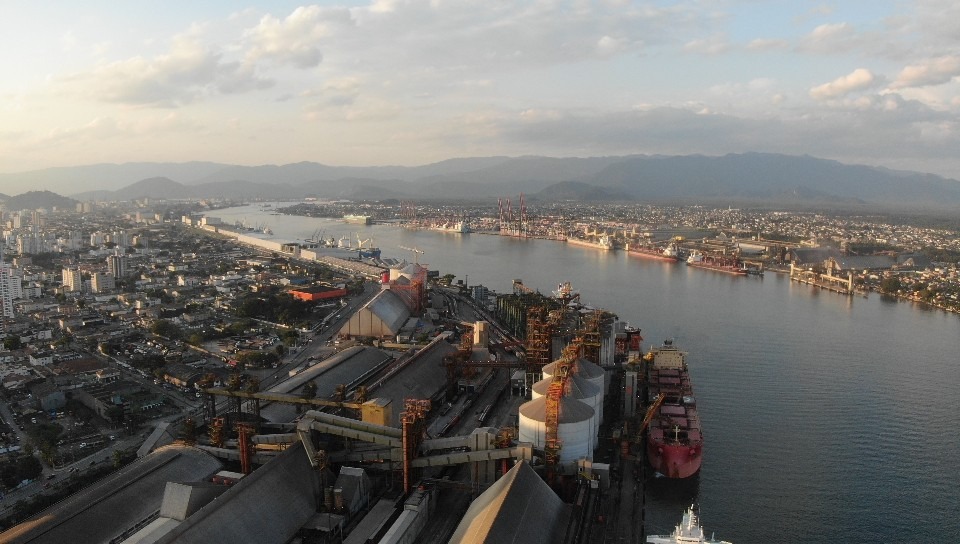
``` ```htmlThe Santos Port Authority hired the Valenciaport Foundation to draw up a decarbonization and energy transition plan for the Port of Santos.
This makes sense, because beyond broad strategic guidelines, each port has its own peculiarities.
The same applies to specific port planning instruments:
Master Plans for ports are currently drawn up by the Ministry of Ports and Airports, while Development and Zoning Plans are produced by the Port Authorities.
This demonstrates that, if macroplanning falls to the Federal Government, the details are the prerogative of those who actually "get their hands dirty". In the case of the Port of Santos, the 2020 PDZ, still in force, proposed the creation of "clusters", which was not explicit in the Master Plan. Moreover, the lack of alignment between the authors of this planning instrument in the context of the port-city relationship and the failure to consider contributions from other local players led the Federal Court of Accounts (TCU) to require the then Special Secretariat of Ports of the Presidency of the Republic to revise the Master Plan in 2015.
Thus, what is missing, beyond overcoming obstacles related to legal and regulatory uncertainty, through proactive action by the Executive and Legislative branches, with the Judiciary limiting itself exclusively to its constitutional duties, is that local agents have autonomy.
The delegation of competencies should enable this autonomy more broadly, with transparency, professionalism and results-based management.
To some extent, this already occurs partially and without being a rule.


Bill 733/2025 provides for greater participation by Port Authority Councils in this process, which could be a first step in this disruptive innovation.
Disruptive innovation?
I believe that a good example of successful disruptive innovation was the implementation of the first Special Economic Zone in China, in the city of Shenzhen, in 1980.
This was the Chinese people's first capitalist experiment, strategically close to Hong Kong, when it was still under British control.
Today, there are thousands of SEZs in China; Shenzhen is one of its major ports and the country has become a global economic powerhouse.
Brazilian ports and other assets controlled by the Federal Government need to have greater flexibility to innovate and seek new markets.
Anyone working in the port sector knows that cargo is what runs the port.
The Port of Santos, being multipurpose, is particularly in demand and should have a PDZ that goes beyond a mere detail of the Master Plan.
The growing handling of cellulose in public and private terminals of the local complex is an example of alignment by the Santos Port Authority with market trends and demands.
The PDZ can be even more comprehensive, involving other strategic aspects that serve as arguments for receiving the necessary institutional support, without depending exclusively on Brasília to achieve the desired objectives.
The development of the Port of Santos, like any port complex, does not depend on it alone. Strategic planning makes it possible to identify weaknesses, threats, strengths and opportunities (SWOT analysis).
The weaknesses are widely known, generally associated with the legal framework, its complexities, conflicts and ambiguities.
``` ```htmlBut threats need to be transformed into opportunities based on existing and potential strengths.
The PDZ must consider the effects of climate change, competition with other port complexes, including the risk of losing cargo due to inability to meet demand. It must also point out the works necessary for sustained expansion; identify and attract new cargo, diversifying its export portfolio, especially with higher value-added and high-technology cargo; create, in partnership with municipalities, attractive conditions for the implementation of port-industry activities, in the best interest of the port-city relationship; invest in R&D.
Santos Port Authority has innovated in several aspects, which has reinforced its status as a national reference.
Currently there are control mechanisms that allow port authorities to act with greater flexibility, agility and accountability. Performance indicators are not lacking!
The challenge is, as already mentioned, to remove the obstacles that have historically hindered Brazil's sustained development, so as to allow well-designed strategic plans to be effectively implemented, with multiple benefits to the country and its people.
I do not know if this can be considered a disruptive process, but this understanding is possible, even if only partially.
Brazil needs to be disruptive in other sensitive areas, but this implies excluding and punishing some actors who benefit from the status quo.
This also includes subordinating the exploitation of our natural resources by foreigners to the creation of related industrial plants, scientific research and technology transfer in our country.
Also because of this, China had its disruptive innovation.
But that will be a topic for another article.
```