access infrastructure to port complexes and the impacts of climate change is a challenge to Brazil's sustained development.
Part of that challenge is the need to reduce logistics lead times and diversify the portfolio of exported products, which is directly related to foreign trade and, consequently, to the national economy.
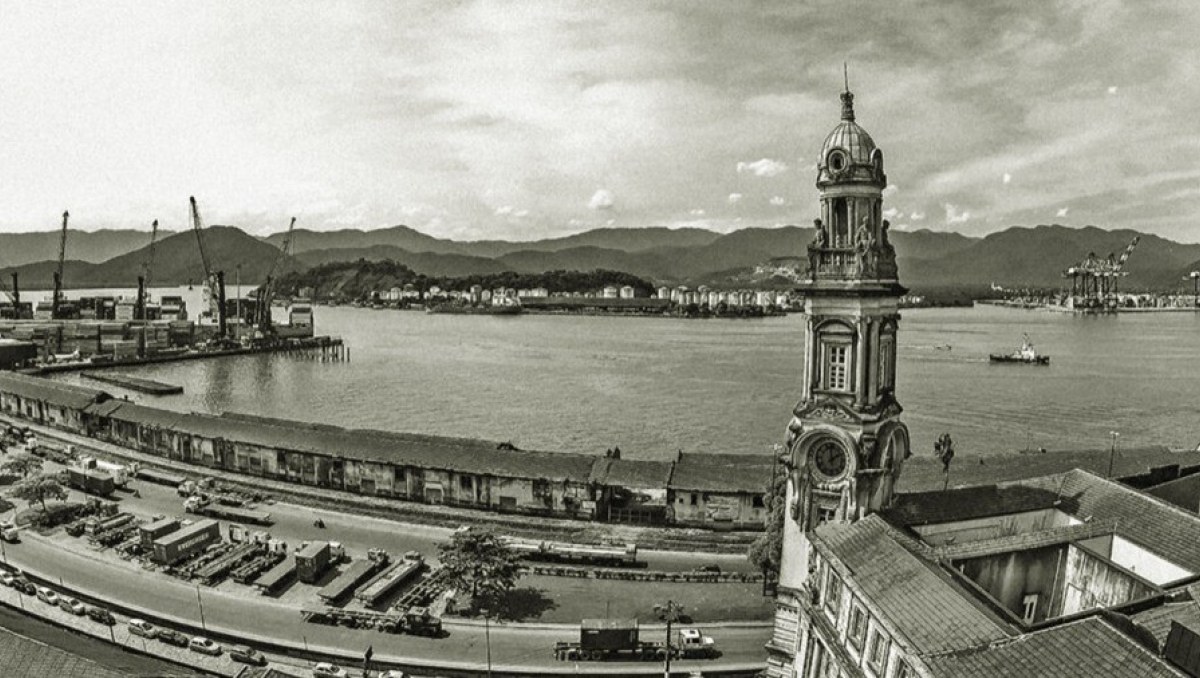
This applies to any port, but I will restrict myself to the case of Santos Port, although some aspects are applicable to other port complexes.
In my opinion, this topic is fundamental to the socioeconomic development with social responsibility of the region, the state and the country, for multiple reasons, including:
- The operation of agribusiness bulk cargo at Santos Port, despite the growing trend in agribusiness production, can be negatively affected by the effects of climate change and competition with Northern Arc ports and future biocean corridors, especially the one that will connect Northeast ports with Chancay, in Peru; and
- As important as increasing cargo throughput by tonnage is adding value per tonnage, which presupposes increased science and technology in this process.
Ideally, Master Plans and PDZs should consider attracting higher value-added cargo. However, unless I am mistaken, this has not occurred, in fact, not even in the PNL 2035. I hope that the PNL 2050 addresses this topic, and the same holds for the PLI-SP 2050, in the State of São Paulo.
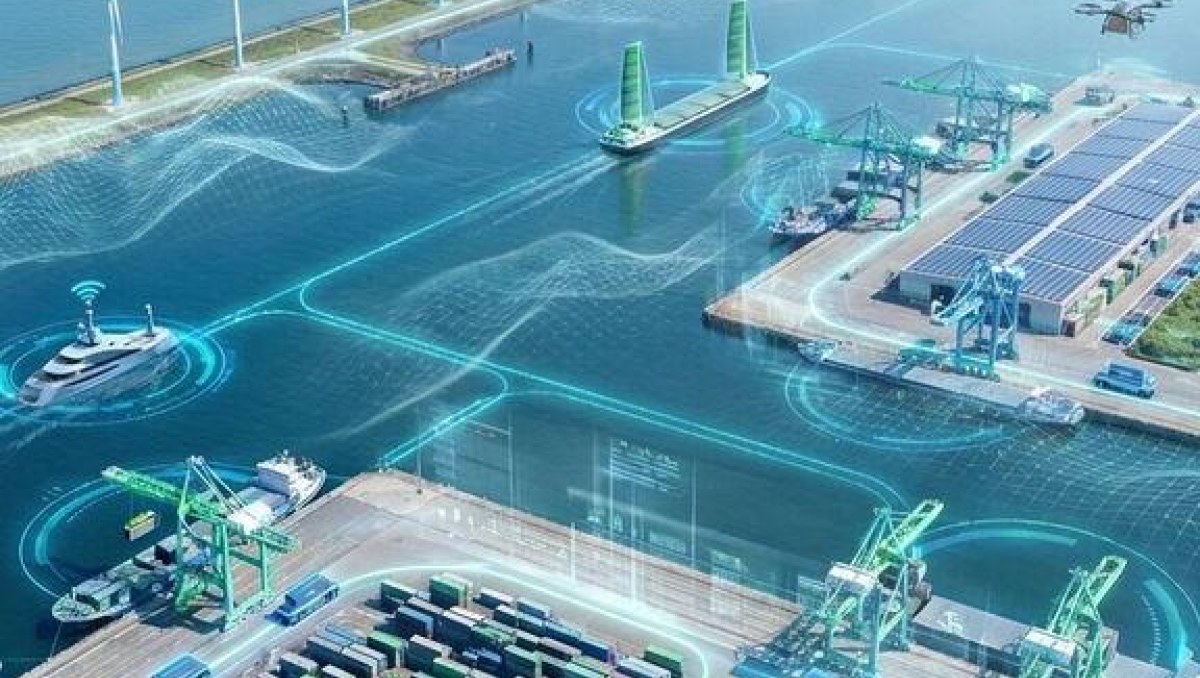
Santos Port Authority (APS) has invested significantly in R&D, relying on an excellent team of technical staff, in addition to external partnerships.
Support for "startups," scholarships made available by the CENEP-Santos Foundation and contracts and agreements with universities and technological park foundations have enhanced port operations. These initiatives, coupled with the dynamism of port operators, have resulted in successive cargo throughput records. The definition of "clusters" also played a key role in this process. However, it is necessary to add value to cargo throughput, as well as minimize the effects of climate change on operations.
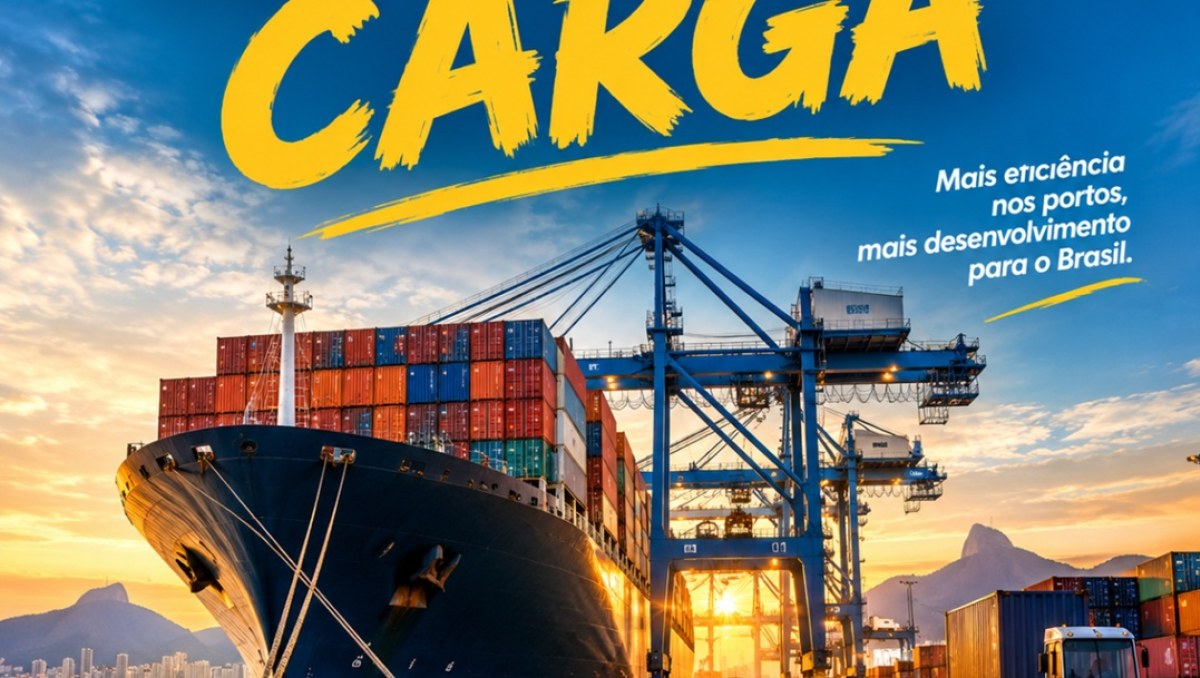
It is notable that cargo moved by containers and project cargo are less susceptible to climate factors than solid bulk cargo inherent to agribusiness.
The implementation of TECON Santos 10 has been a "Gordian knot" that needs an Alexander the Great. The same applies to the uncertainty regarding the effective occupation of Bagres Island, which, in my opinion, should be within the Organized Port of Santos polygon.
In both cases, it seems that port expansion for this type of cargo, which is fundamental to ensure the operation of higher value-added cargo and the future of Santos Port itself, needs to be approached more incisively.
The expectation is that both be made viable, but it is also necessary to add industrialized products to Santos Port's export portfolio, and not just more containers to export coffee, a recurring plea from this sector.
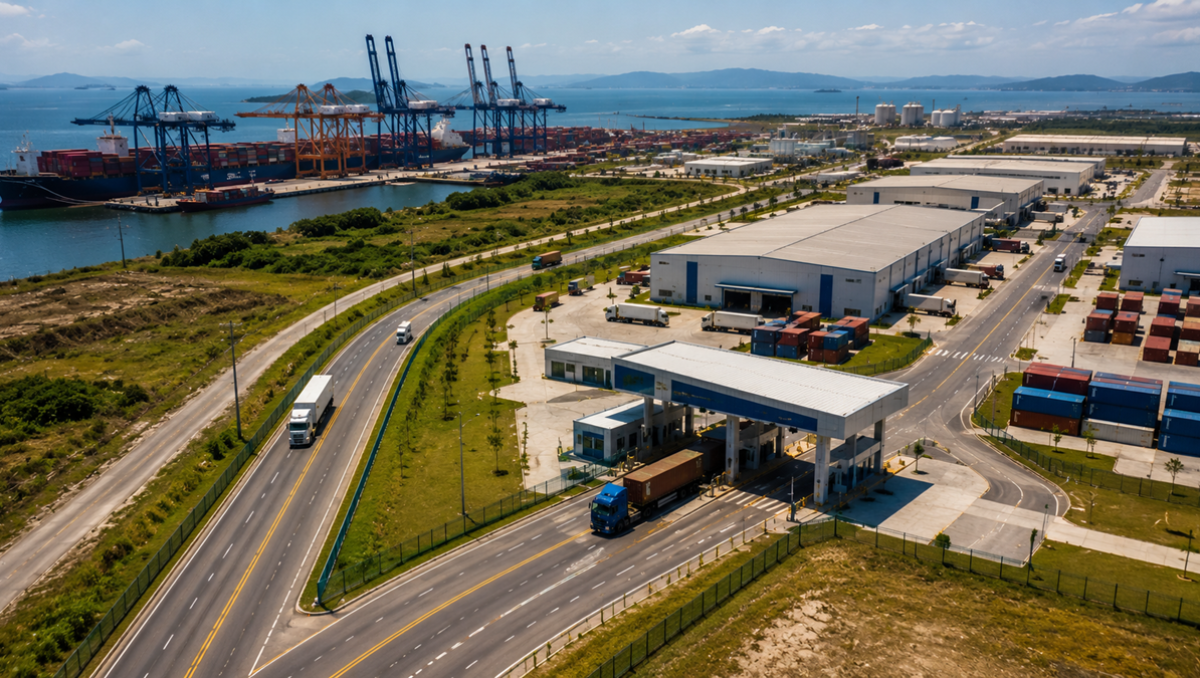
Bringing industrial production closer to the port will reduce logistics costs. Its inclusion in differentiated import/export regimes will do the same with respect to taxes and exchange, whether in the form of "drawback" or through the creation of a regional Export Processing Zone (ZPE).
``` ```htmlThe continental area of Santos is considered the location with the best potential for this type of enterprise, according to studies conducted by the Foundation for Technological Development in Engineering (FDTE) and by the Spanish government in the early 2010s, both held by the Federal Government since the time of the Special Secretariat for Ports of the Presidency of the Republic (SEP/PR).
A regional Export Processing Zone would encompass areas in Guarujá and, even without being suited to host such an installation, Cubatão, as well as other municipalities, following the criterion of a maximum distance of 30 km between plots of land.
This model can include even industrial production in plants located in the interior of São Paulo State. In the case of project cargo, instead of large-scale equipment being transported slowly, in special trailers, subject to geometric limitations of land access to Santos Port, they could arrive in the form of CKD (Completely Knock-Down – Completely Disassembled Kits), transported in conventional trailers or containers, to be assembled in the vicinity of the port complex, generating jobs in the Greater São Paulo Metropolitan Area of Baixada Santista and drawing on graduates from local technical schools and higher education courses.


The Federal Government, under the current Export Processing Zone regime, acts indirectly in its creation, limiting itself to evaluating and approving proposals from municipalities and states, individually or jointly, and, since 2021, from the private sector.
However, nothing prevents it from fostering the proximity of industrial production geared toward exports, prioritarily close to port complexes.
The improvement of the model should also be constantly considered, including deliberating on including in the regime differentiated treatment regarding environmental licensing. After all, economic growth is strategic for the country, both in generating revenues and creating qualified jobs, reducing demand for social programs.
In this sense, attracting port-industry activities can and should be foreseen in Master Plans, in PDZs and, even, in the PNL 2050, that is, making it truly strategic.
I have repeatedly addressed this matter, including with MPor and Infra S.A.
Based on a study on the industrial vocation of ports, which can also be considered for cargo airports, the Federal Government would shift from passive to active agent, conducting national and international Public Calls to identify those interested in implementing Export Processing Zones.
Even if there is no government study on the subject, Public Calls could be made by Port Authorities, falling to those responsible for the proposals deemed most appropriate to provide their referral to the National Council for Export Processing Zones (CZPE), of MDIC.
In theory, a Public Call can provide relevant data for the strategic planning of Brazilian ports. At the very least, it will demonstrate the ports' readiness to consider this type of enterprise.
Furthermore, its cost tends to be negligible for port authorities, recalling that the proposal can also come from the private sector.
Although an Export Processing Zone cannot be located within the port polygon, I believe it is unquestionably in the interest of port complex managers to attract new cargo, mainly those of higher added value, high technology and low environmental impact.
It is also important to note that the Export Processing Zone regime cannot remain restricted to reducing regional imbalances, but should also be an effective instrument that favors the competitiveness of industrialized products in Brazilian exports.
``` ```htmlSimilar models adopted by other countries, especially Asian ones, have yielded significant positive results. Some of them, by conditioning the establishment of foreign companies to technology transfer and national investments in cutting-edge technical and scientific training, are today industrial and economic powerhouses at the global level, now producing scientific research and registering patents, with an emphasis on innovation.
This is of strategic interest to the country, therefore. And it has everything to do with national sovereignty.
```