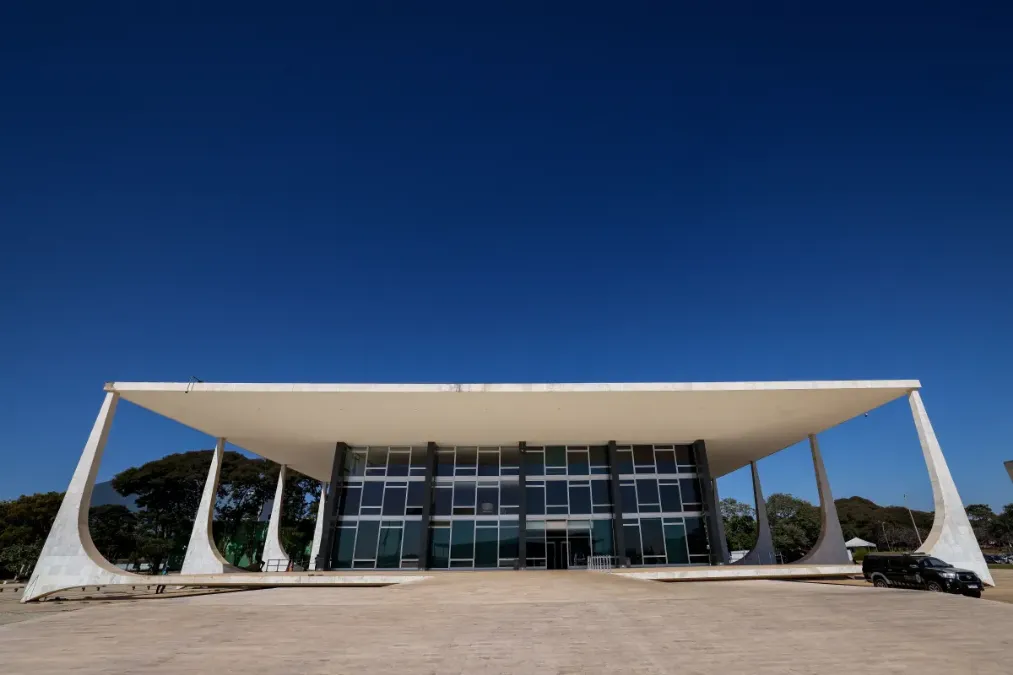
The Federal Supreme Court (STF) unanimously decided to recognize the thesis defended by the National Agency for Waterway Transport (Antaq) and annulled a decision by the Court of Accounts of the Union (TCU) that prohibited the charging of the Segregation and Delivery Service (SSE) fee at Brazilian container terminals.
The action was filed by the Brazilian Association of Container Terminals (Abratec), which challenged in the Supreme Court the TCU decision that had prevented port terminals from charging for the service related to the management and provision of imported cargo.
The ministers followed the vote of the case's rapporteur, Justice Dias Toffoli, who concluded that the Court of Accounts overstepped competencies that belong to Antaq, responsible for technical and economic regulation of the port sector.
In the rapporteur's view, it is up to the TCU to exercise control over public administration, but not to substitute technical decisions made by specialized regulatory agencies. According to him, Antaq had already addressed the matter in technical proceedings and public consultations conducted within sector regulation.
For Abratec, which represents the country's leading container terminals, the Supreme Court's decision represents an important advance for regulatory predictability and legal certainty in the logistics operations of Brazilian ports.
The entity's chief executive officer, Caio Morel, stated that the decision reaffirms a fundamental principle for regulated sectors: the definition of technical rules should remain within the scope of regulatory agencies.
According to him, by recognizing this competency, the STF preserves the legal certainty and predictability necessary for the operation and investments in container terminals.


Experts also assessed that the decision reinforces the role of regulatory agencies. Attorney Diogo Nebias, an infrastructure specialist, highlighted that Antaq has a qualified technical staff to analyze and regulate specific operational and economic aspects of the port sector.
For him, the Court's decision was correct in preventing the TCU from suspending the SSE charge, also known in the market as THC2, at container terminals.
Meanwhile, attorney Mayra Mega Itaborahy, a specialist in corporate contracts, emphasized that the judgment did not directly analyze the legality of the SSE charge. According to her, the Supreme Court addressed only the limits of the Court of Accounts' actions.
According to the expert, although there are legal controversies on the subject, the STF's understanding was that the TCU's competency to oversee public administration does not include enacting or suspending regulations of regulatory agencies.
She also noted that any eventual challenges to the legality of the charge may continue to be analyzed by the Judiciary.
```