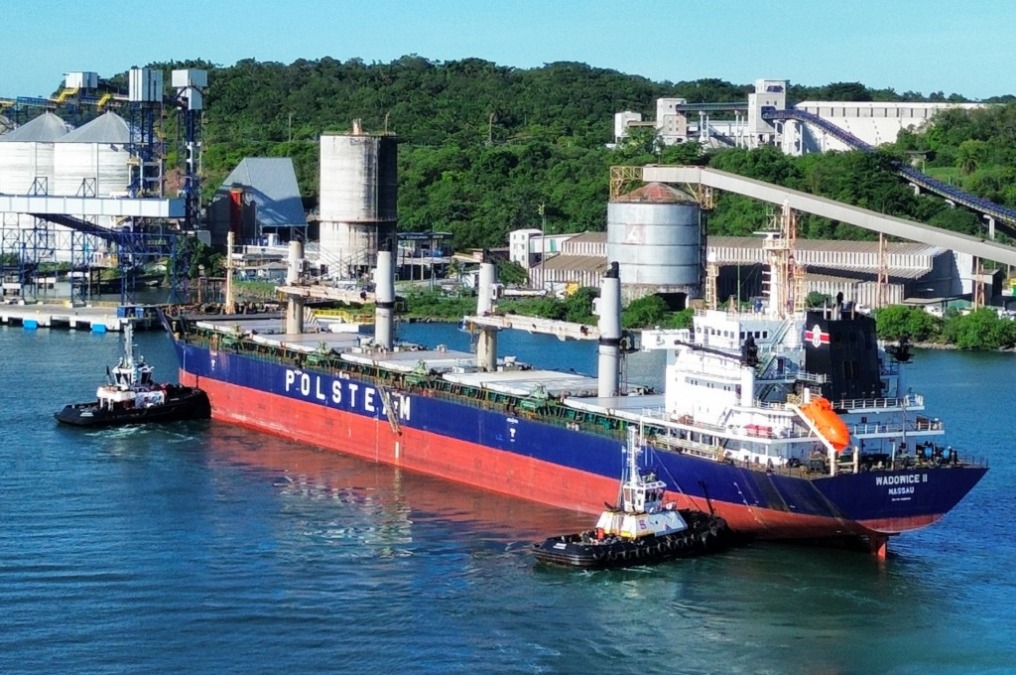
The Port of Aratu-Candeias (BA) has begun operations for vegetable bulk cargo. The activity will be carried out at terminal ATU 18, with the movement of 35,000 tons of sorghum. The cargo originates in western Bahia and marks the beginning of a new logistics front for the export of Bahia's agricultural production. With the expansion of operational capacity, the terminal will be able to handle up to 3.5 million tons of grain per year. In this first year of operation, the forecast is to handle up to 3 million tons, with initial static storage capacity of 120,000 tons.
The forecast is that, after further expansions, movement could reach 7.5 million tons annually. The current modernization of the terminal was carried out by CS Portos, a company of CS Infra, which is part of the Simpar group. In total, over R$ 400 million was invested in revitalization works and improvements to ATU 18, which is now dedicated to the handling and storage of vegetable bulk cargo, mainly soybeans, corn and sorghum.
Created in the 1970s to meet the logistics demands of the Camaçari Petrochemical Complex, the port complex has maintained, throughout its history, a predominant focus on the movement of cargo linked to petrochemical and mineral industries. With the inauguration of the solid bulk terminals ATU 12 and ATU 18, the operational structure was expanded, allowing the port to begin processing this type of cargo and diversify its operational profile.
The president of the Federal Port Authority – Codeba, Antonio Gobbo, who administers the Port of Aratu, projects that the terminal will achieve the highest movement in its history, with the expansion of the backland infrastructure, the construction of four silos, each with a capacity of 30,000 tons, and the automation of operations through the modern conveyors installed at ATU 18.
"All this investment will reduce the time and costs of operations and should generate an increase of more than 20% in cargo movement," said Gobbo, who also projects growth for the Port of Salvador, after the terminal reaches record movement levels, leading Codeba to release additional space to meet the demand from operations.


For CS Portos' chief executive officer, Marcos Tourinho, the start of vegetable bulk operations at ATU 18 expands its strategic relevance by incorporating an operation aimed at the export of agricultural production. "We delivered a structure worthy of the potential of agribusiness, helping to reduce logistics bottlenecks, increase productivity and drive economic development in the region," he said.
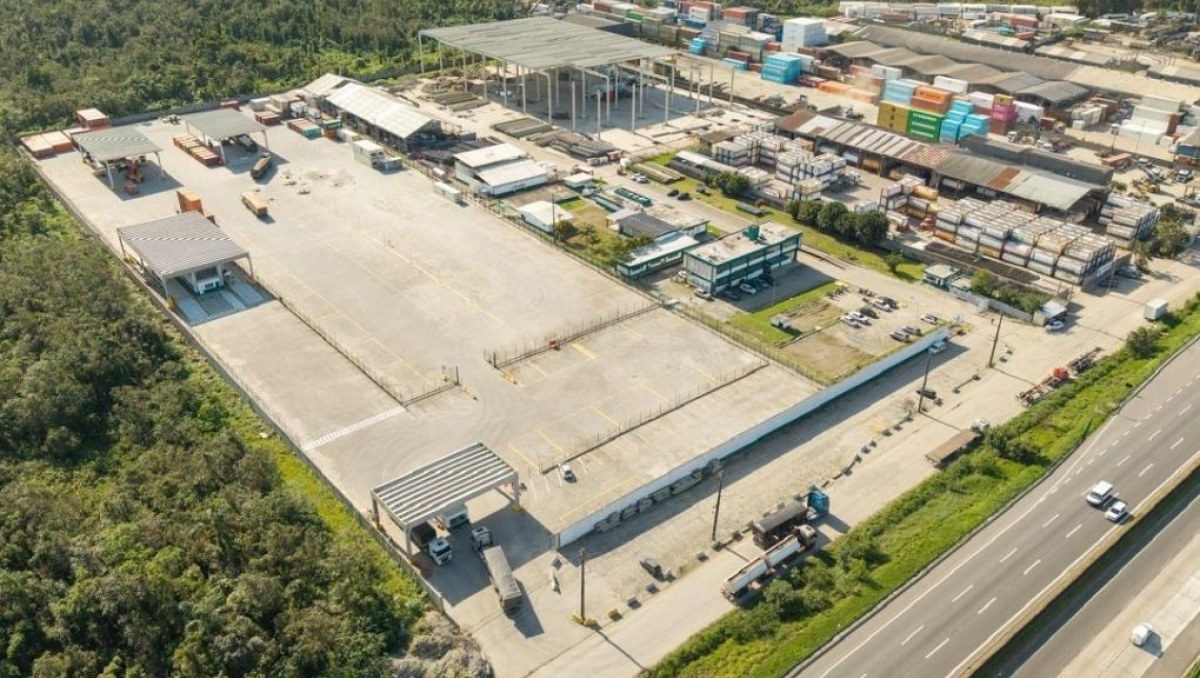
The resources were applied to the construction of strategic infrastructure, such as classifiers, dumpers, road hoppers, vehicle yard and four silos, each with a capacity to store 30,000 tons. State-of-the-art equipment was also acquired to increase operational efficiency.
Among the main equipment installed is a shiploader dedicated exclusively to the export of grains, with a capacity of up to two thousand tons per hour. The system will allow average productivity of up to 30,000 tons per day at the vegetable bulk terminal.
CS Portos operates the unloading, loading and storage services at the ATU-12 and ATU-18 port terminals at the Port of Aratu, in Candeias (BA). The contracts have a duration of 25 and 15 years, respectively, and may be extended for up to 70 years. The products handled at the facility are mainly oriented toward agribusiness, such as fertilizers and grains, as well as copper concentrate, iron ore and magnesite.
```