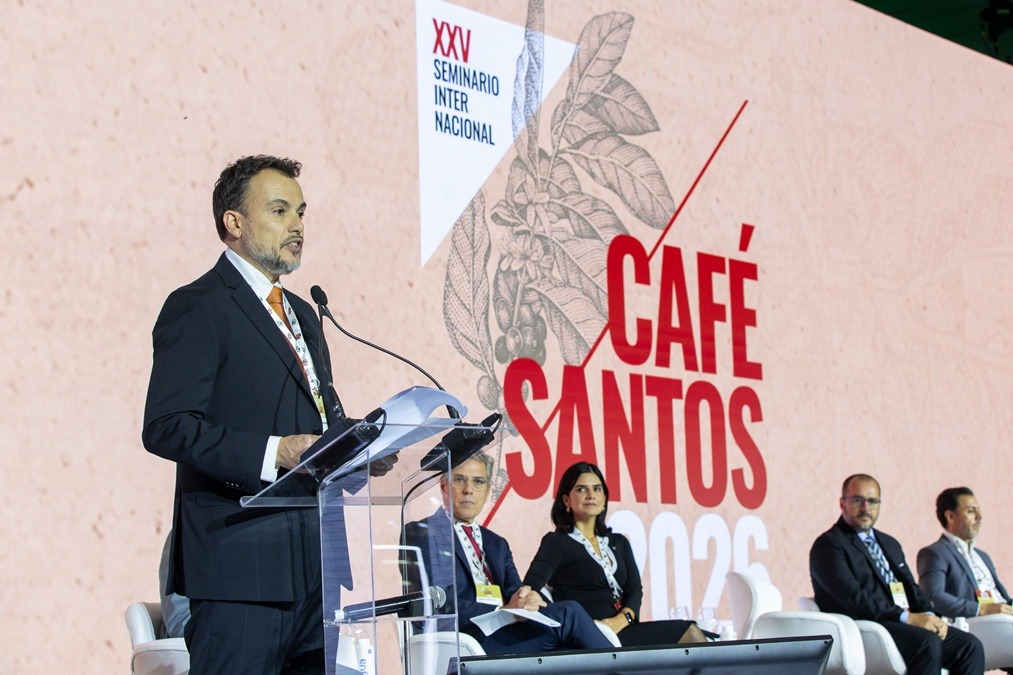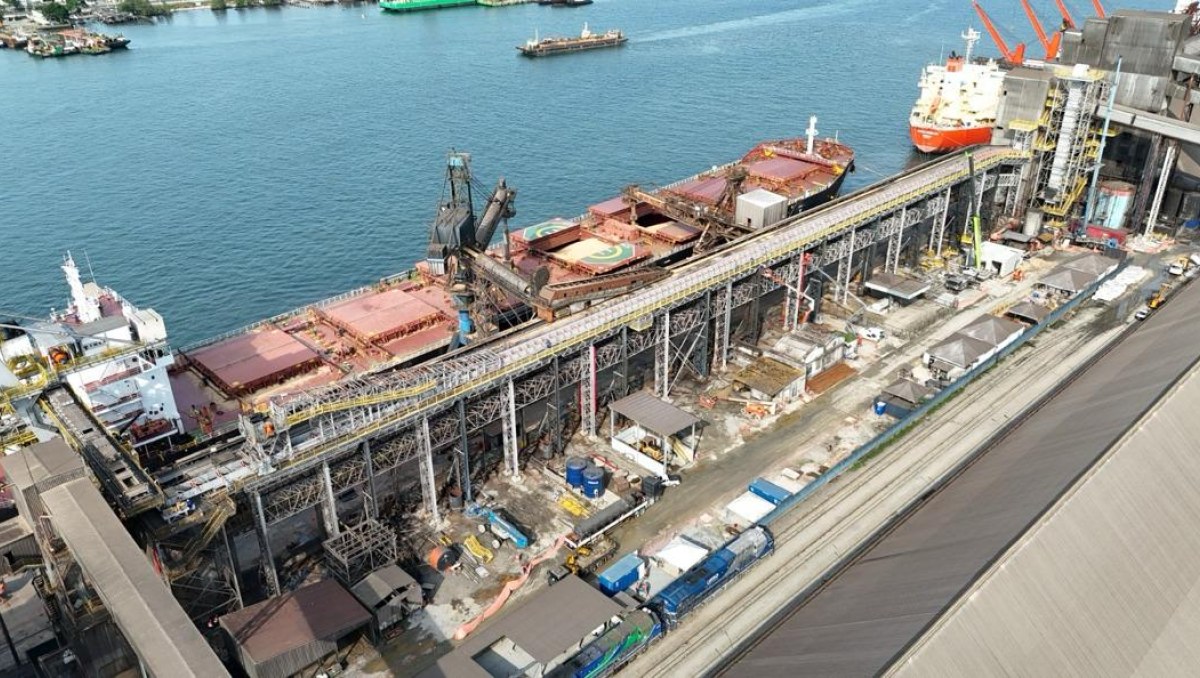
The urgent need to expand Santos Port's operational capacity and infrastructure to mitigate billion-dollar losses and sustain agricultural exports was the central theme on the morning of this Tuesday (20th), on the second day of the XXV International Coffee Seminar. Hosted at the Santos Convention Center, the forum brings together business leaders, exporters and sector authorities. The event's program continues this afternoon.
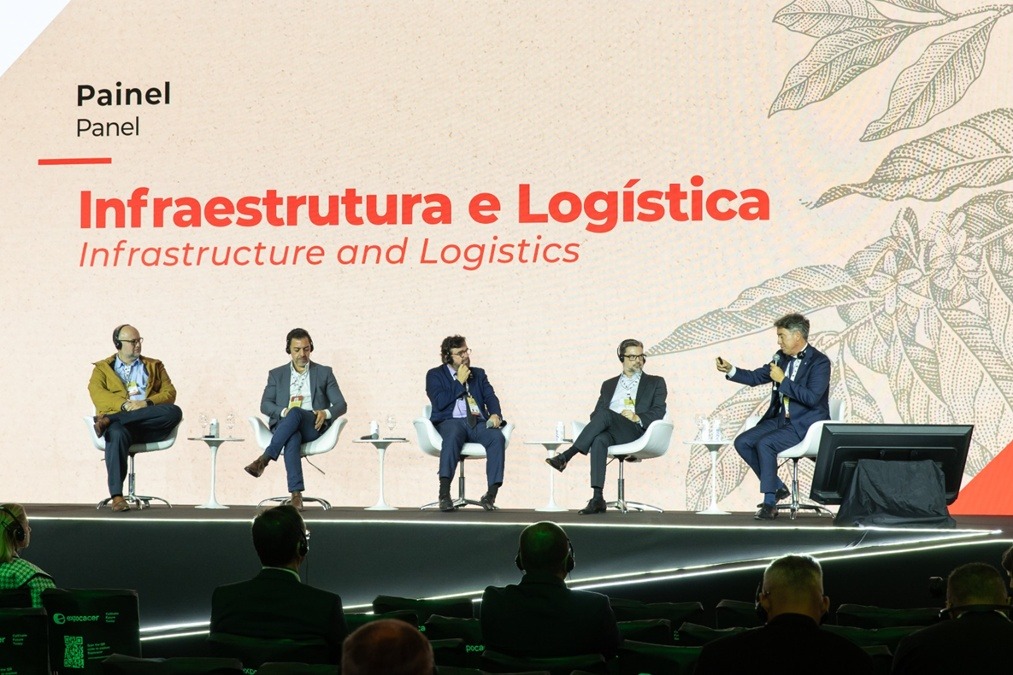
The historical mismatch between the growth of national production demand and the pace of investments in berthing facilities guided the debates of the Infrastructure and Logistics panel, which was moderated by the chairman and CEO of the Brazilian Infrastructure Institute (IBI), Mário Povia. On the occasion, the president of the Santos Port Authority (APS), Anderson Pomini, demanded swift execution of structural projects.
"We have been studying a dry connection between the port's shores for 100 years. Furthermore, for 13 years we have been discussing the modeling of Tecon Santos 10, which, in full operation, would increase our capacity. Why are we so slow to implement what is obvious? When Tecon comes online, our port will become the 20th in the world," he stressed, concluding: "The port is in a hurry, as are the cargo and the producers. They rightfully demand joint action and predictability of growth".
Fabrizio Pierdomenico, partner and director at Porto Consultoria Portuária e Empresarial Agency, warned that the complex operates with compromised capacity, repeating a chronic cycle in which demand strangles the supply of berths. According to the executive, one of the reasons for this situation is the lack of investment.
"The last major public funding for port infrastructure were the right-bank perimeter and the deepening dredging from 2010 to 2011. We need management models that allow the public and private sectors to maintain the same pace of investment," he noted.
From the operational perspective of shipowners, Leandro Barreto, managing director of Solve Shipping, presented data proving 20% growth in demand for port infrastructure in Brazil between 2024 and 2025 — double the global average. He stressed that shipping companies kept pace by expanding their container ship supply by 40%, injecting a capacity of 800,000 TEUs — TEUs being an international unit equivalent to a 20-foot container. However, the terminals have not advanced proportionally.
"When a terminal operates above 65% utilization, there is no margin to receive a delayed ship, absorb strikes or bad weather. Brazil's major terminals now operate near 90% berth occupancy," he explained.
According to Barreto, this extreme level of occupancy reduces productivity and service levels. "In 2025, about 50% of ship calls recorded delays. The numbers don't add up. The good news is that Brazilian terminals are investing to increase capacity from 20 million to 25 million TEUs".
The direct financial impacts of this forced idleness and maritime congestion were quantified by Neowise Consultoria partner Luis Montenegro, who presented a study on the damage caused by ship queues at Santos Port. According to the survey, the cost of waiting was R$ 775.3 million in demurrage charges (penalties for ship overstay) in 2024 alone. Accumulated since 2019, the amount is R$ 3.8 billion. "This value cannot be recovered and could have been reinvested in infrastructure, but was spent due to inefficiency. It is the cost of time. A congested port only solves its problem by increasing capacity. If I expand, I end the queue and reduce the cost".
Revenue growth
The pursuit of greater profitability and commercial efficiency in the export chain was also addressed at the seminar. The president of the Brazilian Coffee Industry Association (ABIC), Pavel Cardoso, addressed the topic. He acknowledged that the country's share of global revenue is still very low compared to the volume produced. For this reason, the sector's main goal is to increase competitiveness to boost wealth generation in the country.
"Brazil accounts for 40% of global coffee production, but we capture revenue far below that. Just as an example, in the United States, revenue per worker in the segment is 155,000 dollars. Here, it is less than 3,000 dollars. We generate total revenue per employee 53 times lower than the American figure," he said.
To mitigate this disparity and strengthen the positioning of national coffee abroad, ABIC structured a series of strategic actions focused on modernizing and promoting the institutional brand "Cafés do Brasil". Given the lack of historical investments identified by audits from the Court of Accounts of the Union (TCU) in Funcafé (Coffee Economy Defense Fund), the entity directed efforts to ensure specific promotional funding. The main initiative consisted of completely redesigning the brand's visual identity.
"We identified the need to drive image promotion. We saw the need to redesign the brand, which was from the 1980s and no longer spoke to the world. The new brand serves as a foundation for the next steps we will take," he explained.
```html

As part of this aggressive rollout effort, the rebranded product was sponsored on high-visibility global platforms, including the São Paulo Formula 1 Grand Prix at Interlagos, exposing the product to an audience of 500 million viewers.
Macroeconomic Scenario
The event also featured economist Pablo Spyer, who analyzed the impact of global geopolitical tensions and technological advancement on economic activity. The analyst mapped how international conflicts create a picture of exogenous pressures on inflation and gross domestic product (GDP).
"The main issue in the world today is the war in the Middle East, which sent oil prices soaring sharply. It was at 70 dollars and, in about two months, it went to 110 dollars, a 50% jump that has many side effects, the main one being the rise in fuel prices, which interferes with freight. The Strait of Hormuz is not just oil; natural gas passes through it, which is important for Europe, and fertilizers and inputs like ammonia, phosphate and potassium also pass through—things we use in Brazil. Freight prices have risen too much. There is a whole shift in the structures of global trade, with energy prices rising, inflation rising, pulling GDP down," he warned. Spyer detailed that if the conflict persists for more than three months, global inflation could rise 2.8%, and world GDP could shrink by up to 3.15%, with a direct impact on Brazil of 0.4% in the Broad National Consumer Price Index (IPCA) for every 10% increase in the price per barrel.
The international outlook points to a slowdown in emerging markets and the Eurozone, while China faces a crisis, with growth targets below 5% and a return to coal plant usage. In contrast, the USA maintains resilience backed by domestic consumption. Furthermore, the dollar is declining.
Indeed, given the recent weakening of the US currency, the economist set macroeconomic projections for the domestic market. "Our GDP should grow 2% this year. As for inflation, it remains under control but is expected to settle at 5.3%. We forecast the dollar will end 2026 at R$ 5.00. Finally, the Selic rate could reach 13.75%".
Nevertheless, the specialist said he is optimistic about the Brazilian economy. "Demand is very strong, and we are at full employment. We also had the start of interest rate cuts and tax reform, which will improve our standing in the world," he said.
Regarding coffee, Pablo Spyer stressed that the commodity is in good shape. "We should set records (in harvests). Consumption continues to rise without stopping and I want to see when China has a boom... coffee will shine again".
The XXV Santos International Coffee Seminar is sponsored by MSC, Brasil Terminal Portuário, StoneX, Santos Port Authority, ApexBrasil, Ministry of Development, Industry, Trade and Services, Federal Government, Ofi, Sucafina, LDC and Nucoffee. Official café: Cooxupé, SMC and Prima Qualità.
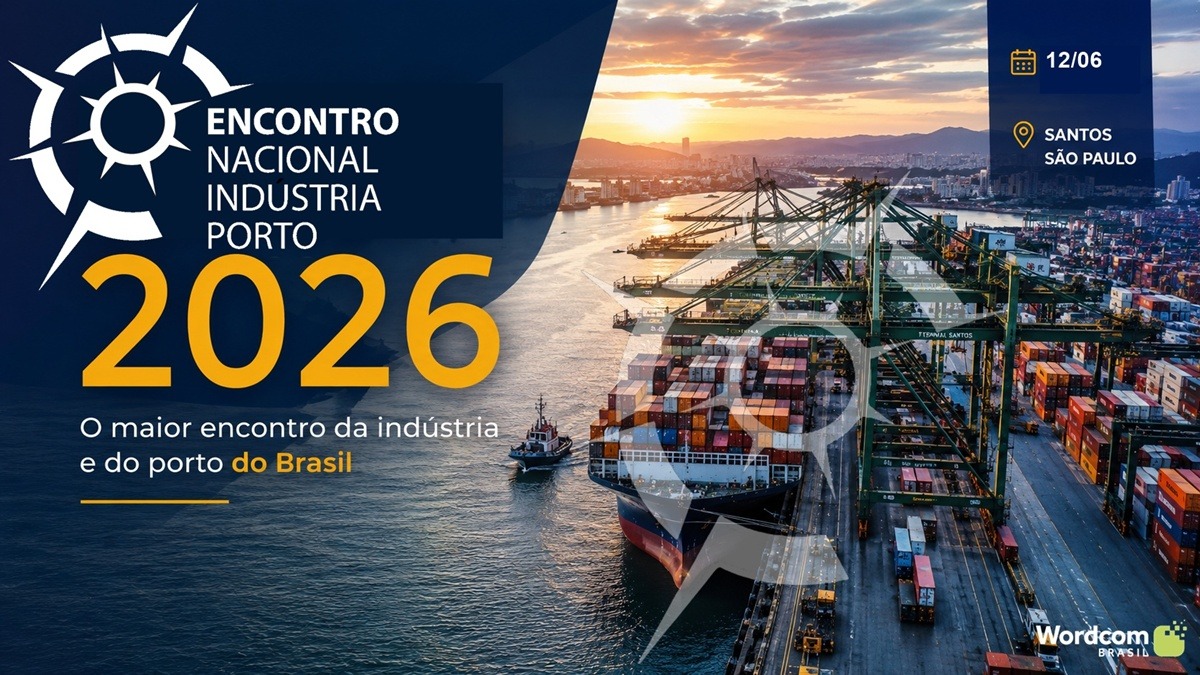
Jornal Portuário readers will receive a 15% discount on registrations for the ENIP 2026 stage taking place in Santos on June 12.
To secure the benefit, simply use the coupon JP15 at the time of registration.
Register now:
https://www.sympla.com.br/evento/encontro-nacional-industria-porto-2026-etapa-santos/3397606