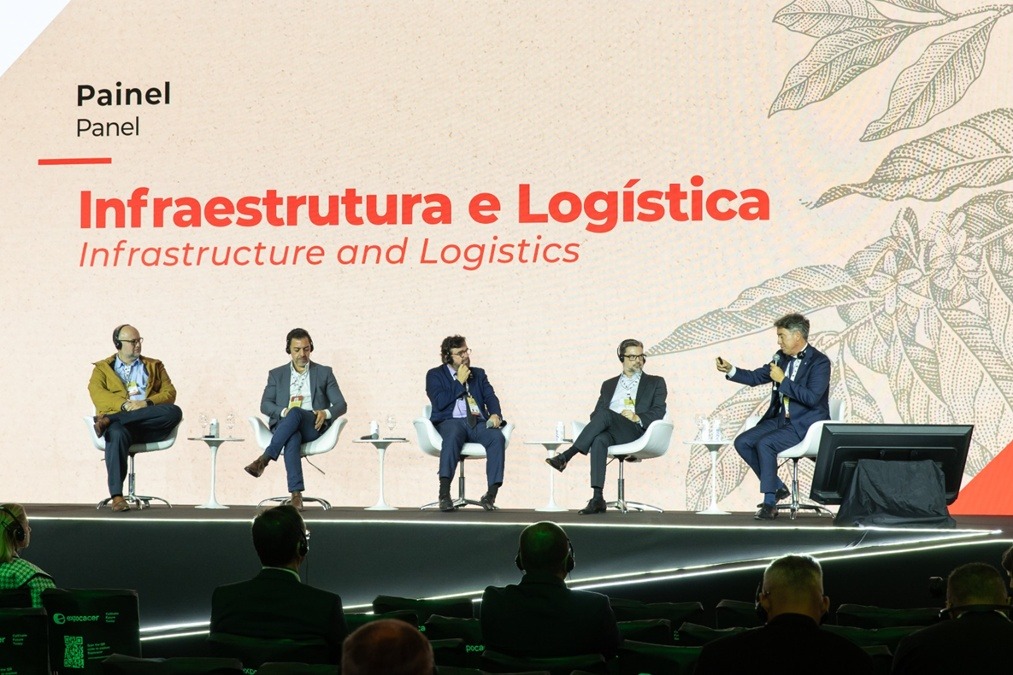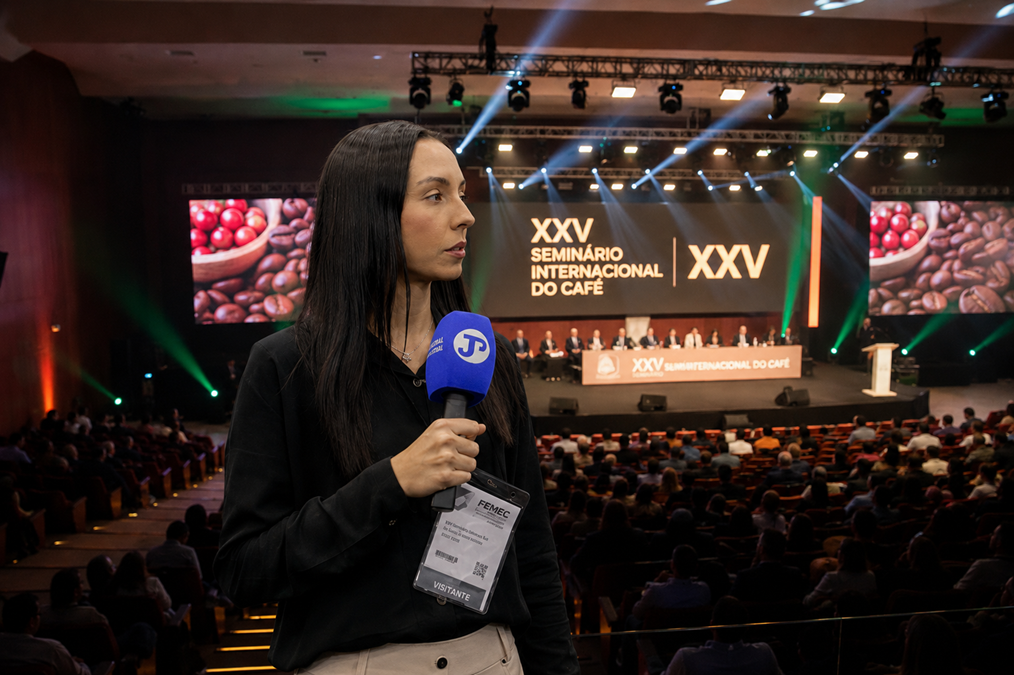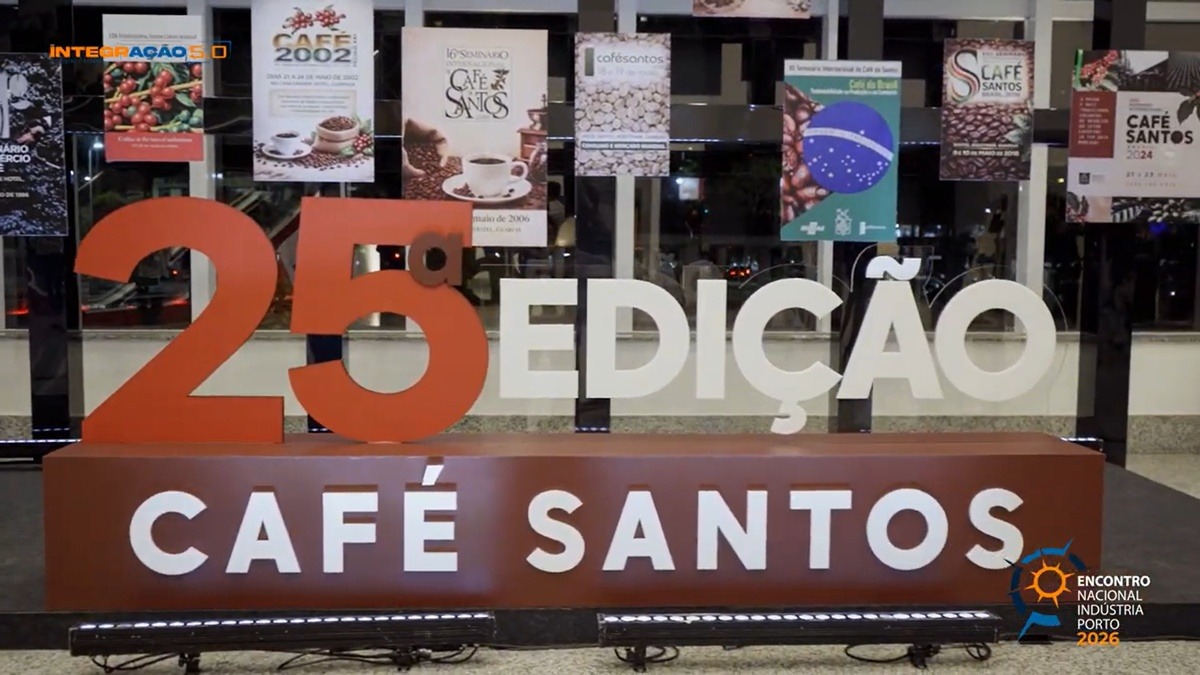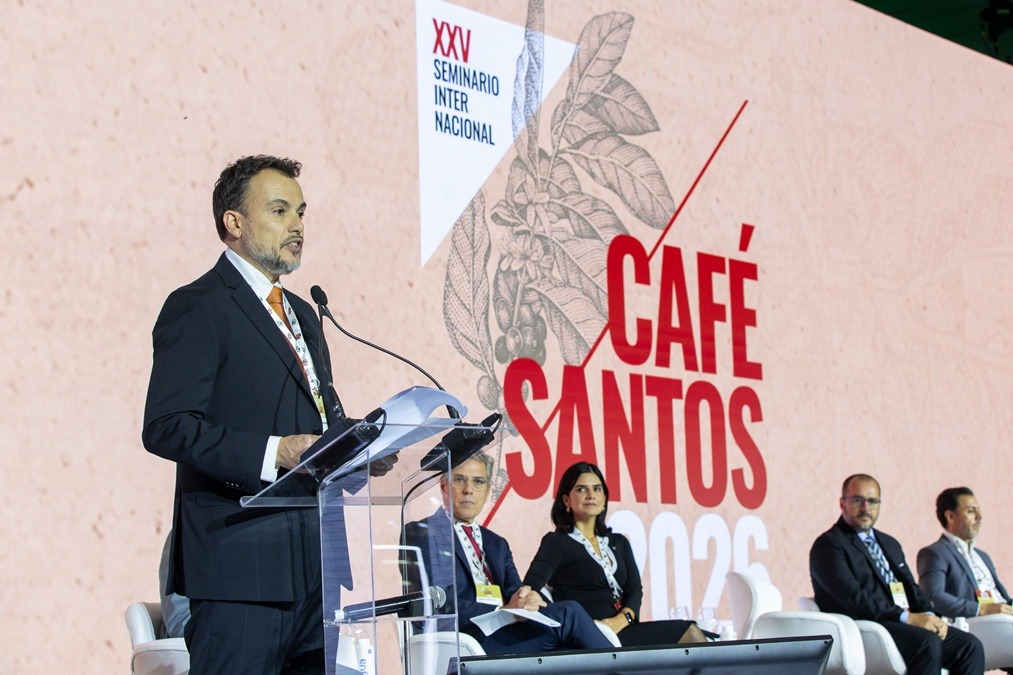
Considered one of the world's largest forums in the coffee sector, the XXV International Coffee Seminar held its official opening this Tuesday (19th) in Santos. With the expectation of welcoming over a thousand visitors over three days and counting representatives from 24 countries, the opening ceremony brought together a significant audience, filled with business leaders and prominent authorities from the coffee and port sectors.
Held at the Santos Convention Center and organized by the Santos Commercial Association (ACS), the event will continue this Wednesday (20th), starting at 9 a.m., and concludes on Thursday (21st), with panels scheduled to begin at 8:30 a.m.
The scale of the gathering was reflected in numbers by ACS president Mauro Sammarco, who highlighted the maturity of a trajectory spanning five decades. "This seminar has established itself as the largest in the coffee sector. It is 50 years of history built by the vision of businesspeople who understood, before many others, that coffee was not just a product, but a link that would connect Brazil to the world," he said, also emphasizing that Brazil needs a robust infrastructure framework, regulatory security and technological innovation, such as artificial intelligence, to maintain competitiveness.
The connection between agricultural strength and logistics development was the central point of the address by Santos Port Authority (APS) president Anderson Pomini. In congratulating ACS on organizing the event, the official stressed the historic role of coffee culture in the consolidation of railways and the structures that form the port polygon since the 18th century.
"Santos Port represents 30% of Brazil's commercial flow. It is our main gateway connecting to 200 countries and 600 destinations worldwide. Without the strength of rural producers, especially coffee growers, Brazilian ports and logistics would not have developed. Last year we moved nearly 190 million tonnes, and 55% of that total reflects the strength of Brazilian agribusiness. We need to offer adequate infrastructure so that producers have security to invest," said Pomini.
In turn, ACS vice-president and chief executive officer of MSC Brasil, Elber Justo, reinforced the importance of working in mutual cooperation to expand Brazilian coffee abroad and facilitate logistical flows in the food chain. "Brazil is a world reference in coffee. This gathering is a way to assert our commitment to connections that strengthen commerce and drive development".
Following the sector analyses, EISA commercial director and also ACS vice-president Carlos Santana proposed a comparative historical review between the seminar's foundation in 1972 and the present day. In his remarks, he highlighted that over the decades, the port complex expanded its cargo handling from a modest 25 million tonnes in the 1970s to 186.4 million in 2025.
Furthermore, Santana praised the environmental awareness already evident in the country. "Brazil is very close to reaping one of the largest harvests in its history, even with a smaller area than in 1972. We have grown with more technology, efficiency, knowledge and awareness. The coffee producer thinks about legacy, soil health, water preservation and biodiversity," he assessed.
From the perspective of sustainability and market requirements, National Aquatic Transport Agency (Antaq) director Cristina Castro applauded the alignment of Brazilian coffee cultivation with UN international indicators. "Looking at the 17 Sustainable Development Goals (SDGs), a quick survey shows that coffee producers have already clearly achieved seven of them directly," she said, providing examples. "You are highly linked to poverty eradication, since 78% of producers are small and medium enterprises. You are linked to education with new generations, seeking new technologies. I found the direct inclusion of women in the market sensational, plus the impacts on climate change and infrastructure," she listed.
The social and identity relevance of the grain was also defended by Pedro Henrique de Souza Neto, agribusiness manager at the Brazilian Export and Investment Promotion Agency (ApexBrasil). According to the manager, the activity perfectly symbolizes national diversity.
"The sector is the face of Brazil, because coffee was one of the first sectors that brought the country to shelves worldwide about 100 years ago. It is a segment with producers of all origins and sizes, from family farming to Japanese, Italian and indigenous growers. Brazil has the coffee that global consumers want to consume," he reflected.


Finally, Santos acting mayor Audrey Kleys emphasized the city's role as a historic landmark of coffee activity and celebrated the union of innovation and education agendas brought by the seminar.
"From here began the story for the state, for Brazil and for the world. This was our history as the world capital of coffee and this magnificent gathering could not take place in any other city," the official concluded.
```After the speeches, the seminar organizers honored the president of the Regional Cooperative of Coffee Growers in Guaxupé (Cooxupé), Carlos Augusto Rodrigues de Melo. On stage, the executive received a plaque with gold details in recognition of his professional trajectory dedicated to the cooperative system.
In the audience
In addition to the authorities who spoke, the opening ceremony was attended by various representatives from the public and corporate sectors. The Santos municipal administration was represented by the Government Secretary, Fábio Ferraz, by the Secretary of Port Affairs and Employment, Bruno Orlandi, and by the Secretary of Tourism, Trade and Entrepreneurship, Thiago Papa.
The port and foreign trade segment brought together institutional leaders, such as the head of the International Agricultural Surveillance Sector for Santos Plant Area (SetV-SNTV) of the Ministry of Agriculture and Livestock, Hugo Frederico Sickert de Almeida Rocha, and the president of the Union of Customs Brokers of Santos and Region, Carlos Melo. The international corporate coffee market was also represented by the director of NKG Stocker, Michael Timm.
The strength of trade associations and economic development entities in the state was represented by the vice-president of the Commercial Association of São Paulo (ACSP), Luiz Roberto Gonçalves, and by the vice-president of the Federation of Commercial Associations of the State of São Paulo (FACESP) of RA 05 - Coastal Region. Completing the group of authorities, the administrative and financial director of IBI, Nicolas Margiotta, and the president of the Association of Engineers and Architects of Santos (AEAS), André de Fazio Neto, attended the ceremony.
External visit.
Although the official opening took place in the evening, during the afternoon, in partnership with the Santos Port Authority (APS), an external visit to the Santos Port channel was held. By boat, seminar participants were able to see up close the structure of the entire complex. The action aimed to demonstrate the strategic importance of the location for Brazilian foreign trade and for the coffee supply chain.
The XXV International Coffee Seminar Santos is sponsored by MSC, Brasil Terminal Portuário, StoneX, Santos Port Authority, ApexBrasil, Ministry of Development, Industry, Trade and Services, Federal Government, Ofi, Sucafina, LDC and Nucoffee. Official café: Cooxupé, SMC and Prima Qualità.