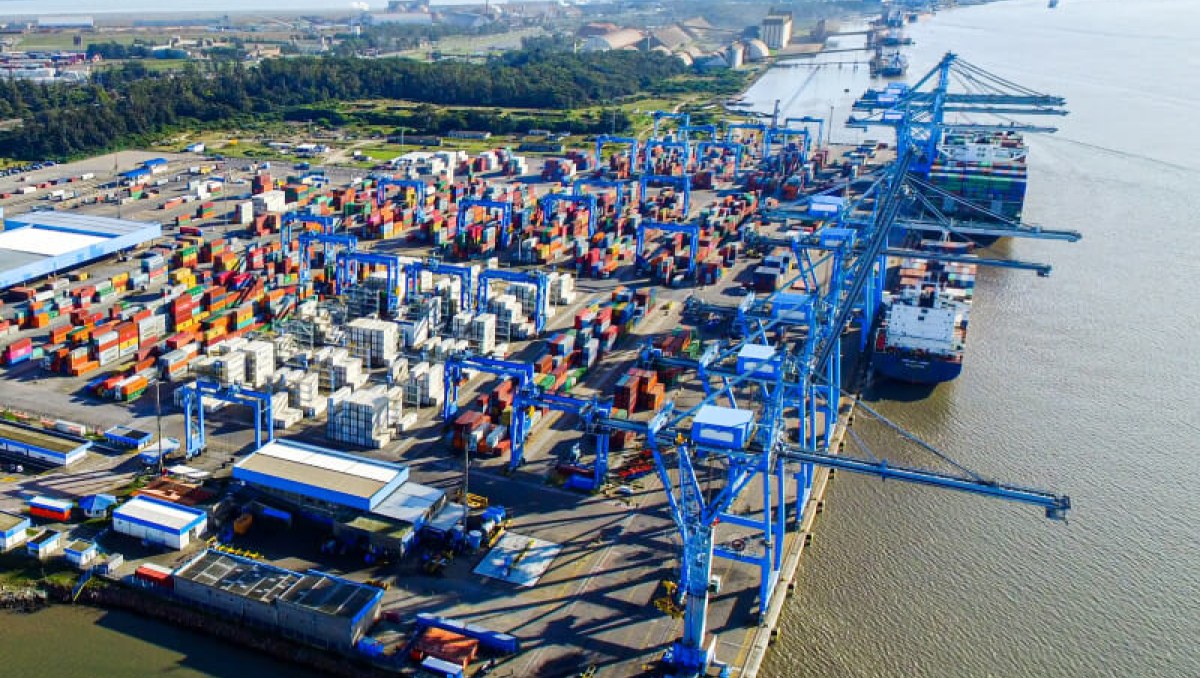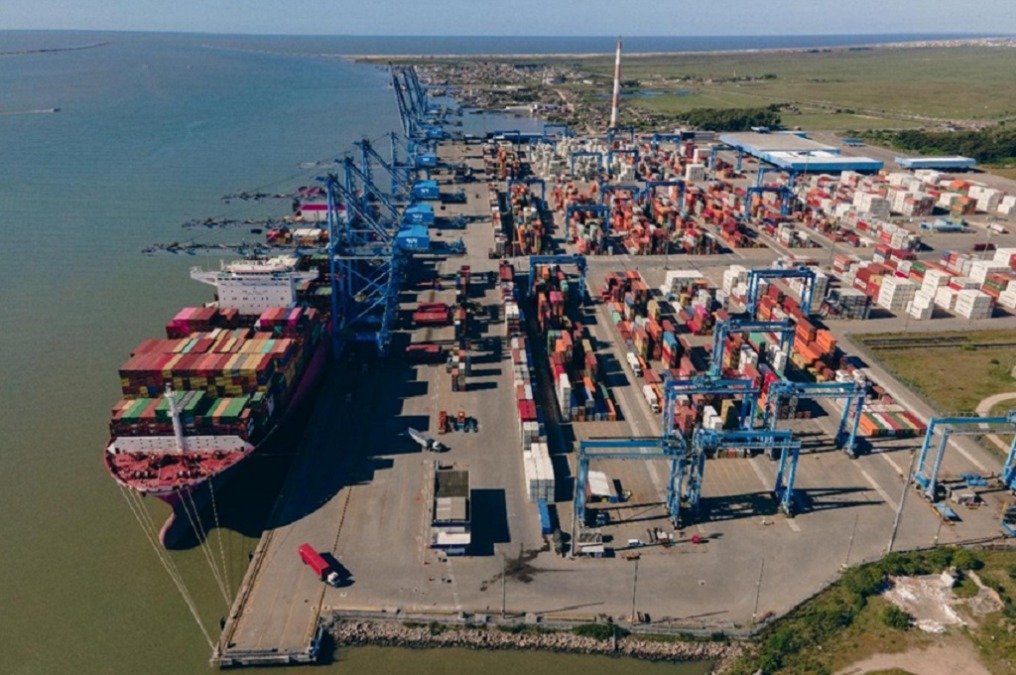
Wilson Sons forecasts an investment of approximately R$ 1.1 billion in port infrastructure through 2030 for the expansion of Tecon Rio Grande (RS). According to the group, the investment aims to increase the terminal's operational capacity and meet the growing logistics demand of Rio Grande do Sul and the Southern Cone. The company notes a movement already underway, driven by growing production from exporters and increased container transshipment from countries such as Uruguay, Argentina, and Paraguay.
The project provides for the expansion of the quay, which will grow from the current 900 meters to 1,200 meters. The expansion will allow simultaneous operations of up to three large vessels, especially of the New Panamax class, with 366 meters in length and predominant on international routes.
The assessment is that the improvements are essential to avoid logistics bottlenecks and ensure continued high operational performance of the terminal and service to increasingly larger vessels. The goal is to secure the port's role as a cargo hub in the Southern Cone region (Argentina, Uruguay, and Paraguay), operating the largest vessels currently berthing on the Brazilian coast.
Tecon Rio Grande's Chief Executive Officer, Paulo Bertinetti, assesses that the expansion directly addresses the need to ensure the flow of exports from Rio Grande do Sul producers and the Southern Cone, while also serving importers who depend on the port's efficiency to maintain Rio Grande do Sul's competitiveness in domestic and international markets. "If these investments were postponed, there would be a risk of significant operational constraints, such as vessel queues, omitted port calls, and cargo diversion to other ports, with direct impact on the state's logistics costs," Bertinetti stated.


The project also includes expansion of the back-of-port area, paving of more than 180,000 square meters, and acquisition of new equipment, such as three ship-to-shore cranes (STS), 14 rubber-tyred gantry cranes (RTGs), and 26 terminal tractors. According to Wilson Sons, all this equipment is electric, with embedded automation and remote operation, as well as state-of-the-art telemetry systems for asset monitoring.
The investment is expected to create approximately 220 direct jobs, plus 500 during construction and more than 5,000 indirect positions across the logistics chain. For Wilson Sons, the work represents a physical expansion and assurance that Rio Grande do Sul will remain directly connected to major global markets, avoiding extra transshipment costs at other ports, given the scenario of continued growth in regional production and increasing demand for adequate logistics infrastructure.
Among cargoes of Brazilian origin that currently arrive at Tecon Rio Grande, notable exports include frozen chicken, pork meat, tobacco, rice, resins, cellulose, and furniture. On the import side, parts and components, machinery, chemicals, and steel articles. In the flow from neighboring countries, the terminal handles transshipped cargoes including beef, parts and components, timber, chemicals, machinery, resins, electronic equipment, and seeds.