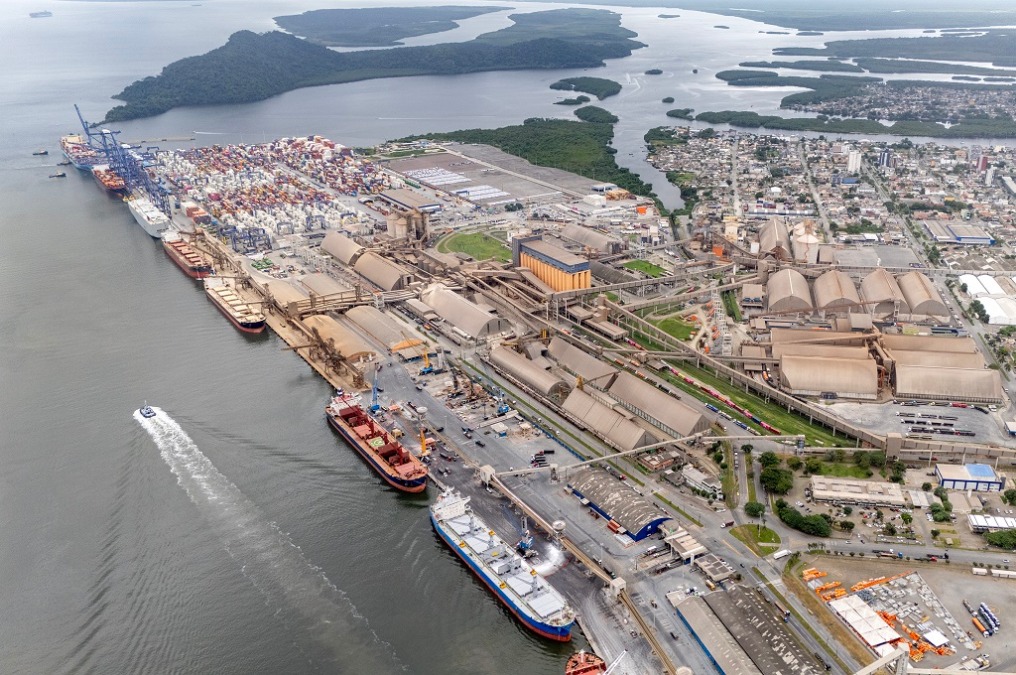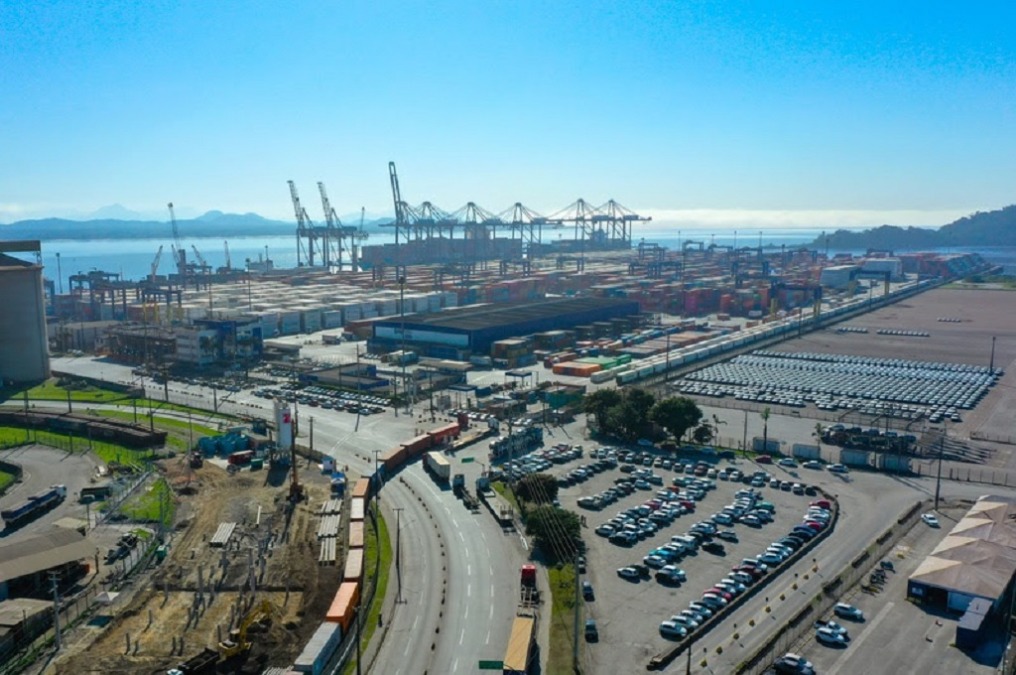
TCP and Brado Logística announced on Friday (27th) that the railway infrastructure in the terminal's operational yard will be expanded with the installation of a third rail line and a maneuvering area, totaling 757 additional meters of railway.
The structure, which will be installed by Brado, will be used exclusively in TCP operations, and the expectation is that it will allow an increase of approximately 20% in handling capacity. With the expansion, according to TCP, the operational capacity, currently up to 55,000 full containers per year by rail, will be expanded to up to 66,000 containers.
The company reported that today it operates with two lines and that when one train arrives at the operations yard the other leaves the area, allowing loading and unloading operations of 41 containers at a time, and that with the new line and maneuvering area, two trains will be able to be operated simultaneously while a third performs its departure, which will raise the volume received to up to 82 units.
The company explained that in 2024, of the 310,000 full containers exported by TCP, 52,000, equivalent to 17%, were transported by Brado by rail. Furthermore, it reported that the railway mode has strong participation in refrigerated cargo and that in 2025, approximately 55% of the volume transported by rail was in this segment, mainly animal protein destined for export.
According to Giovanni Guidolim, commercial, logistics and customer service manager at TCP, the expansion of the railway will strengthen the terminal's logistics portfolio because the mode guarantees predictability, reliability and competitive costs. According to him, since the terminal is the only one in Southern Brazil with direct connection between the bonded area and the railway branch, containers can be transferred between the wagons and the yard without the need for truck transport.


Vinicius Cordeiro, executive manager of commercial and new business at Brado, explained that the expansion of operations in Paranaguá is part of the company's strategy to increase the participation of the railway mode in providing logistics services to customers, mainly those in agribusiness. According to him, chicken meat transport represents 24% of the transports carried out by the company and that the railway extension aims to increase its use in this segment.
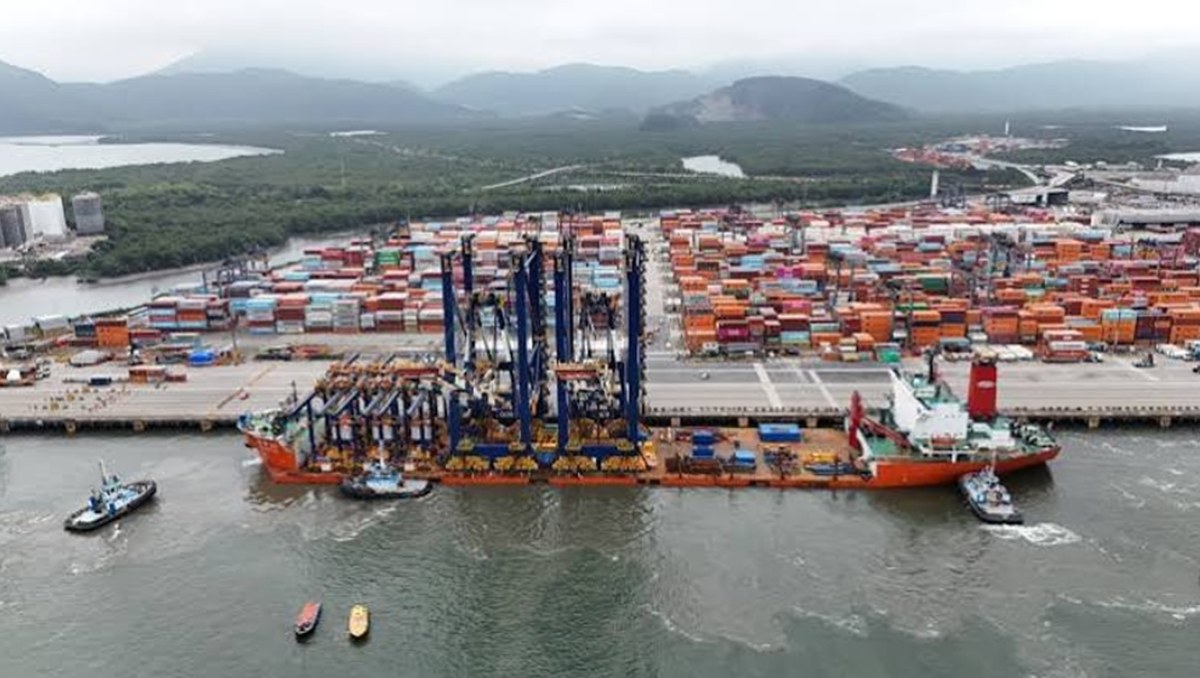
TCP reported that the railway expansion is part of the expansion plans for the handling capacity of the Paranaguá Container Terminal, in which approximately R$ 500 million have been invested over five years. The company explained that, to keep up with the growth in railway handling, it began operating with three RTG (Rubber Tyred Gantry) cranes, one more than previously.
According to the company, the equipment underwent an electrification process, with the installation of electrical busbars along the railway area. The initiative allowed a reduction of approximately 771 tons of carbon dioxide emissions per year in the operation of the three pieces of equipment.
```