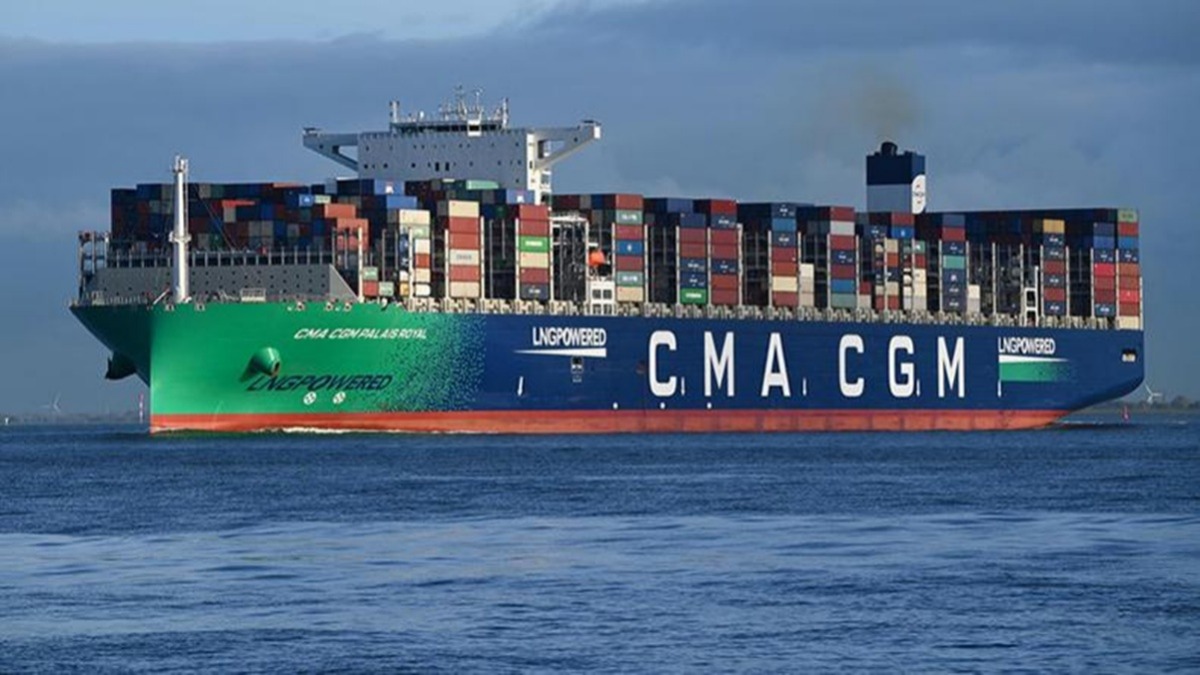
The balance of power in global maritime transport is about to shift. French CMA CGM is advancing with an aggressive fleet expansion strategy and is expected to surpass Danish A.P. Moller - Maersk in container operational capacity by 2027, assuming the second position among the world's largest shipping companies.
Absolute leadership remains with Mediterranean Shipping Company (MSC), which currently holds the top position globally in capacity. However, the competition for second place has intensified after CMA CGM accelerated new ship orders and expanded its share in the international market.
According to market analysis, the French company has a portfolio of new ships that should rapidly narrow the gap with Maersk. Recent data indicates that CMA CGM operates approximately 4.4 million TEUs of capacity, while the Danish company is close to 4.7 million TEUs, a distance that could be eliminated with the scheduled new deliveries.
The race among the giants reveals two distinct visions for the future of shipping.
While Maersk directed part of its strategy toward establishing itself as a global logistics integrator, reducing focus on accelerated maritime fleet growth, CMA CGM maintained a policy of expanding ocean capacity, combining maritime transport, port terminals, and land-based logistics operations.
The French company has also been investing in larger vessels and lower-carbon emission technologies, including ships powered by LNG (liquefied natural gas). One example is the deployment of new large-capacity container ships, reinforcing its fleet renewal strategy.
CMA CGM's rise is the result of continuous expansion begun more than a decade ago. The company significantly increased its fleet through new ship construction and strategic acquisitions, including companies and regional operations that expanded its global presence.


In 2009, the company surpassed the 1 million TEU mark; years later, it reached over 4 million TEUs of operational capacity, consolidating itself as one of the main forces in international maritime transport.
The possible change in the global ranking of shipowners will have direct impacts on ports, terminals, and global logistics chains.
Greater capacity means increased competition for market share, new maritime services, pressure on freight rates, and the need for port infrastructure prepared to receive increasingly larger ships.
For Brazilian terminals, including the main container hubs, the movement could represent opportunities for new calls and increased competition among shipowners seeking to expand their presence on international routes.
If the forecast proves accurate, 2027 will mark one of the greatest changes in the ranking of shipping companies in recent decades: Maersk's loss of second position and CMA CGM's consolidation as the new French powerhouse of the oceans.
The competition shows that in global maritime transport, size still matters — and the battle for millions of TEUs is far from over.
```