This French expression is pertinent, given the accomplishment of the first bunkering of a large deep-sea vessel with ethanol at Santos Port. This operation was also pioneering in Brazil.
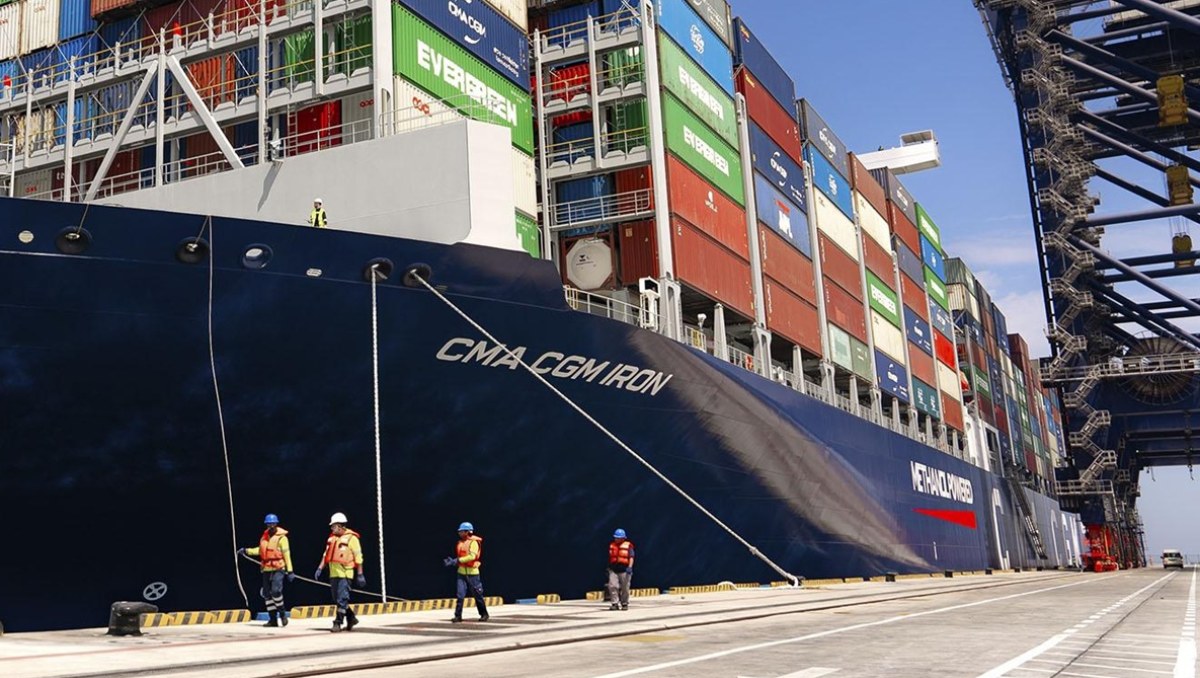
The vessel was the CMA CGM Iron, whose shipowner is headquartered in Marseille, France, despite flying the Maltese flag. It is one of the world's most important container carriers.
This vessel is part of a new generation of ships, designed to operate with "multiflex" engines, with emphasis on transition fuels.
The CMA CGM Iron is a container ship, which expresses this condition on its own hull: "METHANOL POWERED", although in reality it can operate on three fuels: methanol, bunker, and ethanol. In the latter, Brazil stands out globally.
The proposal not to depend on just one propellant is rational when it comes to deep-sea shipping lines.
The use of transition fuels, especially LNG and methanol, has generated hundreds of orders to shipyards. There are already some hundreds of ships in operation with this flexibility.
"Green" hydrogen has its advocates. There are production initiatives, including in Brazil. However, to be "green", it must be produced from renewable electrical energy. Brazil's energy matrix in this regard is an international reference, better balanced environmentally than that of countries that demand environmental protection actions from us which they do not adopt domestically.
If all Brazilian ports, public and private, begin to use onshore electrical power supply (Onshore Power Supply or Cold Ironing) for vessels and the fleet of electric vehicles achieves the expansion desired by the automotive industry, there remains the question: will current generation and distribution capacity support this increase in demand?
I still prefer "flex" cars, which I normally fuel with ethanol, rather than 100% electric cars.
Perhaps because of this there are still few examples of vessels powered by "green" hydrogen, besides questions about the risks involved in bunkering operations. Demands regarding the typology and capacity of tanks for this type of fuel must also be considered. It is not much different in the case of LNG, recalling that some people have referred to regasification units and vessels that supply them as "bomb ships".
Imagine if we had all public and private berths supplied with these types of fuels?
Methanol also has its risks, and they are not few.
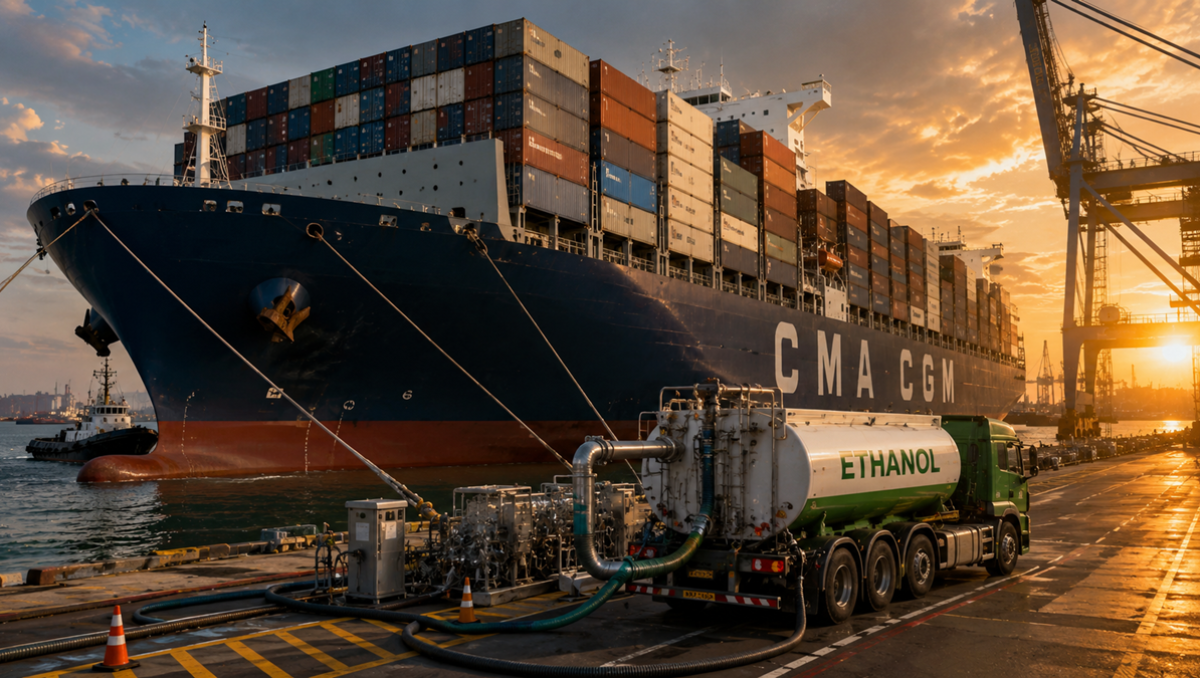
Ethanol, produced and distributed on a large scale in Brazil, presents advantages that have put it on shipowners' "radar".
In the case of sugarcane ethanol, Brazil has mastered this technique since the 1970s. To reduce dependence on oil imports, when domestic production was insufficient to meet internal demand (still is, in the case of gasoline, reportedly), the first automotive engines powered by ethanol were developed, initially as adaptations. Success in this development led to the production of "flex" engines, using gasoline or ethanol. Gasoline also began to receive progressive additions of ethanol in its composition.
This technology also came to be used in aircraft and small vessels.
``` ```htmlIn 2024, at an event in Brasília, I met a multinational company that was already running tests with ethanol-powered engines, which can be derived from corn or sugarcane, for larger vessels.


Its use in this context seemed to be merely a matter of time.
I wrote at least two articles specifically about ethanol: "Here we go" (06/2024) and "Worth investing in ethanol!" (04/2026)
Other factors also made it viable, such as the fact that it does not require tanks different from conventional ones and, in case of spillage, is easily diluted in water. It also evaporates faster than water, without generating plumes.
This occurred at the Tecon Santos Terminal, operated by Santos Brasil, in Guarujá, on Dec 7, 2026, and was celebrated with well-deserved ceremony at an event held the following day, which was attended by authorities, business leaders, workers, media, and all those involved in the process.
Present were the protagonists of planning and execution: CMA CGM, as shipowner and principal controller of the largest container terminal in Santos Port and in Brazil; Copersucar, ethanol producer; AGEO, whose terminal stores this fuel in the port complex; and Bunker One, the international company responsible for the barge used for bunkering, properly equipped.
Each of the exhibitors emphasized the importance of the participation of the Santos Port Authority and the Port Authority of São Paulo in planning and enabling the operation during the months that preceded it.
The event is, in fact, remarkable, as it places Brazil even more in the spotlight on the world stage when it comes to energy matrix and decarbonization of maritime transport.
It is something to be celebrated and disseminated by the national port sector, with the world adapting to technology developed in Brazil, rather than constantly having to adapt to external demands.
Our scientists and technicians have ample conditions to develop national potential as regards the exploitation of our natural resources. Public and private investments correctly directed toward sustainable development, however modest, tend to yield surprisingly positive results.
This applies to agribusiness and to cutting-edge industry, in all its specialties!
Brazil needs to invest ever more and ever better in useful scientific research, as well as in high-performance education that shapes minds capable of "taking the baton" of technological evolution, indispensable to the country's effective sovereignty!
Congratulations to all involved!
Cheers!
```