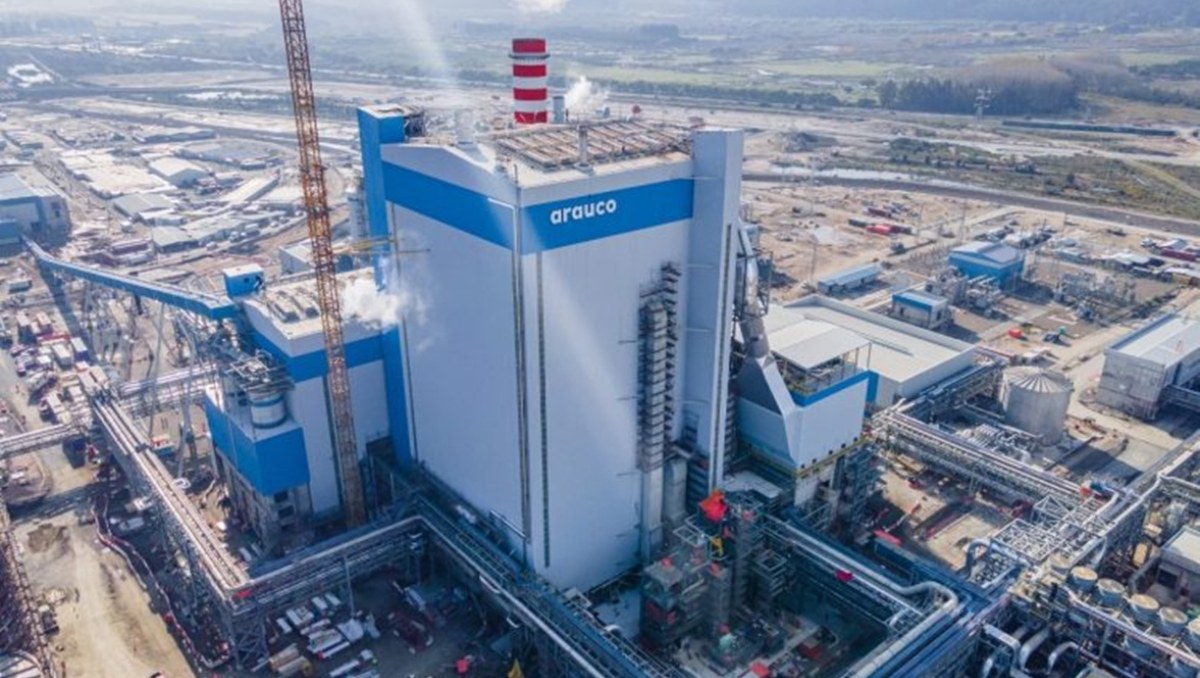
A factory worth approximately R$ 25 billion, its own railway, 26 locomotives, 721 freight cars and an annual production projection of 3.5 million tons of cellulose destined mainly for the international market.
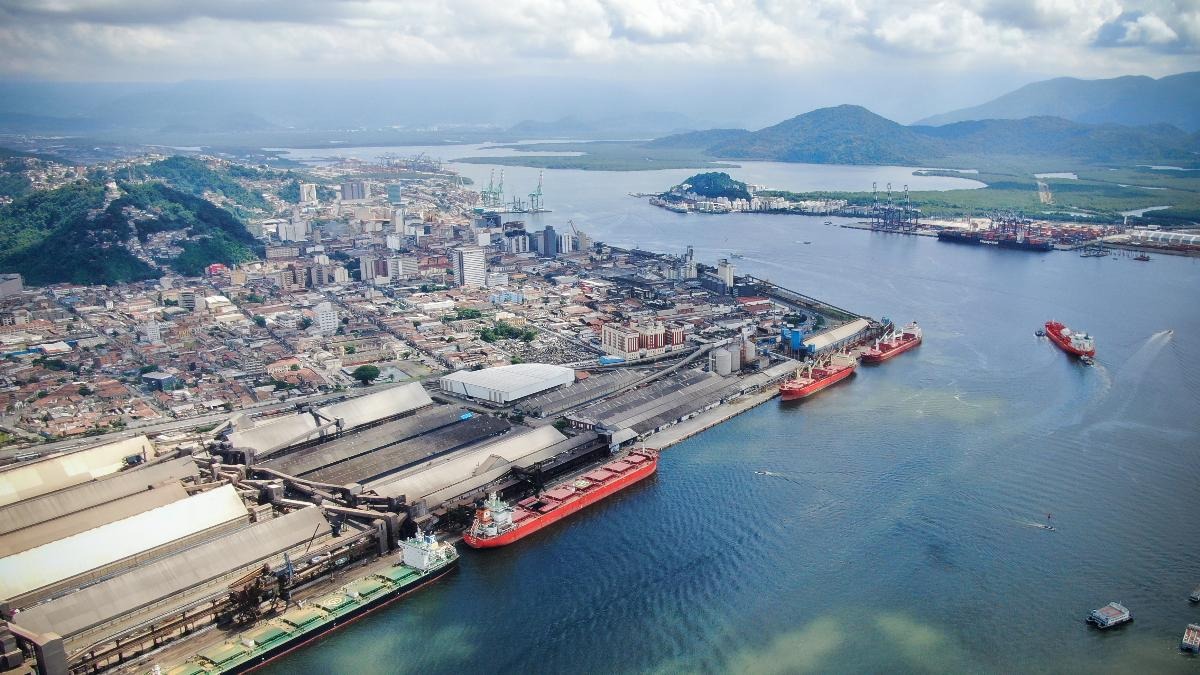
At the center of this gigantic logistics machine will be Santos Port.
Chilean company Arauco is advancing implementation of the Sucuriú Project in Inocência, Mato Grosso do Sul, an undertaking worth US$ 4.6 billion that marks the entry of the company's cellulose division into Brazil.
But the scope of the project goes beyond the factory itself.
To move virtually all of this production from the interior of Mato Grosso do Sul, the company is building its own railway, the EF-A35, which will connect directly the industrial complex to the Malha Norte network.
From that connection, the cellulose will travel approximately 1,050 kilometers on rail to Santos Port, where it will be shipped to international customers.
In practice, Arauco is not merely building a factory.
It is building a practically complete logistics corridor linking the forest, the industry, the railway and the port.
3.5 million tons per year
The Sucuriú Project is being implemented on an area of approximately 3,500 hectares, about 50 kilometers from the center of Inocência and close to the Sucuriú River.
Once in operation, the unit will have the capacity to produce 3.5 million tons annually of short-fiber cellulose.
The company's current forecast is to begin operations in the latter part of 2027.
The scale positions the undertaking among the largest industrial investments currently being implemented in Brazil and reinforces the transformation of Mato Grosso do Sul into one of the main hubs of the Brazilian cellulose industry.
To serve a factory of this size, however, production is only half the challenge.
It is necessary to move thousands of tons of product daily from the interior of the country and transport them, competitively, to consumer markets.
And it was precisely for this reason that the railway came to occupy a central position in the project.
A railway practically within the factory
The EF-A35 will have approximately 45 kilometers of track outside the industrial complex, plus another 9 kilometers of rail within the factory itself.
The branch will make a direct connection between Arauco's unit and the Malha Norte yard, operated by Rumo.
From there, the cellulose will continue its railway journey to Santos.
The structure also represents a milestone for Brazil's new railway model: the undertaking became one of the first private authorizations to effectively move forward to the implementation phase after the new railway framework.
Work on the EF-A35 began in late 2025 and is expected to be completed in the second half of 2027, in line with the factory's schedule.
26 locomotives and 721 freight cars
The scale of rolling stock shows the size of the operation being prepared.
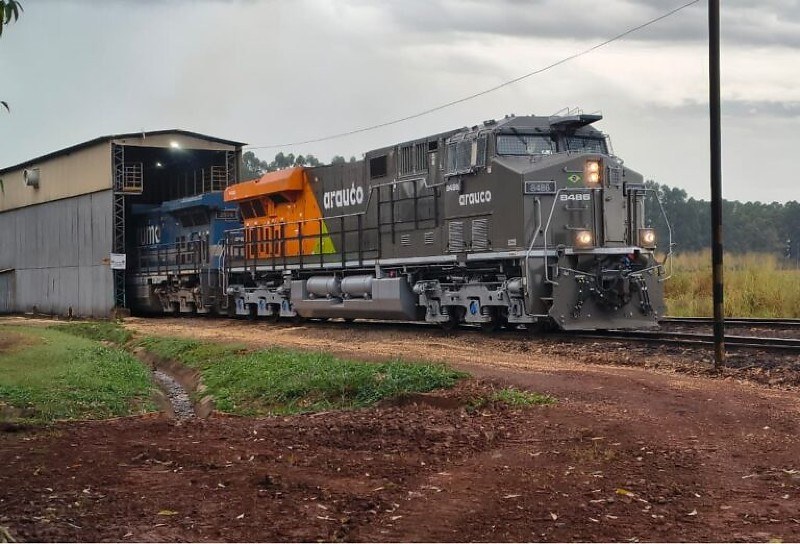
Arauco foresees a fleet of 26 locomotives and 721 freight cars, sized to handle the annual throughput of the future plant.
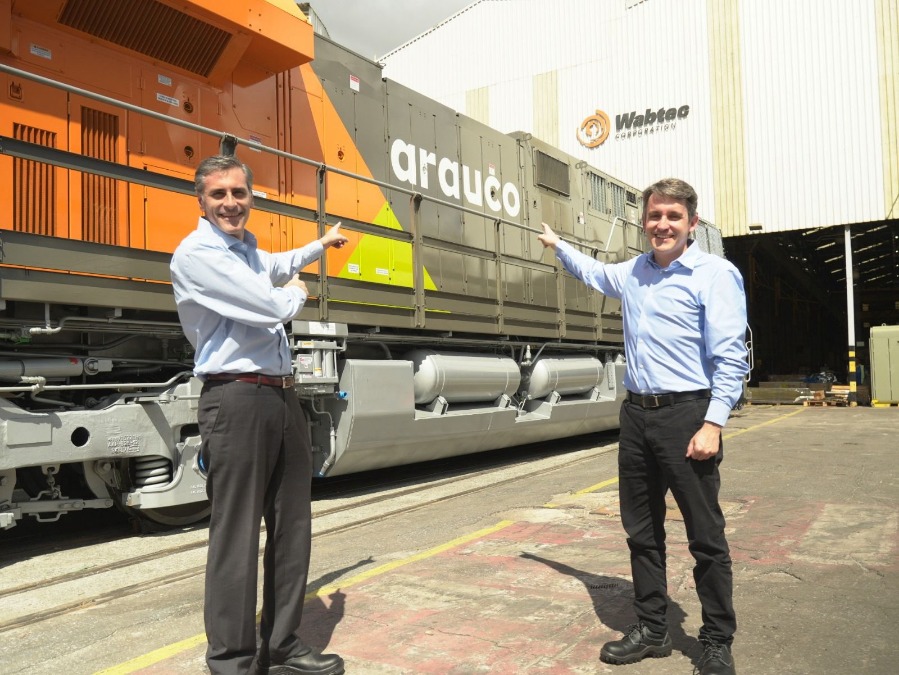
The first locomotives, manufactured by Wabtec, have already begun to be received by the company.
They are equipment from the Evolution ES44 series, produced in Contagem, Minas Gerais, and designed for heavy-haul railway operations.
Each consist will be able to transport approximately 9.6 thousand tons of cellulose per trip.
The company also counts on embedded control and safety technologies, as well as engines designed for greater energy efficiency.
190 fewer truck trips every day
Perhaps one of the figures that best demonstrates the railway's impact lies outside the rails.
According to estimates by Arauco itself, use of the railway mode could avoid approximately 190 truck trips per day on regional highways.
The company also calculates a reduction of up to 94% in CO₂ emissions, when compared to an equivalent operation predominantly by road.
``` ```html

In a factory capable of producing millions of tons annually, transporting all that cargo by trucks would mean placing hundreds of heavy vehicles daily on roads between Mato Grosso do Sul and the coast.
The railway changes that equation.
The truck continues to play an important role in forestry and industrial supply chains, but the long haul to the port is now carried out on rails.
Santos will be the gateway to the world
After approximately 1,050 kilometers of railway transport, the cellulose will arrive at Santos Port.
It is at this point that a project built in the interior of Mato Grosso do Sul begins to produce effects directly on Brazil's largest port complex.
Most of the Sucuriú Project production is expected to go to international markets, including Asia, Europe and North America.
This means adding millions of tons annually to a corridor that already has a strong presence of cellulose produced in the Center-West.
The movement also reinforces a transformation observed in Brazilian logistics for the sector.
Major cellulose producers are structuring increasingly integrated supply chains, connecting forest areas, factories, railway terminals and port facilities.
The goal is simple: gain scale, predictability and competitiveness.
A factory that produces its own energy
The enormity of the Sucuriú Project does not end with cellulose production and the railway.
The complex was also designed to generate energy from biomass.
The forecast is to exceed 400 MW of generation, allowing the factory to be energy self-sufficient.
Part of the surplus electricity can be made available to the National Interconnected System.
Thus, the project brings together in a single undertaking planted forest, industry, energy generation and dedicated railway logistics.
It is an integration uncommonly seen even among major Brazilian industrial projects.
Inocência will also be transformed
The impact is expected to be particularly significant for Inocência.
During the construction phase, the company estimates generating over 14,000 job opportunities.
After operations begin, approximately 6,000 people are expected to work in industrial, forestry and logistics activities associated with the project.
For an interior municipality, an investment of this magnitude tends to trigger transformations that extend beyond the factory gates, reaching housing, commerce, services, infrastructure and professional qualification.
The port begins 1,050 kilometers from the dock
For Jornal Portuário, perhaps this is one of the main takeaways from the Sucuriú Project.
The project shows that a port's competitiveness does not begin when the ship berths.
It begins much earlier.
In this case, it begins over a thousand kilometers from the Santos dock, inside a factory built in the interior of Mato Grosso do Sul.
The EF-A35 will be the first railway link. Malha Norte will make the long-distance connection. Santos will receive the cargo. And the ship will complete the chain by taking Brazilian cellulose to international consumer markets.
It is exactly this integration that transforms infrastructure into competitiveness.
When the first train leaves Inocência loaded with cellulose in late 2027, it will not merely be inaugurating a railway.
It will be putting into operation a new export corridor that begins in the forests of Mato Grosso do Sul, runs over a thousand kilometers on rails and ends alongside the ships at Santos Port.
```