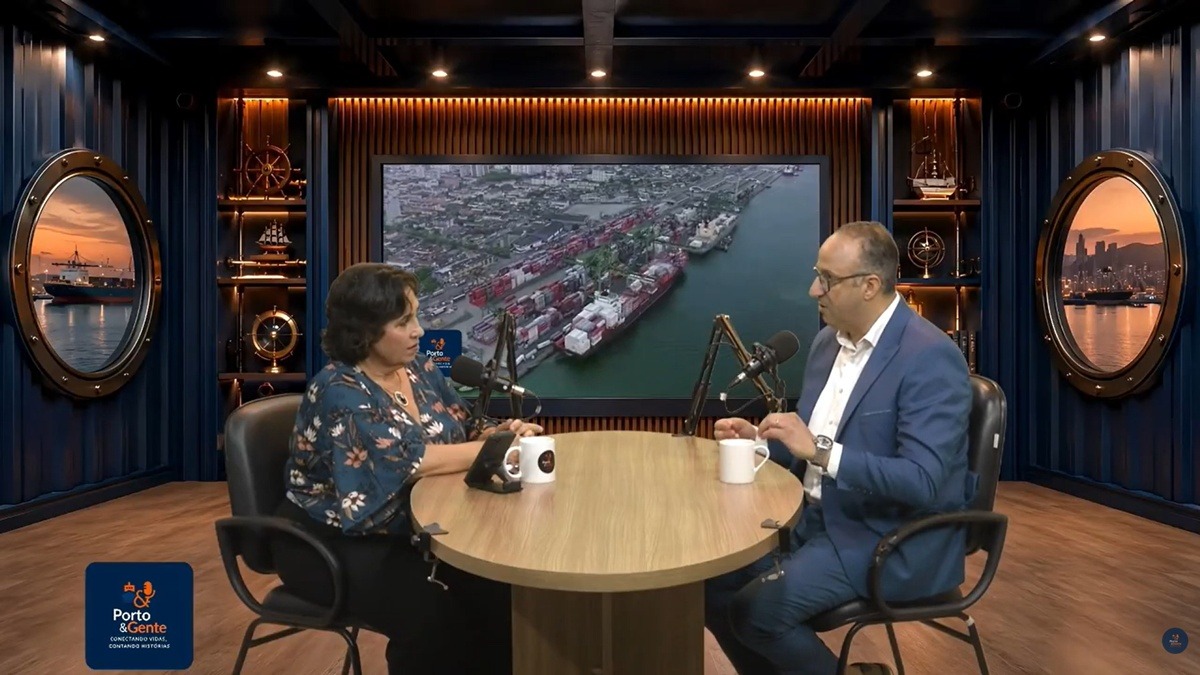
Marcus Santana's professional history is intertwined with the dynamics of the Brazilian port sector itself. In an interview given to the podcast Porto & Gente, presented by Mag Wallau, the executive recalled the challenges, lessons and opportunities that transformed a temporary data entry position into a prominent international career.
A resident of Ponta da Praia and grandson of a port worker, Marcus grew up hearing stories about Santos Port. Contact with family members linked to port operations sparked an early desire to work in the sector. The opportunity came in 1997, when he was hired temporarily by a shipping agency to work as a data entry clerk in the finance department.
Shortly thereafter, a skill that was not even part of the selection process would change his professional path. During a meeting, the company discovered that the young employee was fluent in English, something rare at the time. From that moment on, Marcus took on new responsibilities and achieved permanent employment.
But his dream went beyond the office. Fascinated by the ships he saw daily entering and leaving Santos Port, he sought an opportunity to work directly in maritime operations. That is how he became a ship visitor, a role responsible for accompanying vessels, intermediating contacts with authorities and ensuring all necessary documentation for port operations.
Over the years, Marcus accumulated experience in shipping agencies, tugboat companies, port terminals and logistics operations. His trajectory included supervisory, management and executive positions, always accompanied by a constant pursuit of professional qualification. According to him, completing his degree represented a turning point in his executive career.
From Santos Port to the world.
His international career emerged after years of work in the Brazilian maritime sector. After holding strategic positions in different companies, Marcus received an invitation to work on operations linked to the Panama Canal, one of the most important maritime corridors on the planet.


In the Central American country, he participated in projects related to vessel handling, transit of ships and yachts through the canal, as well as contributing to the expansion of new business ventures of the company where he worked. The experience allowed contact with clients from various continents and participation in international events in the nautical and maritime sector.
Even facing the challenges imposed by the pandemic and changes in the global market, Marcus emphasized that the ability to adapt was decisive for his professional development. Throughout his career, he worked across different areas, including shipping, logistics, port terminals, foreign trade and agribusiness.
The importance of preparation
During the interview, the executive emphasized that three factors were fundamental to his professional growth: fluency in English, knowledge of technology and continuous investment in education. For him, these competencies remain important differentials for those who wish to build a solid career in the port and logistics sector.
When leaving a message for young professionals, Marcus highlighted the importance of humility, persistence and the ability to learn from more experienced people.
"You have to have drive, willpower, humility to listen and learn. Difficulties will always exist, but those who persist and continue preparing themselves increase their chances of going further," he stated.
For those who follow the evolution of Santos Port and Brazilian logistics, Marcus Santana's trajectory represents an example of how qualification, dedication and willingness to face new challenges can open doors to opportunities that transcend borders.