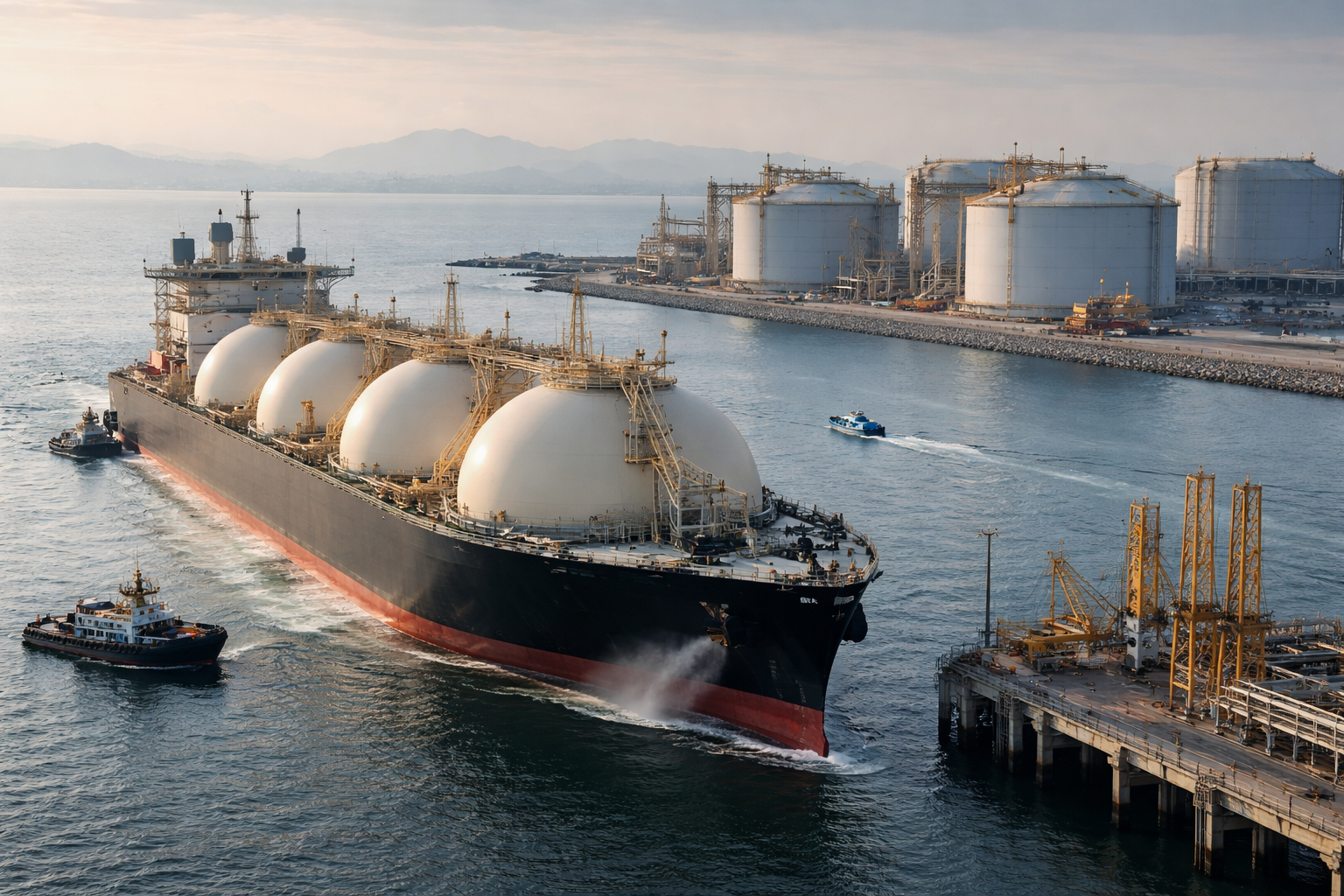
Tensions in the Middle East are driving new adjustments in the global liquefied natural gas market, with several vessels rerouting to swap planned discharges in Europe for Asian destinations.
The reason is straightforward: at present, Asia is paying more, and this is weighing on the commercial decisions of those who transport and sell these cargoes. This movement helps explain how the energy market remains extremely sensitive to geopolitical context. Simply raising concerns about a strategic zone like the Strait of Hormuz causes prices to react almost immediately. When this happens, vessels end up heading to markets where returns are higher, even if they were initially destined for European ports.
Click here to follow Jornal Portuário on WhatsApp now!
For Europe, the signal is hardly reassuring. If more cargoes are diverted to Asia, pressure on supply increases and competition between buyers grows as well. This can result in higher prices, smaller safety margins, and greater vulnerability at a time when the market is already operating under some strain.
Ultimately, this scenario shows that the maritime transport of energy is far from being merely a logistical matter. It is also a direct reflection of international instability, market balances, and each region's capacity to pay more when risk rises. And at this moment, Asia is managing to attract part of these cargoes to itself, leaving Europe in a more exposed position.
This publication was generated from information from the original feed. Credits and reference to the source have been included at the end of the text.


Source: https://portaldomar.org/2026/03/14/navios-de-gnl-trocam-a-europa-pela-asia-perante-subida-dos-precos/
```