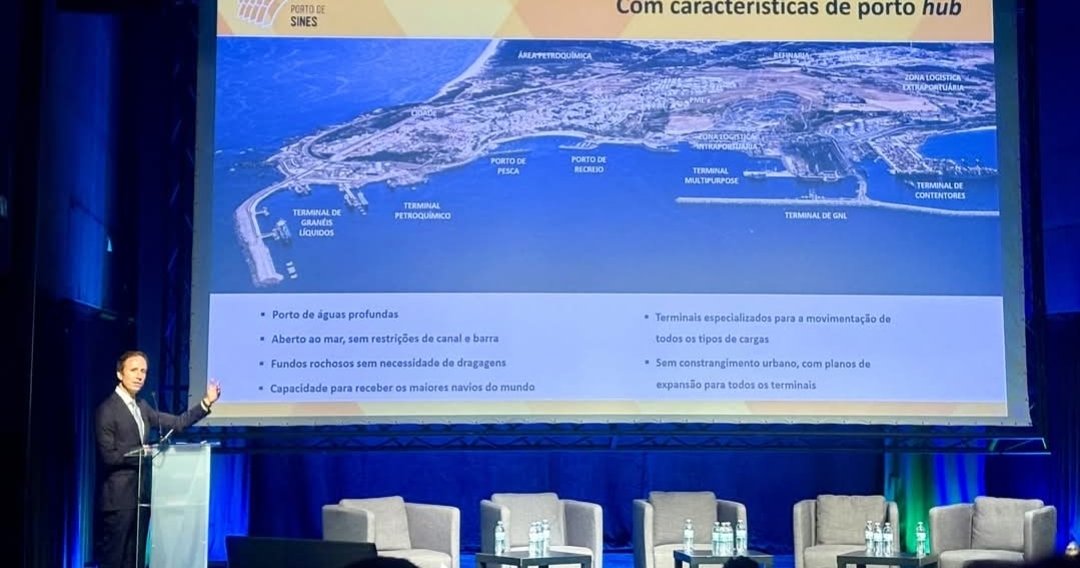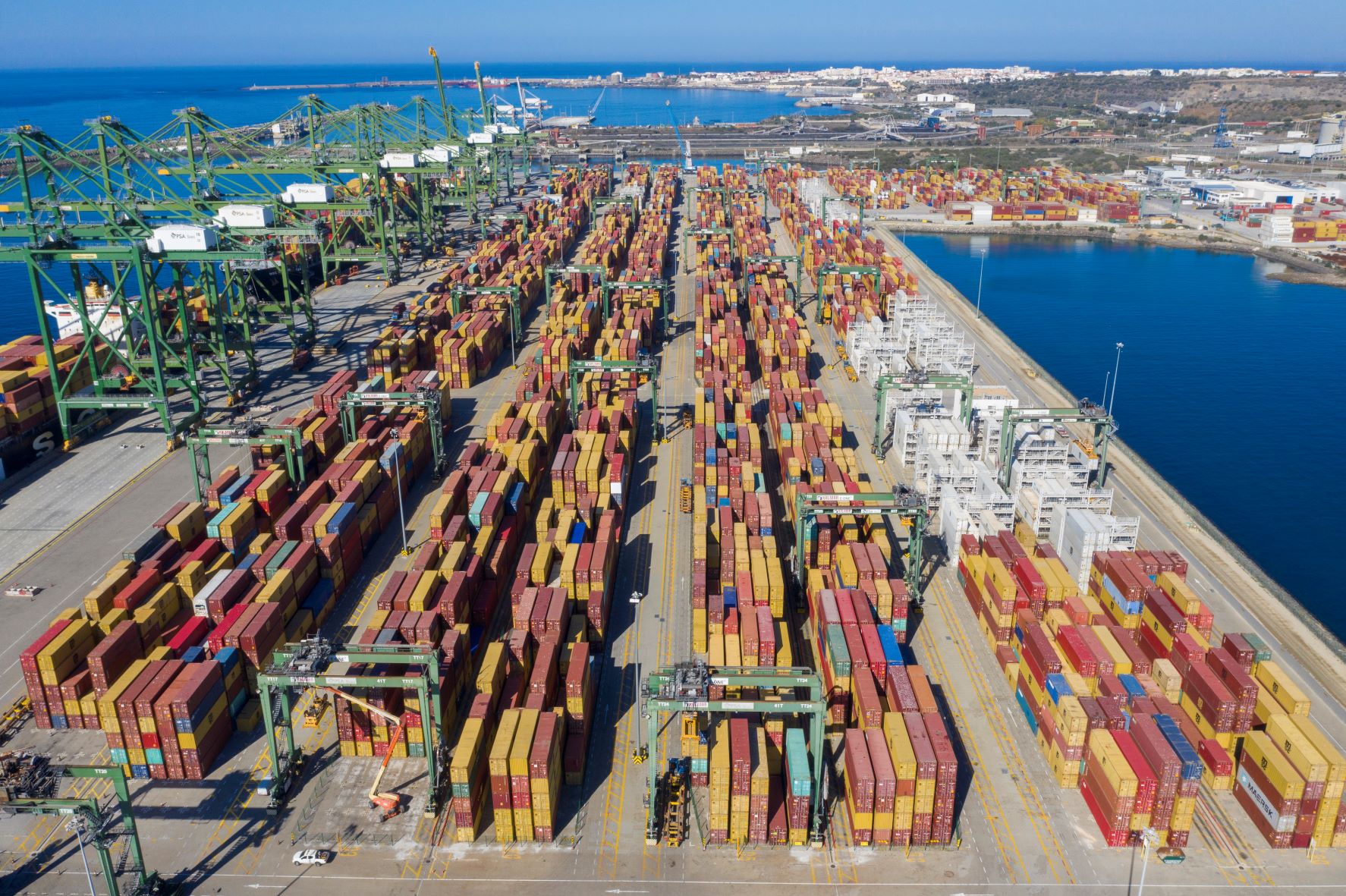
Theo Notteboom's analysis of port evolution in the Strait of Gibraltar zone helps clarify where Sines Port stands today and what its true space for affirmation may be in the coming years. The picture is demanding: Tanger-Med has established itself as the major regional power in container traffic, Algeciras remains an unmissable reference in Southern Europe's port system, and Sines emerges as a port with strategic weight, but still seeking to transform potential into more robust scale.
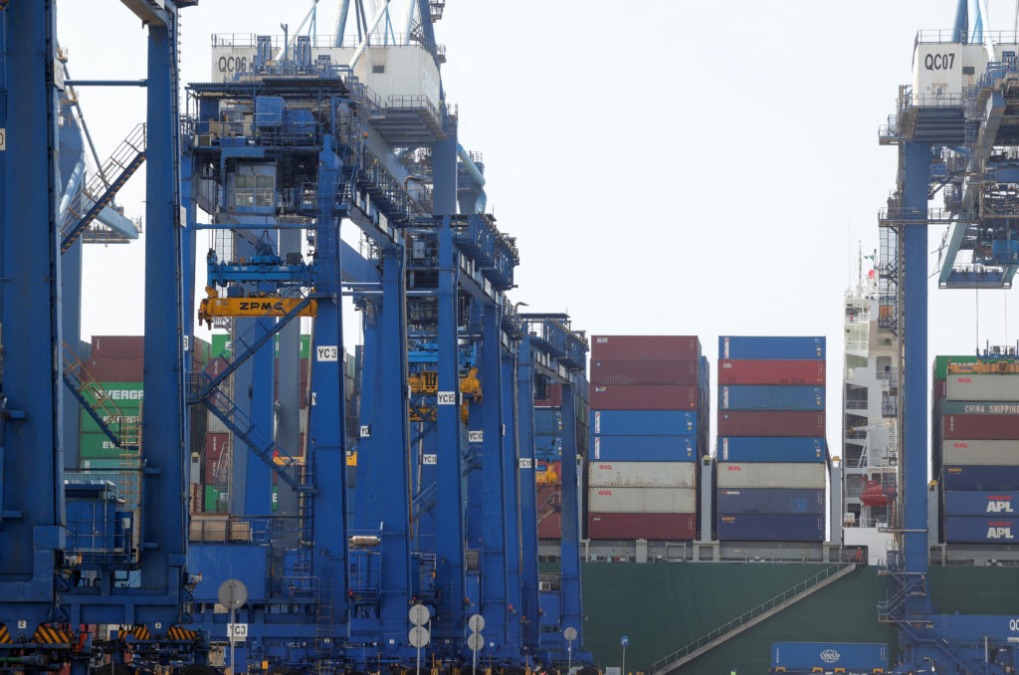
It is precisely here that the analysis becomes more interesting for Portugal. Sines is not competing solely with neighboring ports. It operates within an increasingly pressured logistics geography shaped by major transhipment hubs, reconfiguring maritime chains, and commercial decisions made on a global scale. In this context, Tanger-Med has imposed itself with force that is hard to ignore, concentrating nearly half of the container traffic handled by this expanded port cluster. It is not merely a matter of volume. It is a matter of competitive aggressiveness, geographic positioning, and the ability to capture flows that were once distributed more evenly. Algeciras, for its part, continues to represent a historic giant in the region. It maintains scale, centrality, and a long tradition as a key point on international routes.
Yet its relative weight is no longer what it once was. The rise of Tanger-Med has profoundly altered the balance in the Strait and forced all other regional ports to rethink their positioning. Sines is also part of that equation. In the Portuguese case, the deep-water port continues to possess attributes that place it on a special level. Its natural depth, its capacity to receive some of the world's largest container ships, its Atlantic location, and its potential link to the Iberian and European hinterland make Sines an asset of enormous logistical value.
The problem has never been a lack of natural conditions. The challenge has always been different: converting those advantages into sustained growth, greater logistics density, and more capacity to retain cargo, investment, and added value. This is why Sines should not be read solely through direct comparison with Tanger-Med. Morocco built, with that port, a global-scale machine, heavily oriented toward transshipment, with competitive costs and regulatory flexibility that European Union ports do not have.
That difference matters. And it matters even more at a time when European ports face new environmental requirements, increased costs, and greater regulatory pressure. Sines, being a European port, operates under stricter rules. This may be a competitive limitation in the short term, but it could also become an advantage if Europe decides to treat its major strategic ports as assets to defend and strengthen.
The decisive point is this: Sines does not need to be a copy of Tanger-Med to be relevant. It does need, however, to assert its own identity within the European and Atlantic maritime network. It has the conditions to function as a major gateway to the Atlantic, as a platform for intercontinental services, and as a logistics node with room to grow through coordination with rail, industry, and export corridors. That is the difference between being merely an efficient port and becoming truly structural infrastructure for the Portuguese economy.
Notteboom's analysis also helps dismantle a simplistic idea that sometimes surfaces in public debate: that growth in other ports automatically condemns Sines to irrelevance. It does not. The growth of Tanger-Med shows that there is demand, scale, and centrality on this maritime front. What it demands is a more ambitious response. Sines must grow with strategy, with investment, and with vision. Expansion of installed capacity, continuous improvement in operational conditions, and advancement of new terminal projects can give the Portuguese port the critical mass it needs to move up a level.


In essence, the picture drawn by Theo Notteboom does not place Sines out of the game. Quite the opposite. It shows that the port remains within one of the most contested and most important zones of Euro-Mediterranean maritime logistics. But it also leaves a clear warning: in a system where Tanger-Med accelerates and Algeciras holds firm, Sines cannot live by geography alone. It must transform position into influence, capacity into cargo, and potential into effective centrality. That is, perhaps, the most important point of this entire analysis. Sines still has everything it takes to grow. What is missing is not destiny. It is scale. And that is no longer conquered by good natural conditions alone. It is conquered through execution, strategy, and ambition.
``` ```html
This publication was generated from information in the original feed. Credits and source reference have been included at the end of the text.
Source: https://portaldomar.org/2026/03/15/theo-notteboom-analisa-sines-algeciras-e-tanger-med/
```