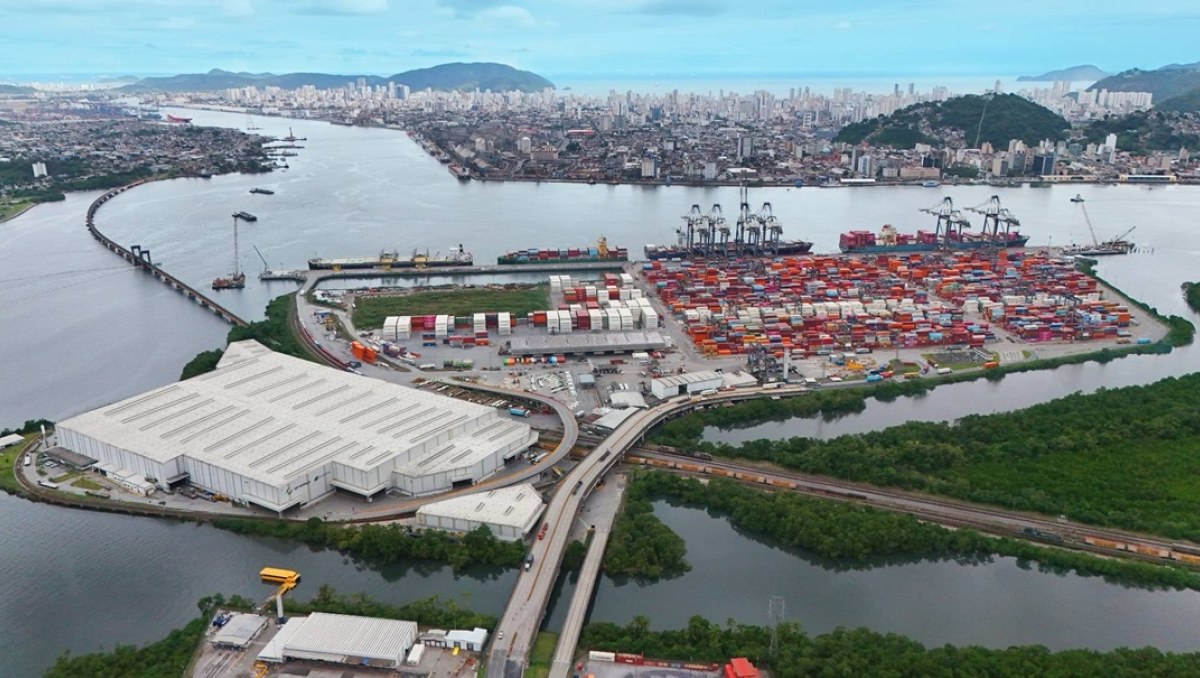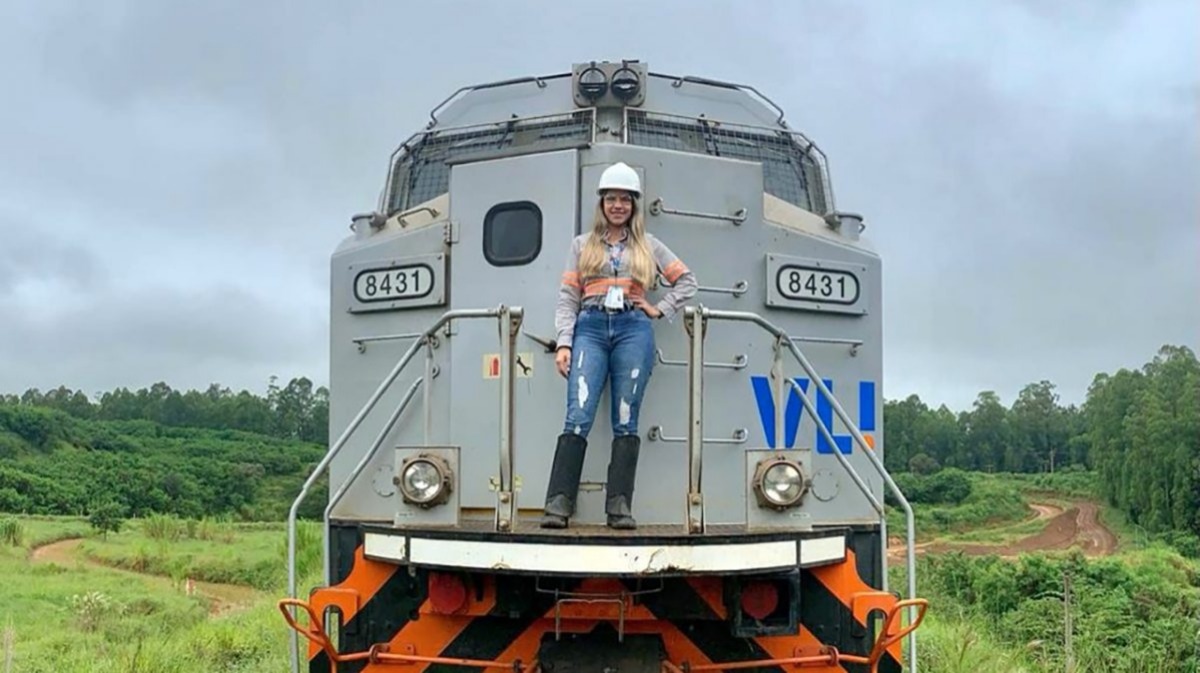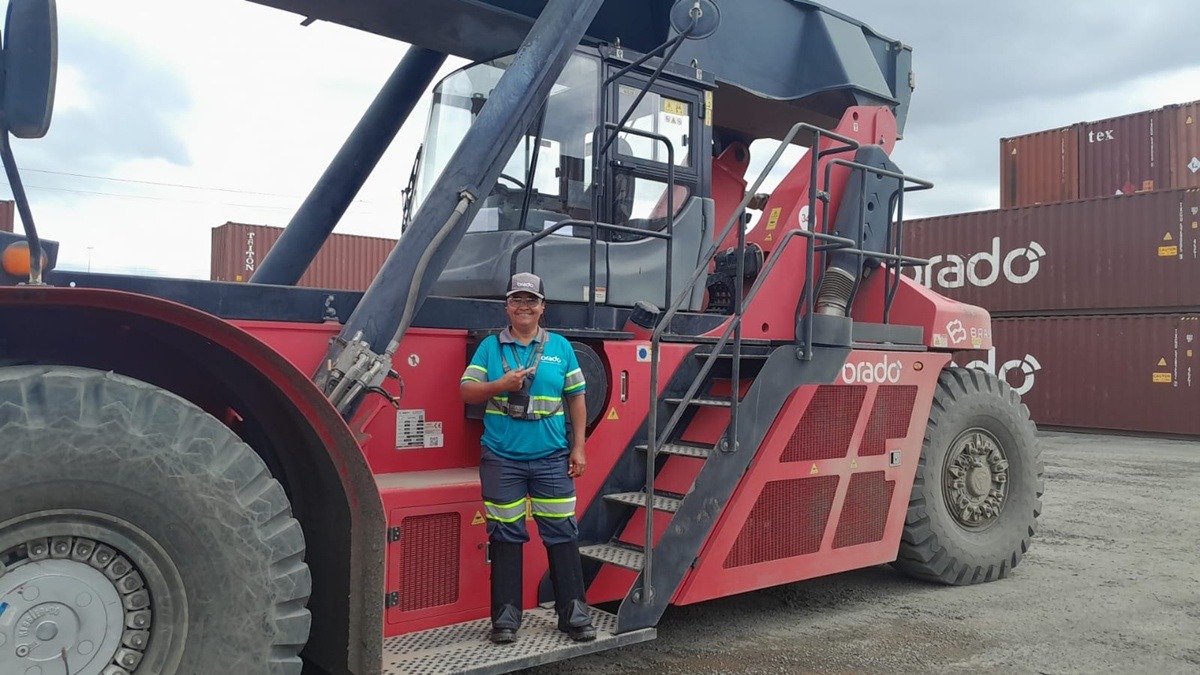
The dream of operating heavy-duty machinery predates Deborah Cristina Lopes' own career. At 49 years old, a reach stacker operator at Brado Logística, she built her professional trajectory driven by the conviction that one day she would take command of the equipment she observed in operation at the terminal behind her residence.
Familiarity with vehicles began early, when her stepfather gave her a Volkswagen Beetle to learn to drive. The experience sparked even more interest, and now she was certain she wanted to be behind a steering wheel. Her first choice was to drive trucks, but soon her attention turned to the machines that sat in the yard of the Sumaré terminal, and then, in 2001, she completed a forklift technician course and, three years later, began operating professionally.
Early in her career, she was the only woman on a team of 11 men. She had to resume duties and adapt to completely manual equipment. She watched her colleagues before executing tasks and faced difficulties until she gained confidence. "I would watch a lot before doing. At first I didn't do so well, it was all manual, but I wanted to learn and never thought about giving up, because I knew that was my place," she recalls.
Years later, she had her first stint at Brado, still as a contractor, operating smaller-capacity forklifts at the terminal. Her performance caught the attention of management, but her career would take an unexpected turn. In 2018, she decided to pursue opportunities on the São Paulo coast. She left with R$ 300 and a suitcase. Unable to secure a position in operations, she worked as a cleaner to support herself.
Every morning, she dropped off resumes and sought a chance to return to machinery operation. "I went after it every day. I worked as a cleaner, did what needed to be done, but never stopped handing in my resume. I knew I didn't want to leave the field, I wanted to get back to operations," she states.
Return to operations — The experience outside the field reinforced her goal of resuming her career in logistics. Months later, she returned to the interior of São Paulo and landed a job as a forklift operator, also driving trucks at a pharmaceutical warehouse, where she stayed for six months. It was during this period that she received the call to return to Brado.
In 2020, when an opening came up to operate a reach stacker at the Sumaré terminal, she was called again. Even though she was employed, she didn't hesitate to accept. The equipment is used for container handling and requires precision, constant attention, and strict compliance with safety regulations, but it had always caught the professional's eye. "When they called me, I didn't think twice. It was the machine I always looked at and said one day I would pilot. For me, it was the realization of a dream," she says.
On being a woman in operations, Deborah reports that she has faced resistance and even sabotage in previous experiences, including intentional damage to cargo under her responsibility. "I've been through situations where they tried to burn me, did things to go wrong on my shift. It hurts, but it also strengthens you. I always thought I needed to prove myself through my work," she states.
At Brado, she says the context was different from the start. According to her, upon arrival, management emphasized that her entry into operations should be accompanied by respect. "Since I came here as a permanent employee, I've never had a problem. They always made clear that I had space to speak and that any situation would be addressed. That makes a huge difference for us to continue," she declares.


Over the past six years, she has operated different equipment and says she was encouraged to expand her own competencies, overcoming initial fears with team support. Today, she says she works with ease and safety. And the pride is visible when she talks about her daily work. During construction or terminal visits, the size of the machine catches the attention of passersby.
"When people stop and look at the size of the machine, I think: that's me inside there. It's a big responsibility, requires attention all the time, but that's what I like to do. I'm proud of myself," she states. She doesn't plan to change roles. She considers that she has achieved the goal that drove her for years.
The hiring perspective — Deborah's trajectory reflects a gradual movement expanding the presence of women in logistics, a historically male-dominated sector. According to the International Labour Organization (ILO), women represent 24% of the global workforce in logistics. In Brazil, participation is around 20%, according to IBGE data, with even lower rates in operational roles.
At Brado, women account for 35% of total employees and 26% of the operational workforce at multimodal terminals. While the majority of these operational positions are still held by men, the percentage is above national and international averages.
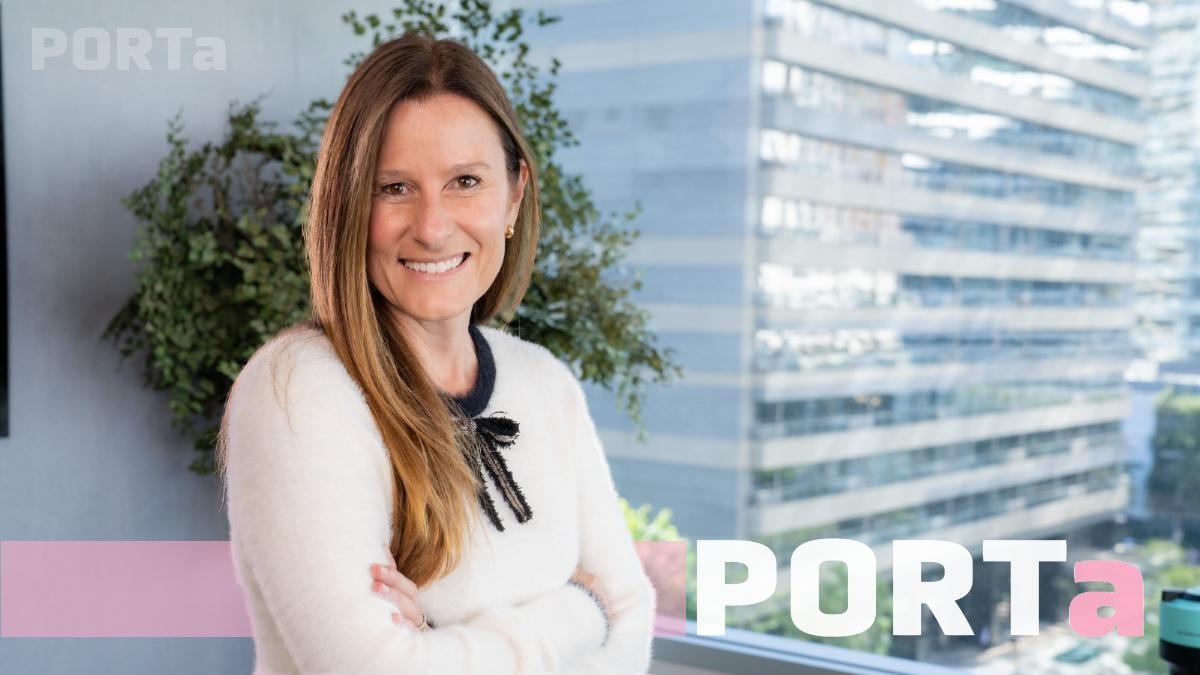
Brado's executive manager of Human Resources, Camila Matte, assesses that the challenge has structural roots. "We are a reflection of a society that dictates what is for men and what is for women. We need to show not only men that we can bring women into operations, but women themselves that they can be in any position," she states.
```According to her, the male predominance begins even before the selection process itself, as within the technical courses aimed at the operational and equipment segments, there are still far more men than women, directly impacting the number of female candidates in the segment.
For the executive, expanding female presence requires more than hiring. "Beyond reaching a number, we need to create an environment where these professionals feel safe to stay and grow. Diversity is not just an entry point, it is permanence, development and equity in everyday life," she says.
The company maintains affinity groups, monitors salary equity and develops projects focused on female leadership. In 2025, it was a finalist for the Sesi ODS 2025 Award, in the Social category, with the project "Inclusive Selection: Foundations of Equity and Female Leadership", which reviews recruitment processes and seeks to expand real career advancement opportunities.
Camila affirms that cultural transformation is ongoing. "We are working to increasingly expand female participation in operations. This involves internal awareness, process review and incentive for more women to see themselves in these spaces," she concludes.