Brazil's railway sector, historically dominated by men, has been undergoing a quiet yet significant transformation. In recent years, logistics and railway transport companies have expanded women's presence in operational, technical, and leadership roles, marking a new phase of modernization and inclusion in the segment.
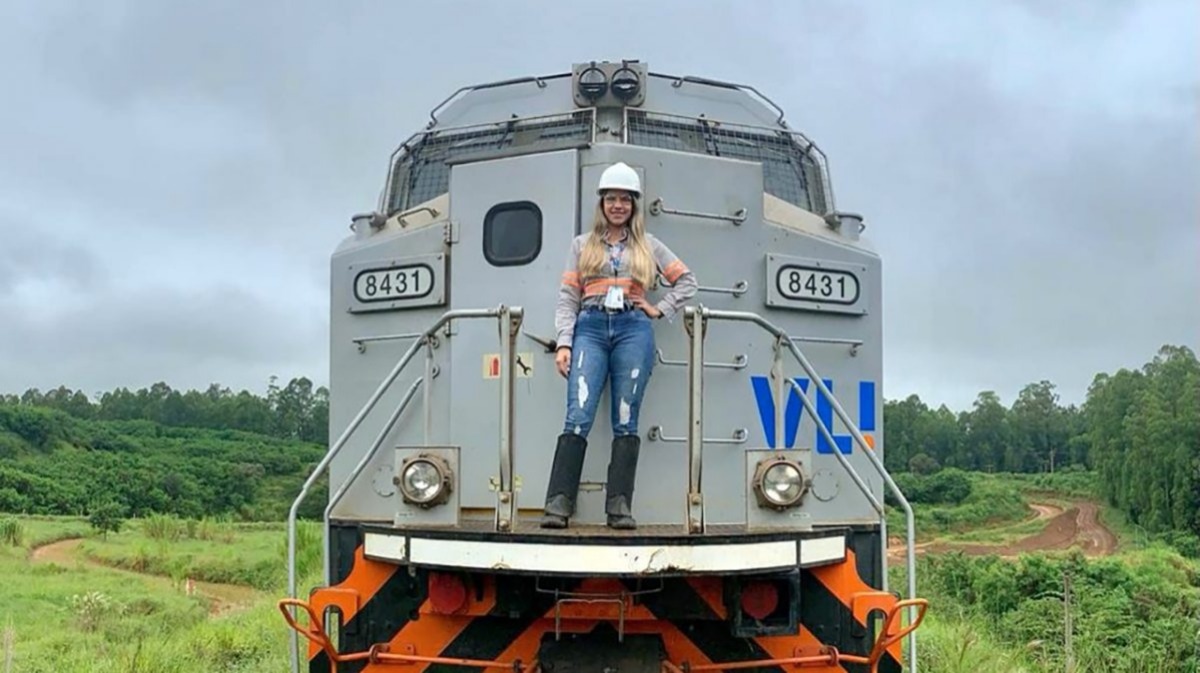
One example that gained national attention was that of trainee locomotive operator Bruna Scarlet Santos, from VLI, recognized for achieving record-breaking operational efficiency indices during her work on the company's trains. At the time, the professional drew attention for her performance in fuel economy, efficient operation, and above-average operational results.
The case came to symbolize an important shift within Brazil's railway sector, which currently seeks not only logistics efficiency, but also cultural evolution and expanded diversity in operations.
In recent years, railway companies have invested in training programs, technical qualification, and women's leadership development, following global trends linked to ESG agendas and the valorization of diversity in the corporate environment.
With advances in on-board locomotive technology, intelligent driving systems, and operational digitalization, the profile of railway operations has also changed. The new generation of industry professionals works in an increasingly technological, strategic, and sustainability-connected environment.
VLI itself has highlighted investments in energy efficiency and advanced operational training, using systems that assist locomotive operators in optimizing acceleration, braking, and reducing fuel consumption. In this new scenario, women professionals have begun to gain greater space in roles once considered predominantly male.


Beyond railway operations, women's presence is also growing in areas such as engineering, logistics management, industrial maintenance, operational planning, and corporate leadership.
Sector specialists assess that the expansion of women's participation in railways represents not only a social advance, but also a competitive differentiator for companies, especially in a market increasingly focused on innovation, operational safety, and efficiency.
The transformation accompanies the expansion of Brazil's logistics network and the strengthening of railway transport as a strategic alternative for agribusiness, mining, fuels, and exports.
More than operating locomotives, women have been helping to drive a new mindset within domestic logistics.
```