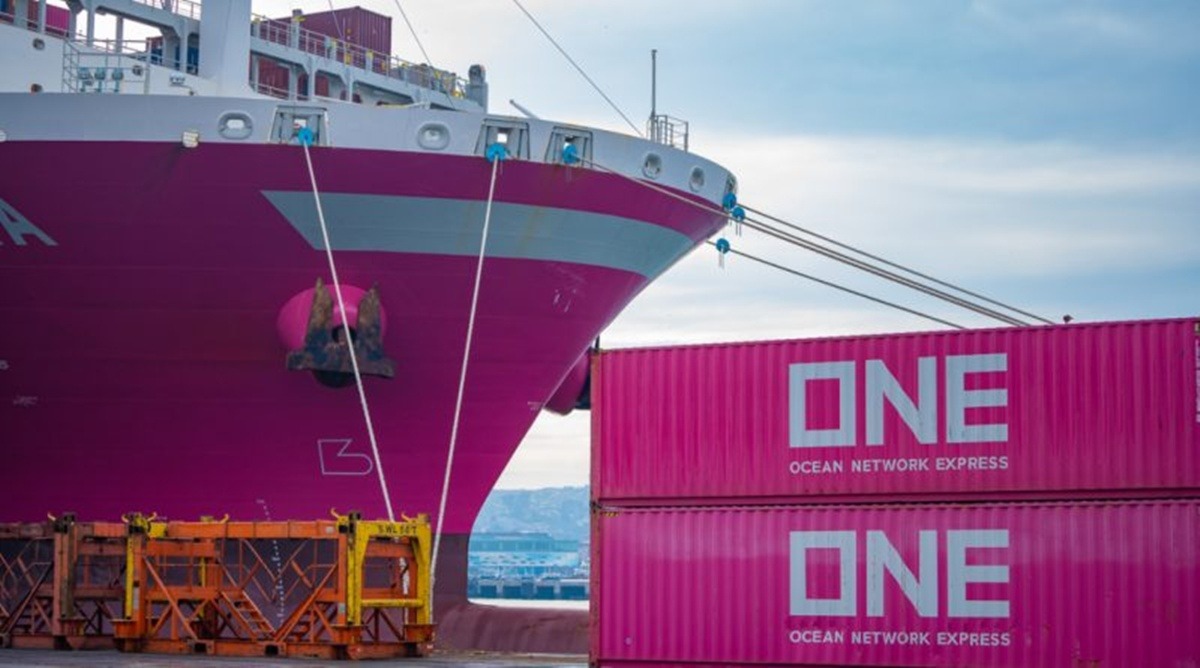
Shipping company Ocean Network Express ended fiscal year 2025 still in the black, but financial results reveal a profound shift in the international container shipping landscape.
The company reported revenue of US$ 16.62 billion, a 14% decline from the previous fiscal year. Net profit plummeted more than 90%, falling from approximately US$ 4.2 billion to US$ 338 million. In the fourth quarter alone, revenue stood at US$ 4.04 billion, reflecting more intensely the deterioration of ocean freight rates throughout 2025.
The trend confirms the end of the exceptional profitability cycle observed between 2021 and 2022, when the pandemic created global logistics bottlenecks, sparked a surge in demand, and drove ocean freight rates to historic highs.
Excess capacity reshapes sector dynamics
The decline in rates is not linked solely to global economic slowdown, but mainly to the structural imbalance between supply and demand in the shipping sector.
At the height of the pandemic, major shipowners placed massive orders for new vessels to meet strong global demand. These ships began to be delivered at large scale starting in 2024, significantly raising available global capacity.
At the same time, international demand stabilized following the atypical growth period recorded in prior years. With fewer port congestions and greater operational fluidity, the logistics system returned to operating with greater efficiency, directly contributing to the drop in freight rates.
Global indicators reinforce this scenario. Drewry's World Container Index accumulated successive declines throughout the year, moving away from the record levels observed during the pandemic. Long-term contracts tracked by Xeneta also showed consistent declines, pressuring shipowner revenues even further.
Even recent geopolitical factors, such as tensions in the Middle East and impacts on Red Sea routes, had limited effect on prices. Although typically raising ocean shipping costs, these events were not sufficient to offset the global excess supply.
Shipowners step up capacity cuts
Facing margin pressure, sector giants such as Maersk, Hapag-Lloyd and Ocean Network Express itself have adopted more aggressive operational control measures.
Among the main strategies are so-called "blank sailings," which consist of canceling scheduled voyages to temporarily reduce space availability and attempt to sustain freight rates.
In addition, companies have been reviewing routes, adjusting delivery schedules for new ships, and implementing operational cuts to preserve profitability in an increasingly competitive environment.
Financial pressure is widespread across the sector. Maersk has already signaled more conservative projections for upcoming periods, while Hapag-Lloyd recorded a significant decline in its operational indicators. MSC, although maintaining lower financial transparency as a private company, also operates in an environment of tighter margins.


Brazilian shippers gain relief
For Brazilian exporters and importers, the new cycle presents both positive effects and challenges.
The decline in international rates significantly reduces logistics costs, particularly for commodity exporters and importers of manufactured goods. This can expand the competitiveness of Brazilian exports and ease some of the pressure on domestic prices.
On the other hand, operational adjustments undertaken by shipowners increase logistics volatility. Port call cancellations, route changes, and lower operational predictability now represent greater risks for companies that depend on supply chains that are more rigid and time-sensitive.
Operational discipline prevented losses
Despite market deterioration, ONE managed to preserve a positive result thanks to stricter cost control policy and capacity management.
According to CEO Jeremy Nixon, operational discipline was decisive in maintaining profitability. The company expanded route optimization, adjusted space offerings on services, and strengthened operational efficiency measures.
The strategy follows the same movement adopted by major global shipowners, which now prioritize financial sustainability over rapid expansion.
2026 is still expected to be challenging
For the next fiscal year, ONE projects profit around US$ 300 million, signaling continued compressed margins and low predictability.
Sector performance will continue to be shaped by global demand behavior, the pace of new ship deliveries, and international geopolitical tensions.
ONE's results solidify the perception that container shipping has entered a new cycle. After years of historic profitability, the sector returns to operating in an environment marked by greater competition, cost pressure, and constant need for operational efficiency.
```For shippers, the scenario represents a combination of lower freight rates with more complex operations, requiring more sophisticated logistical planning and more active risk management.