Brazil's port sector may enter 2027 facing a scenario of greater caution in private investments. According to information released by the Confidential Report on Monday (28th), major port operators would have signaled to the government the possibility of postponing expansion projects planned for the coming year in light of the uncertainty surrounding the sector's new legal framework.
Among the companies mentioned are CMA CGM/Santos Brasil, DP World, APM Terminals and ICTSI. According to the publication, the concern would be mainly related to the lack of predictability regarding the rules that should govern port operations, contracts, investments and port labor.
The scenario involves Bill 733/2025, which proposes comprehensive changes to the Brazilian Port System. The text addresses issues such as port operations, port operations, contracts, investments and port labor. The proposal establishes, among its principles, the pursuit of legal and regulatory security and the encouragement of private investments.
According to information gathered by Jornal Portuário and reported on Monday, approximately R$ 20 billion in announced investments could be affected if the current environment of regulatory uncertainty persists.
Among the projects mentioned is the DP World expansion program at Santos Port, with billion-dollar investments aimed at expanding capacity and modernizing the terminal.
The company has been executing a new expansion cycle in the Santos complex. Information released in July pointed to investments exceeding R$ 2 billion, with wharf expansion and progressive increases in container handling capacity.
Another project mentioned is the expansion of Rio Brasil Terminal, owned by ICTSI, in Rio de Janeiro, with investments planned to expand the facility's capacity.
In Santos, also on the radar is Brasil Terminal Portuário (BTP), controlled by MSC and APM Terminals, which has investment plans for expanding and modernizing its structure.
Santos Brasil, controlled by CMA CGM, also has expansion and modernization projects at Tecon Santos. The scale of these investments means that any change in the regulatory timeline has the potential to impact not only the terminals, but also the future capacity of Brazil's main port complex.
Bill 733/2025 remains at the center of discussions
The new legal framework for ports has been under discussion since 2025 and has gone through a series of debates in the Chamber of Deputies. The text received hundreds of amendments and involves topics considered sensitive for operators, workers, port authorities and other system stakeholders.
Among the points of greatest disagreement are the rules related to the hiring of port workers and the role of Labor Management Bodies, the OGMOs. The proceedings also involve discussions on contracts, concession terms and conditions for new investments.
In March, the expectation presented in the Chamber was for the rapporteur deputy Arthur Maia's report to advance. Throughout 2026, however, the process remained surrounded by discussions and adjustments.
The regulatory scenario gained yet another dimension with information that the Ministry of Ports and Airports and ANTAQ were working on a legislative alternative to amend the current Ports Law, given the difficulties in advancing Bill 733/2025.


Private capital watches for predictability
The central issue for investors is not just the volume of available resources, but the predictability necessary for infrastructure projects with long-term return cycles.
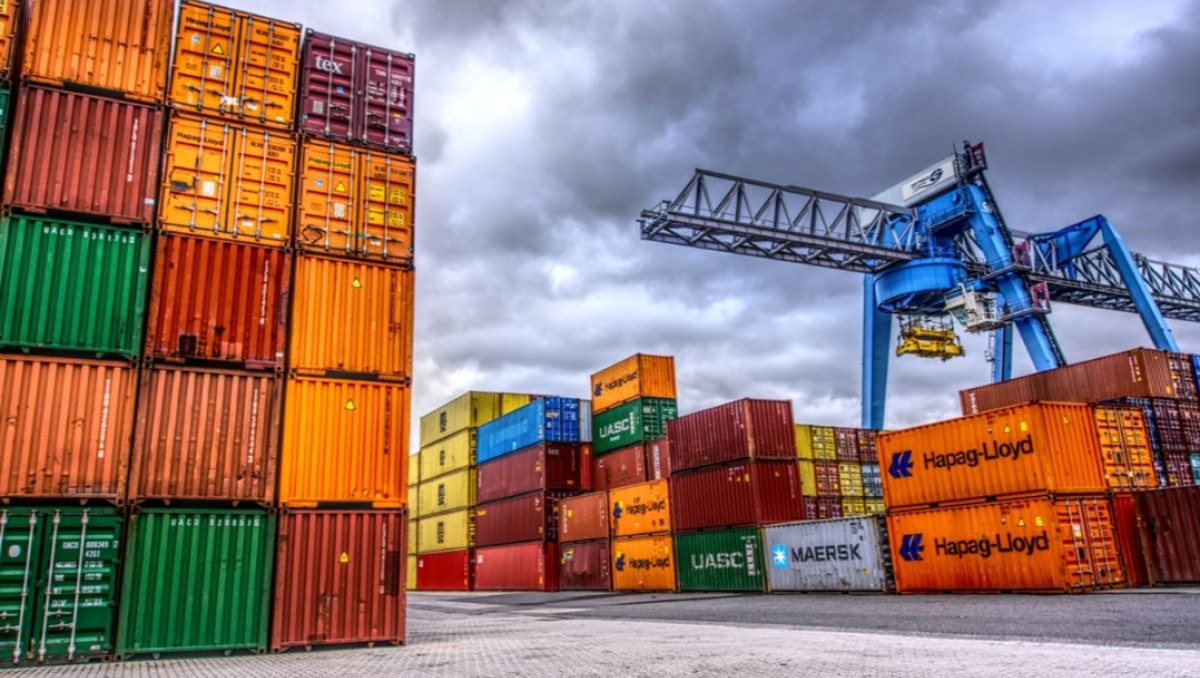
Port terminals require significant investments in wharves, equipment, yards, automation systems, railway infrastructure, dredging and technology. Changes in rules during the planning period can interfere with the economic evaluation of projects and implementation schedules.
This aspect gains importance because the main operators present in Brazil also have assets and projects in different international markets. In this way, the decision on new investments involves a comparison between different regulatory environments and return prospects.
``` ```htmlGovernment maintains discourse on infrastructure expansion
The possible cautious stance by operators contrasts with the public agenda to expand Brazilian port infrastructure.
In September, the Minister of Ports and Airports, Tomé Franca, stated in Santos that the country has a structured portfolio of projects and highlighted legal certainty as one of the pillars for attracting investments. On the same occasion, the Ministry presented Tecon Santos 10 as one of the central projects to expand the container handling capacity of Santos Port.
The contrast poses an important challenge for the sector: turning announced projects into investments that are effectively contracted, executed and put into operation, ensuring predictability for companies that need to plan investments with a decades-long horizon.
What is at stake
If the signals reported by the Confidential Report are confirmed, the impact would not be restricted to individual terminal schedules.
A reduction or postponement of investments could affect port capacity expansion, acquisition of new equipment, automation and electrification projects, rail integration and the preparation of Brazilian terminals for larger vessels and for growth in foreign trade.
On the other hand, it is important to note that the companies mentioned have not publicly announced the cancellation of their expansion projects. The available information points to a possible revision or postponement of investments in the face of regulatory uncertainty.
The central point, therefore, is not only how much will be invested in 2027, but what degree of predictability the Brazilian institutional environment will offer so that port projects can move forward.
Jornal Portuário will continue to follow the proceedings of the new legal framework and the developments regarding investments announced by port operators.
```